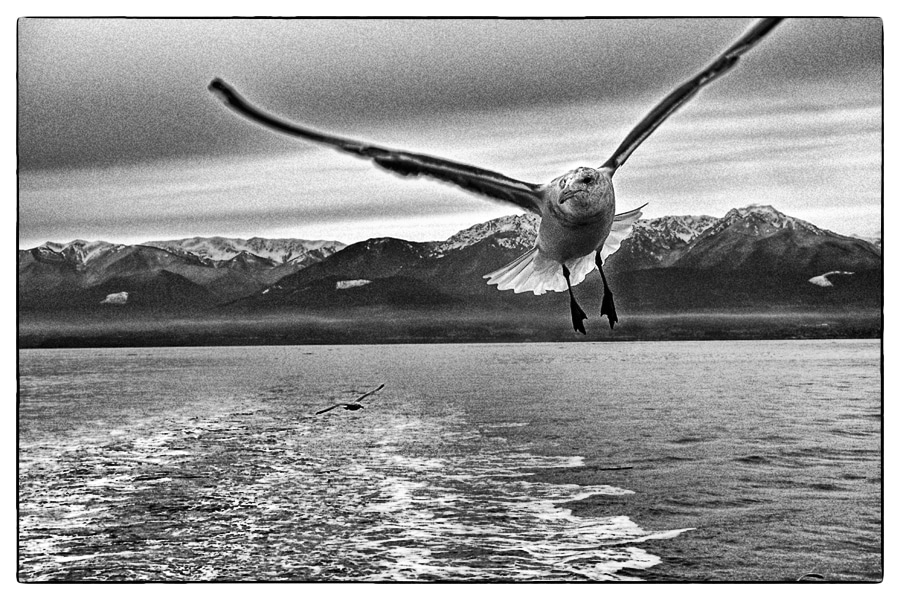
We’ve got an eye on you / George Le Masurier photo
The Week: local bag bans support nation, global effort; these politicians go low
By
The City of Courtenay is poised to pass a single-use plastic bag ban next week that will go into effect next March 31. The city joins the Village of Cumberland, which already approved a bag ban in March to go into effect next January.
Still to come, perhaps, is similar action from the Comox Valley Regional District and the Town of Comox, which is still waiting for a report from its staff.
Although Prime Minister Pierre Trudeau announced a nationwide ban “as early as” 2021, the same year a bag ban goes into effect in the European Union, it is important for small communities like the Comox Valley to keep banning the bags in their jurisdictions.
And it’s important for consumers to embrace this change now. Everyone can start using reusable bags, and refusing plastic whenever possible. Don’t buy plastic water bottles. Buy sodas or juices that come in cans, not plastic containers.
Trudeau’s announcement is only a promise. He might not win the next election, or he might not follow through. He’s ditched campaign promises before, notably electoral reform.
So, congrats to Cumberland and Courtenay, and what are you — Comox and CVRD — waiting for? The public tide has already turned against plastics. And for good reason.
Less than 10 percent of all plastics are recycled. Think about that, about all the plastic wrapping you see and consume in grocery and other retail stores. The rest plugs up our landfills and pollutes our waterways, eventually breaking down into tiny bits that get eaten by fish, birds and other animals. That plastic makes it way into our own bodies through the food chain.
How low will they go?
It’s been obvious for some time that Comox Councillors Ken Grant and Maureen Swift, along with Mayor Russ Arnott, care little about giving a fair hearing to legitimate public concerns.
Now, it appears, they are willing to disrespect their own elected official colleagues to carry out petty vendettas.
It was clear to everyone at this week’s sewage commission meeting that the three Courtenay directors wanted to wait until the next meeting when CFB Representative, Major Delta Guerard, was present.
But Grant and Arnott made a motion anyway, one they opposed, just so they could defeat it. Clever political maneuver, but a knife in the back of their colleagues around the table.
The meeting showed how low Arnott, Grant and Swift are willing to sink.
It’s not a coincidence the trio votes against every request for Area B representation on the Courtenay-Comox Sewage Commission. They also vote in a block to support all attempts to locate sewer infrastructure in somebody else’s backyard.
It would be more useful if Comox commissioners came up with valid reasons to deny Area B representation. To date, they’ve claimed that it was against the Local Government Act — which it wasn’t — and then that our previous Area B director had lied to the commission — which he hadn’t.
Now, the best Arnott can muster is that it’s an “emotional” issue.
There’s a reason the Town of Comox faces the potential for two costly defeats in BC Supreme Court over the next six months, but Arnott, Grant and Swift just don’t get it.
Comox shellfish contaminated
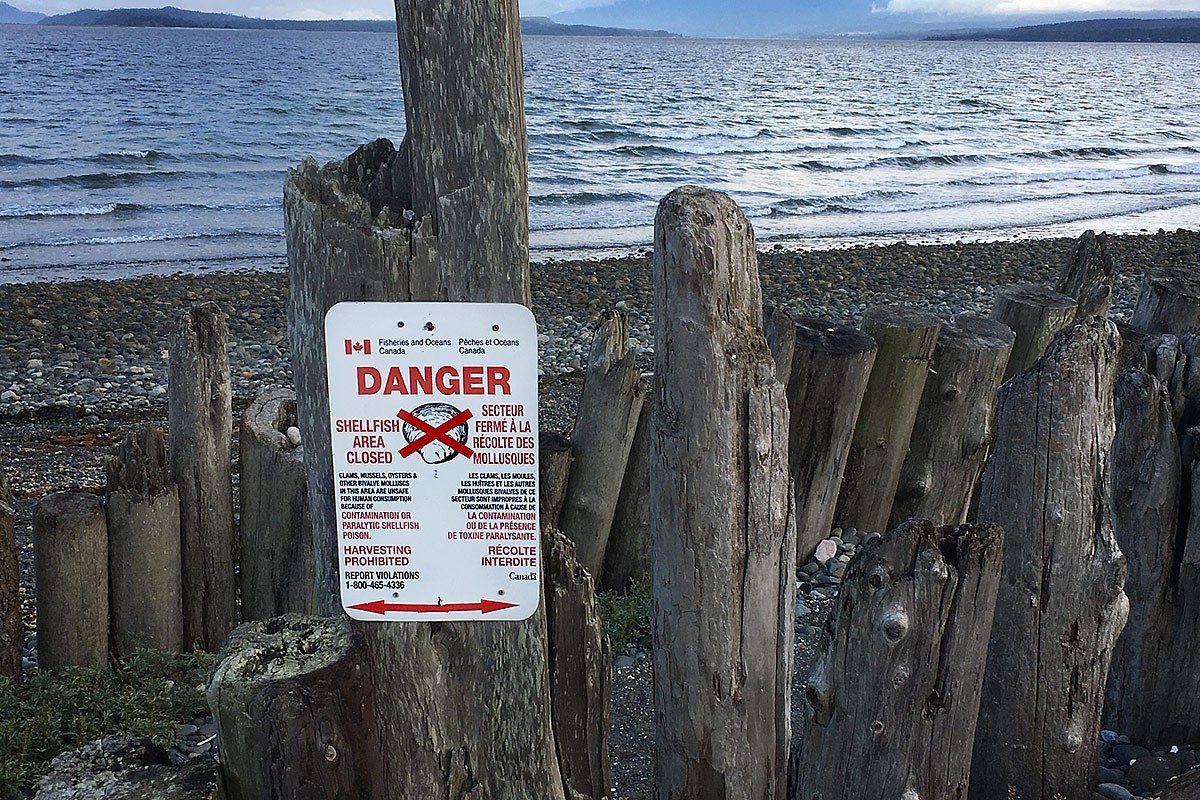
Did you know the entire Comox Harbour area is permanently closed for shellfish harvesting? Sanitary contamination of the area means that consumption of shellfish here presents a serious health hazard. There have already been two emergency notices issued by the DFO about illness from contaminated shellfish.
Probable sources of the fecal contamination include the Town of Comox’s stormwater management system, marinas and boaters and pets and wildlife.
That makes Comox an ironic choice to host the BC Seafood Festival, which is highly supported by fish farms and other aquaculture industry interests.
Creating smoke-free public parks
Congrats to Courtenay Councillor Melanie McCollum for proposing a citywide ban on smoking tobacco, cannabis and vaping products in public parks.
Other BC communities, such as Duncan, Metro Vancouver and North Vancouver, have already taken this step.
McCollum points out the danger of wildfires from carelessly discarded of lighted products, but the health risks of second-hand smoke and hampering the ability of people to enjoy a smoke-free outdoors experience also justify her proposal.
Despite the positive big picture outcome, this election exposed a glaring vulnerability within our electoral system. And that vulnerability caused otherwise smart people to forget how our Canadian parliamentary system actually works. Namely: We do not have a proportional representation form of government. But there is a simple solution.
Progressives have found something new to squabble about: which poll of the North Island-Powell River (NIPR) riding is the accurate one? Some polls show the Liberals ahead of the NDP. Others show the NDP with an edge. But does it really matter if neither party can win?
Photo Caption hen the federal debate commission disinvited the Green Party from national debates, its leader, Jonathan Pedneault divulged an election strategy that evidently didn't make its way to North Island-Powell...
If you want to help the Mark Carney Liberals form the next federal government, then DO NOT vote for them in the North Island-Powell River riding. That sounds counter-intuitive, but only a vote for the NDP can save this riding from swinging to the Conservatives in 2025. Why? Read on for the full article.
Faith-based volunteers can contribute positively to the educational experience in our public schools but everyone must be perfectly clear about who they are, what they can and cannot do and school administrators must monitor their activity closely and consistently
A Comox Valley developer is suing the Town of Comox because his permits to cut down trees and build more single-family homes haven’t been issued as fast as he’s wanted and because the town wants a wider walking trail through the property
Another Comox Councillor was fined by Elections BC for violating BC elections laws, plus Parksville’s water supply is unable to meet provincial requirements for summer water flow in the Englishman River let alone provide water for a proposed 800-unit development
A serious fall drought has reduced flows in the Puntledge River, shutting down hydroelectric power generation for the first time in 55 years. Meanwhile, many states eye sending treated wastewater to kitchen taps
Making it easier for citizens to speak directly to municipal councils might increase public interest in local government, which in turn might encourage more registered voters to actually cast a ballot
Cumberland and Comox municipal councils approve their mayor’s annual appointments, but Courtenay was a no show at its inaugural meeting. Is there conflict behind the scenes?
The Week: Strange attitude in Comox and perils of logging in watersheds
By
There’s a classic ironic saying — “We’re from the government, and we’re here to help you” — that seems to describe the Town of Comox’s aloof and often confrontational attitude toward some of its constituency. It’s a peculiar mindset that the town has developed in recent times.
There’s no better example than the story of Ken McDonald and Golf Creek, which Decafnation first reported back in January when it was a simple Small Claims Court case. This week, we broke the news on Tuesday that a civil court judge granted an escalation of the law to the BC Supreme Court and multiplied the amount of damages tenfold.
Read the full story here, and the original story here
The town could have settled this matter for $25,000 or less three years ago just by taking a helpful and sympathetic approach to a resident’s problem. But instead of trying to assist this taxpayer, the town basically told him to buzz off, and then actually added to his financial burden by paying high-priced lawyers to fight him in court.
By the time this case is resolved, the town will have spent tens of thousands more of taxpayers’ money than if they had empathy for one of their own citizens and helped him out. And the bill will grow to hundreds of thousands more if the town loses the case.
The good news out of this example of the town’s pitiful proclivity for bullying people is that this citizen has the means to fight back. And because of McDonald’s refusal to just let it go, some of the town’s other sins have come to light: flushing toxic stormwater into the harbor, repeatedly ignoring warnings from more than one professional consultant, failing to monitor water quality in the creeks it abuses and more.
It’s hard to ignore the irony of Comox hosting a week-long seafood festival that starts today, knowing that the town bears a huge responsibility for the pollution of Comox Bay that has killed aquatic life and closes the area to shellfish harvesting.
Comox is also embroiled in another legal case that could also cost its taxpayers hundreds of thousands of dollars, this one over the mishandling of the Mack Laing Trust and the fate of his heritage home, Shakesides. Instead of sitting down face-to-face and working out a solution, the town again has taken a confrontational approach, spending large amounts of money on lawyers to prevent Mack Laing’s supporters from having a voice in court.
There are good examples of local governments — in Cumberland and Courtenay — that when faced with citizen-based problems, municipal staff and elected officials actually try to resolve them in a win-win manner, rather than attempt to beat a citizen into submission. But Comox is apparently not that kind of town.
DECODING POLITICAL SPEAK
One of the frustrating aspects of the Town of Comox’s current legal battles is that elected officials refuse to talk about them. Mayor Russ Arnott is famous for hiding behind the words, “It’s before the courts, so I can’t talk about it.”
Literally, that’s not true. Elected officials have the freedom to talk about court cases, and defendants and prosecutors do it all the time. There is no law against this.
What Arnott really means is that he’s afraid to say something that could hurt the town’s legal case.
Municipal insurance companies have a big thumb on freedom of speech. So instead of transparency, we usually get silence based on a fear of liability.
BIKING IN COURTENAY
Here’s some good news: the City of Courtenay has received $227,655 from the provincial BikeBC program to expand its cycling network on both sides of the river. The grant amounts to about half of the cost of projects on Fitzgerald Avenue and the Hobson Neighborhood.
Courtenay is really pushing toward a cycle-friendly community.
For its next step, we humbly suggest some kind of infrastructure — overpasses?, physically separated lanes? — that would allow students of Vanier and Isfeld secondary schools to cycle more safety from their homes on the west side of the river.
LOGGING AND WATER TREATMENT
There is an excellent recent story in the online publication, The Narwhal, about how clearcut logging is driving a water crisis in some interior communities.
While the story focuses on the Okanagan region, there’s a similar story about logging in the Comox Lake Watershed, the drinking water source for most Comox Valley residents. And the results of this practice are similar.
Due to upstream logging, large quantities of sediment flow into Peachland Creek and eventually wash into Okanagan Lake. That has forced the town of Peachland to spend $24 million on a new water treatment plant to filter out the fine sediments, disinfect it with chlorine and ultraviolet light.
Sound familiar? That’s exactly what’s happening in the Comox Lake Watershed. Because the BC government allows logging in the watershed, sediment flows into all the little creeks and streams, and into the bigger rivers, such as the Cruikshank, causing turbidity.
The Comox Valley’s $110 million price tag for water treatment is more than four times higher than Peachland’s.
Why doesn’t the province only permit selective logging in watersheds? Why does the province prioritize logging over drinking water? And one wonders how much of the watershed the Comox Valley could have purchased for the cost of its water treatment plant.
Despite the positive big picture outcome, this election exposed a glaring vulnerability within our electoral system. And that vulnerability caused otherwise smart people to forget how our Canadian parliamentary system actually works. Namely: We do not have a proportional representation form of government. But there is a simple solution.
Progressives have found something new to squabble about: which poll of the North Island-Powell River (NIPR) riding is the accurate one? Some polls show the Liberals ahead of the NDP. Others show the NDP with an edge. But does it really matter if neither party can win?
Photo Caption hen the federal debate commission disinvited the Green Party from national debates, its leader, Jonathan Pedneault divulged an election strategy that evidently didn't make its way to North Island-Powell...
If you want to help the Mark Carney Liberals form the next federal government, then DO NOT vote for them in the North Island-Powell River riding. That sounds counter-intuitive, but only a vote for the NDP can save this riding from swinging to the Conservatives in 2025. Why? Read on for the full article.
Faith-based volunteers can contribute positively to the educational experience in our public schools but everyone must be perfectly clear about who they are, what they can and cannot do and school administrators must monitor their activity closely and consistently
A Comox Valley developer is suing the Town of Comox because his permits to cut down trees and build more single-family homes haven’t been issued as fast as he’s wanted and because the town wants a wider walking trail through the property
Another Comox Councillor was fined by Elections BC for violating BC elections laws, plus Parksville’s water supply is unable to meet provincial requirements for summer water flow in the Englishman River let alone provide water for a proposed 800-unit development
A serious fall drought has reduced flows in the Puntledge River, shutting down hydroelectric power generation for the first time in 55 years. Meanwhile, many states eye sending treated wastewater to kitchen taps
Making it easier for citizens to speak directly to municipal councils might increase public interest in local government, which in turn might encourage more registered voters to actually cast a ballot
Cumberland and Comox municipal councils approve their mayor’s annual appointments, but Courtenay was a no show at its inaugural meeting. Is there conflict behind the scenes?