No Results Found
The page you requested could not be found. Try refining your search, or use the navigation above to locate the post.


Anonymous Old Guard political action groups in the Comox Valley have been trying to elect cohesive voting blocks for decades
Some people made a big fuss during last fall’s by-election for an open seat on the Comox Town Council when a group calling themselves the “Comox Greens” formed to support candidate Dr. Jonathan Kerr, who won by a comfortable margin.
That group is no longer active, but what got folks all riled up was the idea that provincial party ideologies might weave their way into municipal government business.
Chief among the critics was Brennan Day, who had just run unsuccessfully for the BC Legislature as the BC Liberal Party nominee. Day, who doesn’t live in Courtenay and had been previously rejected by Courtenay voters for a council position, explained his concerns in a letter to the editor during the by-election.
Voters, he said, would “no longer … be electing representatives on their individual merits … A cohesive voting block does not need to worry about pesky little things like debate and compromise, it has the ability to circumvent those who disagree and push forward with a single agenda.”
But hasn’t the right-wing, pro-development faction of the Comox Valley political scene – that would naturally support Day – been trying to create that “cohesive voting block” for over a decade?
In 2014, they called themselves Comox Valley Common Sense. In 2018, they called themselves the Comox Valley Taxpayers Alliance. In 2022, they are calling themselves Comox Valley Mainstream. And this year there’s a new more extreme group calling themselves Take Back Comox Valley.
The objective of these groups has always been to elect a majority of council members who will vote together to further their outworn ambitions. And once again, they are supporting the effort to unseat incumbents who they perceive as being too progressive.
So, groups of citizens banding together to affect local government elections is nothing new.
Be that as it may, let’s get real and dispel this notion that any candidate for municipal government can and should come to office with no partialty, predilections or preconceived notions. If a candidate says that, they are lying to you.
No one who seeks public office is without preference for a federal or provincial political party, or is without values that run closer to one party than the others. It’s just a fact. People who are motivated to run for local government usually have strong opinions about the issues of the day and believe that their ideas about how to address them are the best.
Voters know that. They just want candidates to be transparent about those opinions and values so they can choose wisely on Election Day.
It’s unrealistic to expect that public officials can simply erase their life experiences and their personal values and philosophies when they walk through the council room door. They are who they are, and their decisions and council voting records will reflect that.
But that doesn’t mean that former BC Liberal Party MLA Don McRae checked in with the party executive before taking a position when he served seven years on Courtenay council. Of course not. But his values and political perspective led him on a journey to become the Minister of Education under former premier Christy Clark.
The same would have been true for NDP MLA Ronna-Rae Leonard who also sat on Courtenay Council for many years. And consider that former Comox council member Paul Ives who sought the BC Liberal Party nomination in 2016 while still serving as mayor.
It’s laughable to think that MLA Leonard’s perspectives and approach to local issues didn’t more closely resemble the NDP’s values than the BC Liberal Party’s values. And vice versa for McRae.
The same would be true for Brennan Day. That’s why you will see more Day campaign signs in the conservative Crown Isle subdivision than you will in the more liberal Puntledge Park neighborhood.
What Dr. Kerr tried to do in last year’s by-election was to put his political leanings and values out front for everyone to see. Total transparency. That way, if people shared those values, they could see he might be a good representative for them. And if not, they could vote for someone else.
We wish this year’s candidates and political action groups would be as honest.
General Voting Day is Saturday, Oct. 15 for all local government positions.
Comox Valley Regional District
General Voting Day and advance voting take place at the CVRD building in Courtenay from 8 am to 8 pm.
Go to this link for General Voting Day locations in the three Electoral Areas.
Additional voting takes place on Oct. 6 from 9 am to 12 pm on Denman Island and on Oct. 6 from 2 pm to 5 pm on Hornby Island
Courtenay
Advance Voting begins on Wednesday October 5, 2022, 8 am to 8 pm at the Native Sons Hall, and again on Wednesday October 12, 2022, 8 am to 8 pm at the Florence Filberg Centre.
General Voting Day, Saturday, October 15, 2022, 8 am to 8 pm at the Queneesh Elementary School, and at the Florence Filberg Centre.
Comox
Advance voting begins Wednesday, October 5 from 8 a.m. – 8 p.m. at the Comox Community Centre, and on Saturday, October 8 from 10 a.m. – 2 p.m. at the Genoa Sail Building at Comox Marina, and again on Monday, October 10 from 10 a.m. – 2 p.m. at the Genoa Sail Building at Comox Marina, and on Wednesday, October 12 from 8 a.m. – 8 p.m. at the Comox Community Centre.
General Voting Day runs from 8 am to 8 pm on Oct. 15 at the Comox Community Centre.
Cumberland
All voting in the Village of Cumberland takes place from 8 am to 8 pm at the Cumberland Cultural Centre. Advance voting takes place on Oct. 5 and Oct. 12.
The page you requested could not be found. Try refining your search, or use the navigation above to locate the post.
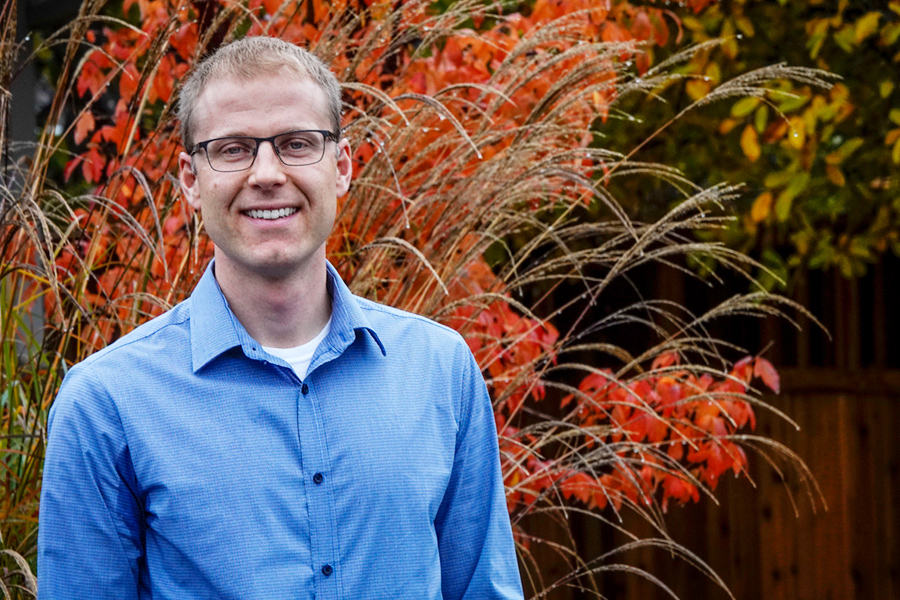
Elected last year to fill out the term of a councillor who resigned, Dr. Jonathan Kerr is seeking re-election to a full term on Comox Council
Dr. Jonathan Kerr is seeking re-election to a full term on the Comox Town Council. Kerr has been a council member since voters elected him 10 months ago to fill the seat of resigning councillor Pat McKenna.
Kerr earned his Doctor of Medicine from the University of Toronto in 2006 and did Post-Graduate Family Medicine training at Queen’s University. He practiced family medicine in Belleville, Ont. prior to moving to the Comox Valley.
He and his wife and their two children moved to the Valley in late 2014, and he joined the Sea Cove Medical Clinic in 2015, where he is currently the lead physician.
Kerr served as president of the Ontario College of Family Physicians and served on its board for many years, including one year as chair. He has also served on the board of directors for the College of Family Physicians Canada and currently sits on the Advisory Committee for the Comox Valley Division of Family Practice.
He is the founder and chair of the new Comox Valley Family Physician Recruitment and Retention Task Force.
Kerr actively competes in the sport of Biathlon and coaches youth eight to 18 in rifle marksmanship and cross-country skiing with the Vancouver Island Biathlon Club. He’s also a volunteer with the Brooklyn Creek Watershed Society, and previously served on the Coalition to End Homelessness, Dawn to Dawn Action on Homelessness Society and is treasurer of the Navigate School Parent Advisory Council.
Kerr says he has really enjoyed his role on council since last November, especially the opportunity to connect with residents. The constituency work energizes him, he says, making him a bit of an outlier among the many policy wonks who hold public office.
Kerr says being a town councillor is similar to his role as a family doctor.
“You listen to people’s concerns, make a diagnosis and work with them on a plan to fix it,” he said. “It’s a real high, a beautiful moment when I can make a difference in people’s lives.”
In his medical practice and now on council, Kerr operates on the ‘servant leadership model.’ He sees his job as serving people to improve their lives, the community and the environment.
He stresses transparency and accountability as key attributes of a good councillor.
“They are not just buzzwords. I take them seriously. After every meeting, I post my voting record on my website and I link to the time in the council video where I speak on each topic,” he said.
In his nine months on council, Kerr has made sure that he focused on what people told him they wanted during the nine-month public listening campaign he ran last year.
“It’s for the voters to decide if I deserve a full term after winning the byelection last fall,” he told Decafnation.
During the byelection, Keer made it clear that he would have three priorities based on the extensive public information sessions he did prior to the byelection: affordable housing, climate change and the recruitment of new family doctors.
On affordable housing, Kerr says the town used to negotiate informally with developers for affordable housing units.
“Now, we have put that into a formal policy so everyone knows what it is,” he said.
The new policy requires developers to set aside 1.2 percent of their total rental units and 1.8 percent of condo units for the town. Comox will then partner with local non-profits to rent these out as truly affordable units.
“I had proposed 2.5 percent, which developers objected to, so we collaborated to agree on the new policy rates. I took some heat for this. Developers were not thrilled but it’s important to stand up for what’s best for the community,” he said.
Kerr says he would support a regional housing authority to manage all the affordable housing units in the Comox Valley. Others running in Comox and Courtenay have expressed support for a housing authority.
On climate change, Kerr helped drive passage of the new tree retention bylaw, which passed on a 4-3 vote. The first version of the tree bylaw required 25 percent retention and the new bylaw requires 30 percent.
“Again I proposed in my motion to make it 35 percent and we collaborated,” he said. “It was important to get this done before any development started in the Northeast Comox area.”
The Town Council also approved participation in the Comox Valley Regional District’s regional climate action initiative. Kerr moved that council adopt the Comox staff report on the possibility of adopting some of the Youth Climate Council’s Green New Deal proposals in the short, medium and long-term.
“I am supporting the Youth Council’s efforts to transition to a more climate change-friendly society,” he said.
Kerr has been especially successful in his campaign theme of recruiting more family doctors to the area.
“Immediately after I was elected last November, I called together a Comox Valley Family Physician Recruitment and Retention Task Force that included mayors, councillors, CAOs, representatives from the CV chamber, hospital and other sectors because it has to be a regional-wide effort,” he said. “The goal wasn’t to just bring doctors to Comox. It wouldn’t work if all our jurisdictions competed with each other. New doctors, wherever they live or set up practice in the Valley benefit us all.”
When Kerr started the task force, there were 14,000 Valley residents who didn’t have a family doctor (numbers were culled from the Comox Valley’s clinics’ wait lists and the province’s health registry).
Since Jan. 1, the group has recruited 13 new doctors; seven are already here and practicing and six are arriving this fall. And the Task Force has connected 5,500 people with doctors in the last 12 months.
To accomplish that, Kerr’s Task Force formed a marketing strategy that examined what each community offered. They made videos of current doctors talking about why they love practicing here and posted them on social media.
When doctors come to visit, Kerr says the group has a Roll Out The Red Carpet plan to show the doctors and their families around the whole Comox Valley and try to remove any barriers that exist, such as finding temporary housing.
Staff at the Comox Valley Division of Family Practice coordinates the Task Force’s recruitment efforts, including finding out a doctor’s and their family’s needs and interests before they come to visit in order to tailor the sales pitch.
Kerr says he doesn’t have any personal goals for the next four years, “just the ones Comox residents tell me are their top issues. Housing, climate and doctors are still at the top of the list. But I will be looking at some specific issues.”
One of those other issues would be to protect as much of the Northeast Comox forest land as possible – the area from Highland school down to the roundabout on both sides of Pritchard, mostly on the east side. The area includes 11 different parcels with multiple owners.
“The question here is how best to use this land,” he said.
The area is zoned R1 for residential single-family homes. But Comox already has the highest percentage of single-family homes: 66 percent. The national average is 51 percent.
“We need more rental units and townhouses,” Kerr said. “With the current housing market, single-family homes aren’t affordable housing for many people.”
There’s also the economic piece for taxpayers. It will take more than 30 years to pay back the cost of extending sewer and water infrastructure to the area.
“Why burden the town’s taxpayers with more unfunded liabilities?” he said. “Plus, it’s a beautiful forest and it would be a shame if it all came down. We should be able to find a balance among retaining trees, benefits to taxpayers, affordable housing and a mixture of housing types.”
Right now, Northeast Comox area property owners could build all single-family homes. But Kerr says it would be better to upzone and allow developers higher densities and make a plan for the whole area rather than dealing with each parcel piecemeal.
“We could have a discussion and find a compromise by looking at the whole area through a community benefits lens. I’m optimistic the developers will come to the table,” he said.
Also, the council will be updating the town’s Official Community Plan during the next term. Kerr wants to be a part of that for the inclusion of community-focused visions for social, environmental and reconciliation issues.
Kerr will also be looking at improving activities for teens with “so many new young families moving here,” and making streets safer and working with the BIA for a more vibrant downtown.
Kerr thinks some people believe that the council should limit itself to just dealing with water, sewer and potholes.
“These are all important things, but the role of the town and council is much more,” he said. “It’s not correct that councils are not supposed to do those things.”
The BC Community Charter, which gives municipal governments their authority, states a local government must “foster economic development, social and environmental well-being of its community.”
“Those are the exact lenses that I use in decision-making at council because that’s what Comox residents want and what the people who call me want,” he said.
“It’s the responsibility of elected officials to address the issues that matter while providing excellent core services,” he said. “Our updated Official Community Plan for Comox could look different depending on who Comox people elect. You could have a forward-thinking council or a group of regressive people.”
General Voting Day is Saturday, Oct. 15 for all local government positions.
Comox Valley Regional District
General Voting Day and advance voting take place at the CVRD building in Courtenay from 8 am to 8 pm.
Go to this link for General Voting Day locations in the three Electoral Areas.
Additional voting takes place on Oct. 6 from 9 am to 12 pm on Denman Island and on Oct. 6 from 2 pm to 5 pm on Hornby Island
Courtenay
Advance Voting begins on Wednesday October 5, 2022, 8 am to 8 pm at the Native Sons Hall, and again on Wednesday October 12, 2022, 8 am to 8 pm at the Florence Filberg Centre.
General Voting Day, Saturday, October 15, 2022, 8 am to 8 pm at the Queneesh Elementary School, and at the Florence Filberg Centre.
Comox
Advance voting begins Wednesday, October 5 from 8 a.m. – 8 p.m. at the Comox Community Centre, and on Saturday, October 8 from 10 a.m. – 2 p.m. at the Genoa Sail Building at Comox Marina, and again on Monday, October 10 from 10 a.m. – 2 p.m. at the Genoa Sail Building at Comox Marina, and on Wednesday, October 12 from 8 a.m. – 8 p.m. at the Comox Community Centre.
General Voting Day runs from 8 am to 8 pm on Oct. 15 at the Comox Community Centre.
Cumberland
All voting in the Village of Cumberland takes place from 8 am to 8 pm at the Cumberland Cultural Centre. Advance voting takes place on Oct. 5 and Oct. 12.
Newly-elected Courtenay Mayor Bob Wells has been elected to chair the Comox Valley Regional District board. Arzeena Hamir was elected as vice-chair.
A former Comox Valley resident who now lives in New Zealand, which uses the mixed-member version of proportional representation, answers three common arguments against voting in favor of electoral reform in BC
Chris Hilliar writes about ‘relational voting,’ which he learns is a simple concept – friends talking to friends. And without the individual’s participation democracy unravels.
No wood stove would pass a basic vehicle emissions test, yet the Comox Valley allows them to burn day and night, for weeks and months, with almost no regulation, polluting our air and posing serious public health risks
PR helps young people feel invested in politics Editor’s note: Katie Betanzo was raised in the Comox Valley and New Zealand. She’s a former editor of The Breezeway, the now defunct award-winning student newspaper at G.P. Vanier High School. Betanzo moved to New...
Regional District CAO Russell Dyson says a Human Rights Tribunal settlement agreement entered into by the CVRD and Kabel Atwall includes a clause that Area C Director Edwin Grieve did not make any racist comments
Will British Columbians embrace electoral reform? Comox Valley residents have already started voting in the referendum that ends on Nov. 30. Readers of Decafnation have been sending us their thoughts on electoral reform. Here are three of them ….
Will those of you who support Pro Rep, but have had other challenges on your plate, now join our grassroots effort to reach even more people about proportional representation? Come help us cross the finish line with arms held high in the air.
Imagine, if you will, elected officials from one party cooperating with the elected officials of another party in order to develop long-lasting legislative priorities that stand the test of time.
The anti-tax wave turned into a progressive tsunami in Courtenay; Long undercuts Jangula; 48% of Cumberland voters cast a ballot and a woman of color will contribute her world view to the regional district

Here are the three candidates for the Oct. 15 local government elections. If you know of another forum, please contact us.
Climate change will be the focus of an all-candidates forum for the mayor and council candidates in Courtenay. The event is at 6.30 pm on Tuesday, Oct. 4 in the North Island College theater. It has been organized by NIC nursing students and the Canadian Association of Nurses for the Environment. The public is also invited to submit questions.
The Comox Valley Chamber of Commerce has planned a “Meet and Greet” for all council, regional district and school board candidates from 5 pm to 7 pm on Tuesday, Sept. 27 at the Courtenay & District Museum.
There will be a forum for positions on the School District 71 Board of Trustees at 6:30 pm on Thursday, Sept. 29 in the All Purpose Room at G.P. Vanier Secondary School. The event has been organized by the District Parent Advisory Council (DPAC), the Comox District Teachers’ Association (CDTA), and The Canadian Union of Public Employees Local 439 (CUPE). You can submit questions in advance.
General Voting Day is Saturday, Oct. 15 for all local government positions.
Comox Valley Regional District
General Voting Day (Saturday, Oct. 15) and advance voting (Wednesday Oct. 5 and Wednesday Oct. 12) take place at the CVRD building in Courtenay from 8 am to 8 pm.
Go to this link for General Voting Day locations in the three Electoral Areas.
Additional voting takes place on Oct. 6 from 9 am to 12 pm on Denman Island and on Oct. 6 from 2 pm to 5 pm on Hornby Island
Courtenay
Advance Voting begins on Wednesday October 5, 2022, 8 am to 8 pm at the Native Sons Hall, and again on Wednesday October 12, 2022, 8 am to 8 pm at the Florence Filberg Centre.
General Voting Day, Saturday, October 15, 2022, 8 am to 8 pm at the Queneesh Elementary School, and at the Florence Filberg Centre.
Comox
Advance voting begins Wednesday, October 5 from 8 a.m. – 8 p.m. at the Comox Community Centre, and on Saturday, October 8 from 10 a.m. – 2 p.m. at the Genoa Sail Building at Comox Marina, and again on Monday, October 10 from 10 a.m. – 2 p.m. at the Genoa Sail Building at Comox Marina, and on Wednesday, October 12 from 8 a.m. – 8 p.m. at the Comox Community Centre.
General Voting Day runs from 8 am to 8 pm on Oct. 15 at the Comox Community Centre.
Cumberland
All voting in the Village of Cumberland takes place from 8 am to 8 pm at the Cumberland Cultural Centre. Advance voting takes place on Oct. 5 and Oct. 12.
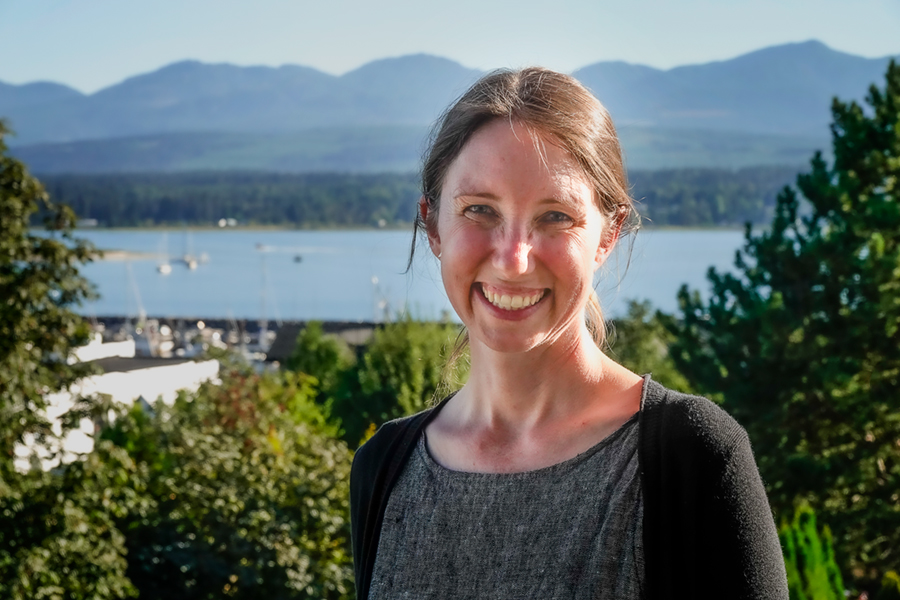
Jenn Meilleur has an insider’s view of how the government process works and years of experience in working collaboratively
Jenn Meilleur is seeking a first term on the Comox Town Council. She is a systems change and dialogue facilitator currently working as the Manager of Community Disaster Recovery with Emergency Management BC.
She has worked with and for local governments since 2010. She started as a Program Manager (Policy Analyst) with the City of Vancouver when it adopted The Greenest City Action Plan in 2010 to become the greenest city in the world.
Meilleur moved to Comox Valley with her husband and two children in the spring of 2019. She grew up in Qualicum and graduated from Vancouver Island University when it was still called Malaspina College.
Jenn has two decades of experience leading and supporting initiatives and collaborative networks in the fields of sustainability and climate action, community development, organizational development and systems change. And she is an active volunteer in her community
She is the Board Co-Chair for LUSH Valley Food Action Society, a member of the local Food Policy Council and a member of the Coordinating Circle for the Comox Valley Community Health Network. She helped found a nature-based elementary school program and supported the creation of the Atl’ka7tsem/Howe Sound UNESCO Biosphere Region in the Salish Sea as a board member.
Jenn finds her inspiration in nature with gratitude on the unceded lands and waters of the K’ómoks First Nation in Comox with her husband, two children and many “four-legged friends.” She enjoys trail running, wild swimming, cycling and creative knitting projects. She is devoted to lifelong learning and is also an avid bookworm.
Meilleur is running for council because she has heard our youth’s growing anxiety about climate change and feels accountable as a Gen-X-er to do what she can for future generations. She believes there is a groundswell of worry about climate change.
“I want to take better care of nature through collaboration with others,” she told Decafnation. “It’s about the emergency. Like Greta Thornberg says, ‘we know we have to do better.’ But how do we do that?”
The three pillars of Meilleur’s campaign are community, collaboration and climate change.
She has spent her career on sustainability issues in the co-op sector, within government and for nonprofits. Through social innovation, she says she has brought people together to solve complex issues.
“I have an inside view of how the government process works and a skill of working collaboratively,” she said.
She says that running for office is not about what one person can do, but rather it’s about how this particular group of people can collaborate and what they can accomplish together.
“I have resisted campaigning with promises,” she said. “The public wants politics to be different. Council work should be a relational process, not a linear path. I would stress collaboration within the council and find new ways to bring citizens into the process.”
Meilleur would also like to bring more art into the community. She says studies have shown that road murals calm traffic and reduce accidents.
As the previous regional coordinator for the Comox Valley Farm-to-School program, Meilleur brought together farmers, nonprofits, government staff and elected officials, and did this during the pandemic.
Working as a facilitator with the Community Health Network, Meilleur figured out how to bring all these diverse groups together to influence policy and make change. She organized and facilitated dialogue sessions and then captured stories that people shared.
Her campaign issues are affordable housing, climate change focus, local business, local food, reconciliation and creating equity for all people. And she believes that if people work collaboratively we can restore people’s faith in democracy.
A quote she particularly likes is from Lilla Watson about being interconnected: “If you have come here to help me, you are wasting your time. But if you have come because your liberation is bound up with mine, then let us work together.”
Meilleur recognizes the importance of affordable housing to the community and would focus her efforts to continue building momentum for solutions.
“I would take a look at why Comox opted out and chose to not work regionally on this issue,” she said. “I believe affordable housing needs to be both local and regional to be effective.”
She says there is lots of good work being done in this field. She notes that Saanich fast-tracked garden suites and created 800 new housing units in one year and that the CV Seniors Support Society has started a housing program to match students with seniors who want to age in place. There was a plan for a Comox task force, but it was never formed, she said.
“Society has the answers and others are doing it,” she said. “Affordable housing has to go beyond new developments.”
But, Meilleur says, we must recognize that solutions that work in bigger cities don’t always work here. “We have to scale things for our size.”
The important lesson she takes from the council motion to require developers to set aside a percentage of below-market-rate units in all new developments is that government needs to work directly with whoever is impacted most when creating new programs – in this case, the developers.
Also, she says, it’s not always the government’s role to do something and maybe it’s better for the community or other partners to do certain things. Government should discern where to create conditions that encourage affordable housing rather than do it themselves.
“We need to consider co-housing, co-op housing and the whole spectrum of possibilities. It’s a regional issue and a complex problem that needs all parties at the table,” she said.
Climate change is also at the top of Meilleur’s priorities.
“I think of climate action both as reducing greenhouse gases and as protecting and restoring the environment,” she said.
For example, she says the town’s tree canopy bylaw supports biodiversity but that it’s out of date. She would work to carefully incentivize developers to keep trees. Meilleur’s family has turned their boulevard into a pollinator garden with bee turf, wildflowers and perennials.
Meilleur’s current work is mostly with First Nations, helping them to recover from the floods last fall (the atmospheric river event in November). But she says climate change-focused actions are “not a ticky box.”
“Those principles must be integrated into everything. Comox would benefit from this same clarity in its strategic vision. There are lots of best practices out there to draw from. There are not many council decisions that wouldn’t benefit from a climate change lens,” she said.
Meilleur believes that local governments need to talk about making “regenerative” actions and policies.
“Our environment is too degraded now so putting it back the same is no longer good enough. It has to be better than before and I think people are starting to get that now,” she said.
Food security is another of Meilleur’s key issues. She believes that community food security can be improved with urban agriculture bylaws.
“Comox made a start but it needs to be more robust to allow hens and front yard greenhouses. We need to make it easy for people to grow food and share it with neighbors. This builds community resilience,” she said.
Meilleur understands that local governments are just finding their feet in regard to reconciliation efforts and that current systems aren’t designed to support First Nations or other equity deserving groups. She thinks she can contribute by using her collaboration skills.
Government-to-government relations are now a big part of every local government’s planning and that “creates a significant paradigm shift for everyone.”
“What I mean is that we aren’t fighting over pieces of a pie, we’re trying to make the pie bigger for everyone. And when we put Indigenous people and other historically marginalized people at the centre of our work, we all benefit,” she said.
The town will be reviewing its Official Community Plan during the next four years and Meilleur would like to be part of that process. The current OCP was updated in 2011.
“The existing document is not visionary. It needs to be more inspirational and account for climate action as Courtenay has done with their OCP,” she said. “Perhaps we should include a citizens’ assembly in the process to engage as many people as possible.”
And finally, Meilleur would do what she can to support local businesses.
“At any given time, there are only about three days of supplies that people need on Vancouver Island and we have already experienced supply chain disruptions from the pandemic and the atmospheric river in November of last year,” she said. “Any type of natural or climate disaster that cuts off those supplies will be serious. Therefore, we need to shorten the supply chain and make more of what we need on the Island.”
In some local governments, Meilleur sees a lack of urgency and clarity of vision. And she doesn’t think the current system and the way local governments often work were designed for the complex problems of today.
“The public sees that it’s not working. They want it to be better,” she said. “We have to learn to disagree better and how to be of service to our community and to these times. I am running to be of service.”
General Voting Day is Saturday, Oct. 15 for all local government positions.
Comox Valley Regional District
General Voting Day and advance voting take place at the CVRD building in Courtenay from 8 am to 8 pm.
Go to this link for General Voting Day locations in the three Electoral Areas.
Additional voting takes place on Oct. 6 from 9 am to 12 pm on Denman Island and on Oct. 6 from 2 pm to 5 pm on Hornby Island
Courtenay
Advance Voting begins on Wednesday October 5, 2022, 8 am to 8 pm at the Native Sons Hall, and again on Wednesday October 12, 2022, 8 am to 8 pm at the Florence Filberg Centre.
General Voting Day, Saturday, October 15, 2022, 8 am to 8 pm at the Queneesh Elementary School, and at the Florence Filberg Centre.
Comox
Advance voting begins Wednesday, October 5 from 8 a.m. – 8 p.m. at the Comox Community Centre, and on Saturday, October 8 from 10 a.m. – 2 p.m. at the Genoa Sail Building at Comox Marina, and again on Monday, October 10 from 10 a.m. – 2 p.m. at the Genoa Sail Building at Comox Marina, and on Wednesday, October 12 from 8 a.m. – 8 p.m. at the Comox Community Centre.
General Voting Day runs from 8 am to 8 pm on Oct. 15 at the Comox Community Centre.
Cumberland
All voting in the Village of Cumberland takes place from 8 am to 8 pm at the Cumberland Cultural Centre. Advance voting takes place on Oct. 5 and Oct. 12.
Newly-elected Courtenay Mayor Bob Wells has been elected to chair the Comox Valley Regional District board. Arzeena Hamir was elected as vice-chair.
A former Comox Valley resident who now lives in New Zealand, which uses the mixed-member version of proportional representation, answers three common arguments against voting in favor of electoral reform in BC
Chris Hilliar writes about ‘relational voting,’ which he learns is a simple concept – friends talking to friends. And without the individual’s participation democracy unravels.
No wood stove would pass a basic vehicle emissions test, yet the Comox Valley allows them to burn day and night, for weeks and months, with almost no regulation, polluting our air and posing serious public health risks
PR helps young people feel invested in politics Editor’s note: Katie Betanzo was raised in the Comox Valley and New Zealand. She’s a former editor of The Breezeway, the now defunct award-winning student newspaper at G.P. Vanier High School. Betanzo moved to New...
Regional District CAO Russell Dyson says a Human Rights Tribunal settlement agreement entered into by the CVRD and Kabel Atwall includes a clause that Area C Director Edwin Grieve did not make any racist comments
Will British Columbians embrace electoral reform? Comox Valley residents have already started voting in the referendum that ends on Nov. 30. Readers of Decafnation have been sending us their thoughts on electoral reform. Here are three of them ….
Will those of you who support Pro Rep, but have had other challenges on your plate, now join our grassroots effort to reach even more people about proportional representation? Come help us cross the finish line with arms held high in the air.
Imagine, if you will, elected officials from one party cooperating with the elected officials of another party in order to develop long-lasting legislative priorities that stand the test of time.
The anti-tax wave turned into a progressive tsunami in Courtenay; Long undercuts Jangula; 48% of Cumberland voters cast a ballot and a woman of color will contribute her world view to the regional district

Image found on the World Wide Web
We have to hand it to that vicious Big Money Gang that pooled their pocket change to launch some mean-spirited attack ads on social media. They took a page right out of Trumpville and tossed down some nasty smack, never mind that the ads made no sense – Reality check: nobody’s trying to defund the Comox Valley RCMP detachment! – these are just a handful of chickenshit middle school bullies who have more lunch money than you but want to steal your snacks anyway.
Well, they got the attention they wanted, but, like all angry people who feel entitled, they made themselves look like morons. That’s what happens when you abuse the privilege of free speech by spewing lies and misinformation and then hide behind anonymity.
Take Back Comox Valley was smart enough, however, to schedule their smear campaign before the official “campaign period” began on Sept. 17. Elections BC tells Decafnation that it received a complaint about the Take Back Comox Valley social media drivel several weeks ago, but the EBC determined the ads did not violate election advertising laws because they ran during the pre-campaign period (July 18 to Sept. 16). Mind boggling. Slapping them with a fine wouldn’t have made a difference anyway.
But here’s the interesting question, where do they think the Comox Valley went? And who do they want to Take it Back from?
Where did “their” Comox Valley go? It went away from them. Over the last two municipal elections, increased numbers of progressively-minded voters have elected progressively-minded people to the Valley’s councils and boards who had the gall, the audacity to start challenging the old way of doing things. And that pissed off the Big Money Gang. They lost their self-claimed right to control and now they want it back.
And what might they want do with that control? They apparently don’t want safer streets (17th Street), but they do want to pave more rural land. They don’t want affordable housing, they want to build more expensive single-family houses. They aren’t concerned about forcing future generations of local residents into enormous debt by extending infrastructure to service new subdivisions outside the urban boundaries, but they stamp their feet when the council has to maintain existing infrastructure (Fifth Street Bridge). And for God’s sake don’t get them started on climate change or social issues like public health orders, childcare or rainbow crosswalks because their heads will explode.
So who was it that took “their” Comox Valley? Well, it’s a safe bet it wasn’t the Village Council in Cumberland. That council has been almost pitch perfect with its community for quite some time, so it would have strong immunity to the advertisements’ violent denunciations. And it’s unlikely the Big Money Gang planned a hit on the Comox Town Council because until the last year the old guard has controlled that bunch of obstructionists through their council henchmen.
So it feels like the Big Money Gang has its crosshairs aimed squarely at the Courtenay City Council and the regional district directors in Areas A and B. These are three of the hotbeds that breed the progressive ideas that are moving the Comox Valley into the 21st Century, where forward-thinking people are planning for the serious and wide reaching adaptations necessary to accommodate our population growth, the changing employment environment, unrelenting social issues and our evolution into an era dominated by climate change.
The good news is that these progressive thinkers didn’t get elected by accident or mistake. They were chosen by an electorate that has itself become more progressive; to wit, climate change deniers are now the crazies on the fringe. In municipalities everywhere, progressive thinking has become the mainstream by necessity. Wildfires, floods and heat domes are forcing us to think and plan for the unthinkable, such as where our food comes from and how much water we have.
The mayor of Lytton has said that as a man in his 60s, he thought climate change was something the next generation had to worry about. “Now I’m the mayor of a town that doesn’t exist.”
And the even better news is that we the people have the ultimate weapon to keep the Big Money Gang from eating our lunch: a vote. If you don’t want the clock turned backwards on progress in the Comox Valley, then haul your ass out of the house and vote.
Decafnation got a big kick out of Courtenay council candidate Brennan Day trying to shrug off his trademark infringement – using the logos for the City of Courtenay and the province on a couple of his campaign signs – by saying in a Comox Valley Record article that he was doing it intentionally to get attention, which we have to say sounds like a lot of BS.
It appeared to us and many others that Day was trying to make his signs look more “official” while complaining about the cost of maintenance on the Fifth Street bridge and to improve safety conditions on 17th Street. Because without the logos and with just the word “misspent,” handwritten to look like graffiti, the sign looks like it came from a crackpot.
But that’s not the funny part. At the end of the article is a long quote from Day in which he admits he knew using the logos was wrong, but since he couldn’t find precise language in the city’s bylaws saying so, he did it anyway. And then he goes on to blame the city staff for not having a more clear bylaw. So, is it their fault he broke the law?
And, then in the most alarming statement ever, Day admits that he checked out the bylaws of other cities and found out that they clearly prohibit using city logos in campaign material.
What?!
He makes the effort to check the bylaws of other cities, where he learns they say no to using logos, but he doesn’t bother to pick up the phone and ask his own City Hall staff? Oh, that’s right, he doesn’t live in Courtenay. Still, it’s not a long distance call.
Well, anyway, Day wins our award for the Most Moronic Explanation That Turned Into a Giant Foot In The Mouth of the 2022 election campaign. So far.
In case you missed it, here’s the whole quote from the Record.
“To be fair, I did check into the municipal bylaws, and they are ambiguous as to the use (of city logos), or at least I couldn’t find it in my research, so I decided to try it. Obviously, they are covered up now… In a lot of other jurisdictions, they spell it out very clearly, that use of the city logos on campaign literature and advertising is not allowed. Courtenay seems that they are a little bit behind in their bylaws.”
Good grief.
Want to watch and hear some candidates answer questions in person? Here’s a few public events we know about:
Climate change will be the focus of an all-candidates forum for the mayor and council candidates in Courtenay. The event is at 6.30 pm on Tuesday, Oct. 4 in the North Island College theater. It has been organized by NIC nursing students and the Canadian Association of Nurses for the Environment. The public is also invited to submit questions.
The Comox Valley Chamber of Commerce has planned a “Meet and Greet” for all council, regional district and school board candidates from 5 pm to 7 pm on Tuesday, Sept. 27 at the Courtenay & District Museum.
There will be a forum for positions on the School District 71 Board of Trustees at 6:30 pm in the All Purpose Room at G.P. Vanier Secondary School. The event has been organized by the District Parent Advisory Council (DPAC), the Comox District Teachers’ Association (CDTA), and The Canadian Union of Public Employees Local 439 (CUPE). You can submit questions in advance.
General Voting Day is Saturday, Oct. 15 for all local government positions.
Comox Valley Regional District
General Voting Day (Saturday, Oct. 15) and advance voting (Wednesday Oct. 5 and Wednesday Oct. 12) take place at the CVRD building in Courtenay from 8 am to 8 pm.
Go to this link for General Voting Day locations in the three Electoral Areas.
Additional voting takes place on Oct. 6 from 9 am to 12 pm on Denman Island and on Oct. 6 from 2 pm to 5 pm on Hornby Island
Courtenay
Advance Voting begins on Wednesday October 5, 2022, 8 am to 8 pm at the Native Sons Hall, and again on Wednesday October 12, 2022, 8 am to 8 pm at the Florence Filberg Centre.
General Voting Day, Saturday, October 15, 2022, 8 am to 8 pm at the Queneesh Elementary School, and at the Florence Filberg Centre.
Comox
Advance voting begins Wednesday, October 5 from 8 a.m. – 8 p.m. at the Comox Community Centre, and on Saturday, October 8 from 10 a.m. – 2 p.m. at the Genoa Sail Building at Comox Marina, and again on Monday, October 10 from 10 a.m. – 2 p.m. at the Genoa Sail Building at Comox Marina, and on Wednesday, October 12 from 8 a.m. – 8 p.m. at the Comox Community Centre.
General Voting Day runs from 8 am to 8 pm on Oct. 15 at the Comox Community Centre.
Cumberland
All voting in the Village of Cumberland takes place from 8 am to 8 pm at the Cumberland Cultural Centre. Advance voting takes place on Oct. 5 and Oct. 12.
The page you requested could not be found. Try refining your search, or use the navigation above to locate the post.