BC forest march: Tell Premier Horgan to implement Old-Growth Review Panel advice

BC forest march: Tell Premier Horgan to implement Old-Growth Review Panel advice

Old-growth logging in the Caycuse region  |  Photo courtesy of the Anciet Forest Alliance

BC forest march: Tell Premier Horgan to implement Old-Growth Review Panel advice

By

About 100 people from Campbell River and Courtenay joined a province-wide
Forest March BC day of action on March 19 to call on Premier Horgan to honour his commitment to fully implement the recommendations of the Old Growth Review Panel.

The Review Panel found that since BC has allowed 97 percent of BC’s ancient forests to be logged, we are reaching a wide spread biodiversity crisis and we must make a fundamental change in the way we manage forests. The panel said it should be a prime mandate to protect ecosystems and to shift to sustainable second-growth forestry management with support for affected forestry workers.

Under the heading, “Immediate Response”, the Review Panel recommended that within six months, or “until a new strategy is implemented, defer development in old forests where ecosystems are at very high and near-term risk of irreversible biodiversity loss.”

But the six months have passed and BC Forestry Minister Conroy say the province has to keep logging Old Growth while the government puts management plans in place.

“It’s now or never” for old-growth forests

“But the whole point of the Panel’s recommendation to halt Old Growth logging was so there would be something left to protect under the new management plans,” Gillian Anderson told Decafnation. Anderson is the spokesperson for the Forest March organizing group.

The Union of B.C. Indian Chiefs has also called on the province to immediately defer logging in all threatened Old Growth forests and to implement all Panel recommendations.

But, despite these actions, the province has scheduled logging of Fairy Creek, the last unprotected watershed valley in southern Vancouver Island, and defenders who have endured months of winter on a blockade there now face possible arrest

The Review Panel also called for support for forest workers and Indigenous communities as they adapt from Old Growth logging to a sustainable second-growth forestry industry.

“The government is only just now working on these transition plans, yet John Horgan has had four years to put such recommended management plans into place after his pledge in 2017 to bring in sustainable forestry management,” Anderson said. “Instead he went on to log a million acres of old-growth forests even as BC lost six forestry jobs a day.”

Anderson added that Forest Minister Conroy’s much-vaunted ‘deferment’ of logging in 353,000 hectares turned out to be under closer scrutiny only 3800 hectares of actual at-risk Old Growth.

“Premier Horgan wants the credit for creating an Old Growth Review Panel and the credit for promising to abide by its recommendations – even as he continues to allow logging of the remnants of this once mighty ecosystem against the Panel’s specific and urgent recommendation,” she said.

Virtually none of the recommended funding has been dedicated for the transition to sustainable, second-growth forestry or for conservation set-asides.

Meanwhile, BC taxpayers continue to subsidize the forestry industry (cutting publicly owned trees including old growth) by $365 million annually, according to the Forest March BC Rally team. They say Old Growth forests are worth more standing than a one-time stumpage fee, as they support sustainable economic, cultural and recreational opportunities including fisheries, tourism, carbon offset projects and non-timber forest products.

Friday’s rally participants urged people to call the premier’s office to implement the Old Growth Review Panel recommendations for the immediate moratorium on Old Growth logging (250-387-1715 or premier@gov.bc.ca).

“With so little of B.C. iconic Ancient Forests left, it’s truly now or never,” Anderson said.


SUBSCRIBE TO OUR NEWSLETTER

Enter your email address to subscribe to the Decafnation newsletter.

More

Farmers: reject Merville water bottling operation

The Mid-Island Farmers Institute has asked the Comox Valley Regional District board to reject a water bottling facility on Sackville Road in Merville. And they want the regional district to ask the Ministry of Forestry, Land, Natural Resources, Operations and Rural Development to rescind the water licence granted to the Sackville Road property owners, Christopher MacKenzie and Regula Heynck.

Requiem for a Garry Oak prairie

The Comox Valley has lost a 6,000-year-old Garry Oak prairie … largely because Comox mayor, Town Council and staff either don’t care or are ignorant of Comox’s natural heritage, or are hell-bent on development vandalism.

Is Site C a Done Deal?

More than 150 people gathered at the K’omox First Nation Band Hall recently for a powerful inspiring evening of speakers who proved that the fight to save the Peace River Valley is far from over. Ken Boon, farmer and member of the Peace Valley Landowners Association and two other speakers explained why Site C is a boondoggle.

Water bottling project raises aquifer concerns

The B.C. government has approved a controversial groundwater licence for a water extraction and bottling operation on a two hectare property on Sackville Road in the Merville area. They did it despite a strong objection from the Comox Valley Regional District and without public consultation or regard for community concerns.

Comox Valley lags the world without ban on plastic bags

The Comox Valley uses and discards between 9,000 and 19,000 plastic shopping bags per day. While other Vancouver Island communities are following the worldwide movement to enact bans of the non-biodegradable bags, most Valley elected officials don’t seem interested.

Could Kus-kus-sum go coastal?

The importance of the planned restoration of the Fields Sawmill site may well go beyond repairing a blight on the Comox Valley’s image. It’s likely to influence the prospects of a coast-wide approach to replacing multiple forest industry eyesores with ecological assets.

Waste to energy discussion missed the GHG point

Prime Minister Justin Trudeau has committed Canada to aggressive reductions in our annual greenhouse gas emissions by 2030. It will take a coordinated national effort to get there, and that means small communities across the country, like the Comox Valley …

CVRD internal tension builds over waste to energy report

The tension between staff and elected officials of the Comox Strathcona Waste Management board (CSWM) ramped up another notch this week. The friction has increased since directors openly criticized Comox Valley Regional District staff at a full CSWM board …
Blowing smoke: Campaign to overturn wood stove bylaws called misleading, ineffective

Blowing smoke: Campaign to overturn wood stove bylaws called misleading, ineffective

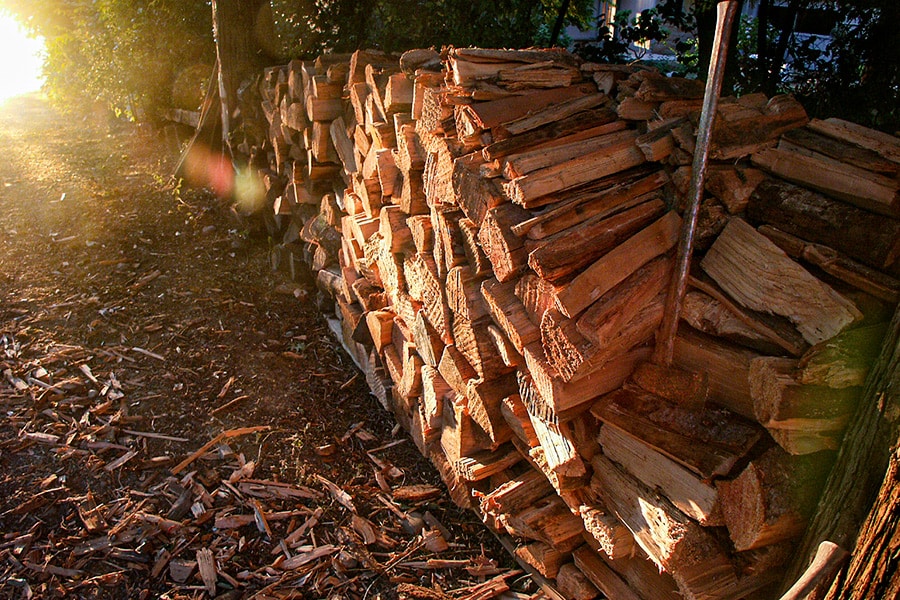
Burning wood has a romantic aura about it for some, but for others, the smoke causes multiple, serious health hazards  |  George Le Masurier photo

Blowing smoke: Campaign to overturn wood stove bylaws called misleading, ineffective

BY GEORGE LE MASURIER AND GAVIN MacRAE

This article has been updated.

The days when Comox Valley people burned wood for cooking and heating out of necessity have long gone. But the romantic notion of chopping and stacking firewood to burn in fireplaces and woodstoves over damp West Coast winters has lingered on in the Comox Valley. The Village of Cumberland even celebrates woodstove culture with an annual festival.

But what was once a means of survival is now regarded as a health hazard.

Smoke from wood stoves and fireplaces is the largest driver of the Comox Valley’s air pollution, creating winter air quality that is at times some of the worst in the province. Temperature inversions, the shape of the Comox Valley and periods of calm air in winter all contribute to the problem, according to the regional district.

And it is this resulting haze that is linked to a litany of health problems.

Ultrafine particles – called PM 2.5 – penetrate deep into lung tissue and can trigger heart attacks, strokes, worsen asthma, and diminish lung function. Long-term exposure to wood smoke can cause emphysema, Chronic Obstructive Pulmonary Disease (COPD) and chronic bronchitis, and heighten the risk of dementia and cancer.

“We are not going backwards” — Cumberland Mayor Leslie Baird

Children are particularly affected. The ultrafine particulates in wood smoke have been shown to lower birth weights, increase infant mortality and stunt lung development and function.

To cap this harmful pollution, Comox, Courtenay and Cumberland have all passed bylaws since 2018 banning wood stove installations in new homes. Courtenay and Comox bylaws go further, prohibiting wood stoves in renovations as well.

That’s raised the hackles of the Hearth Patio & Barbeque Association of Canada (HPBAC). The Ontario-based trade group, with members in the Comox Valley, recently launched a media campaign to have Comox Valley’s wood stove bans overturned.

On a new website and in radio and print advertising, the HPBAC says the bans unfairly prohibit residents from installing new “clean burning” wood stoves certified by the U.S. Environmental Protection Agency (EPA).

The “Overturn the Ban” campaign website also stresses the economy of wood heat, claims local wood stove businesses will “suffer unnecessarily” under a ban, and declares that “Burning wood is a way of life.”

The HPBAC did not respond to an interview request by the publication deadline.

Smoke from woodstoves is the top cause of poor air quality during Comox Valley winters | Ravi Pinisetti photo, Unsplash


A MISLEADING CAMPAIGN

Courtenay Mayor Bob Wells has called the woodstove industry’s campaign misleading.

“The majority of emails I’ve received from the public on this topic are from people who assume the City of Courtenay is banning all wood stoves, based on the ad campaign that’s been running in the Comox Valley,” Wells told Decafnation.

But in fact, Courtenay City Council has updated its Building Bylaw to prohibit the installation of wood stoves in new construction and requires a building permit to fix or replace an existing wood-burning appliance to ensure that the new appliance meets CSA standards.

“Council will not revisit this decision,” Wells said.

And he has requested the industry association to alter their campaign to remove the claim that local governments do not allow upgrades.

Cumberland Mayor Leslie Baird said the industry campaign to overturn the local bans on wood stoves in new construction “is not sending the right message to residents.”

“Each council (Courtenay, Comox and Cumberland) did their due diligence in making their decision,” she told Decafnation. “I am not reconsidering my position and I will not ask Council to reconsider our decision.”

Baird said Cumberland councillors listened to Public Health Officials about the adverse effects of woodsmoke, including the latest reports and studies on the cost to the BC healthcare system.

“How many years did it take for citizens to realize the effects of cigarettes on our health?” she said. “This is the same issue.”

Comox Mayor Russ Arnott refused to comment for this story.

Comox Valley Regional District Chair Jesse Ketler said that regional directors reviewed scientific studies and local air quality testing results before making their decision to offer rebates for replacing five-year-old or more woodstoves used for home heating with a cleaner fuel source, such as gas, pellet, propane or electric heat pump devices.

“As local government, we care about our airshed and have taken steps to reduce local air pollution. These are science-based decisions that are not likely to be reversed but could be improved with further input from our regional Airshed Roundtable,” Ketler said.


INDUSTRY CLAIMS REFUTED

“Newer wood stoves meet stringent EPA emission standards,” said the industry’s Overturn The Ban website, that fall “well within or below acceptable particulate emissions standards per hour.”

But that’s not so, according to a landmark report published in March by the Northeast States for Coordinated Air Use Management (NESCAUM), a coalition of eight U.S. state air quality regulators.

After auditing the EPA’s testing and certification regime and re-testing over 250 EPA-certified stoves, the Boston-based organization found a “systemic failure of the entire certification process, including EPA’s oversight and enforcement of its requirements.”

That failure means there is “no confidence” that new EPA-certified stoves spew fewer particulates than the old appliances they are replacing, the report said.

“The unavoidable conclusion of this report is that EPA’s certification program to ensure new wood heaters meet clean air requirements is dysfunctional,” the report reads. “It is easily manipulated by manufacturers and testing laboratories. EPA has done little to no oversight and enforcement.”

“It’s bigger than just paperwork issues,” said Lisa Rector, a policy and program director at NESCAUM and lead author of the report. “There were many things done during the testing to reduce emissions, some of it allowed but not as intended, and other things not allowed.”

To achieve EPA certification, wood-burning appliances move through a Byzantine process involving multiple third parties and potential conflicts of interest. Since instituting emissions standards, the EPA hasn’t conducted a single audit to verify certification results, the report said, in a period of over 30 years.

Now, Rector said states under NESCAUM’s guidance have to figure out how to adapt the policy to accommodate the EPA’s failings until the EPA fixes the problem, which could take years.

The report has direct implications for the Comox Valley: “At its core, EPA’s program as currently run allows the continued sale and installation of high-emitting devices… Once installed, these units will remain in use, emitting pollution for decades to come.”

CVRD is one of two in the province to exclude woodstoves from the BC exchange program | George Le Masurier photo


MONEY TO BURN?

Jennell Ellis, the spokesperson for the non-profit advocacy group Breathe Clean Air Comox Valley, considers the NESCAUM report’s findings significant enough to refer to as “Woodstovegate,” but said other claims by the HPBAC don’t stand up to scrutiny either.

Namely, that it is unfair to restrict wood stoves because they are an inexpensive source of heat for lower-income residents.

Ellis said that although wood heat is cheap for those getting free wood, in reality, the heat source exacts a dear price from neighbours, communities, and society at large.

“In lower-income neighbourhoods, everyone is breathing the air, while only those who get free wood benefit,” she said.

Health Canada estimates air pollution causes 1,900 premature deaths in BC every year, while total health costs in Canada are pegged at $120 billion annually.

Education campaigns on wood seasoning and best burning practices are no panacea either, Ellis said, because some people refuse to change behaviours and because enforcement is difficult and shouldn’t fall on municipalities anyway.

“In order to get a clean-burning wood device, there are four things you need,” said Rector. “Good technology, good fuel, good installation, good operating practices. Modify any one of those – bad fuel, poor operation, bad technology, bad installation – will turn a device into a high emitting device.”


STOVE EXCHANGE PROGRAMS INEFFECTIVE

Finally, the NESCAUM study adds to a body of evidence calling into question the wisdom of subsidizing the change-out of old wood stoves for new ones.

In BC, an exchange program funded by the province and municipalities, and administered by the BC Lung Association, offers rebates for households upgrading from an old wood stove to a pellet stove, natural gas, propane, or electric heat pump. In most jurisdictions, the cost of new, EPA-certified wood stoves is also subsidized by $250-$500.

The Comox Valley Regional District and Sunshine Coast Regional District are the first in BC to exclude replacement wood stoves from the program.

“[The BC Lung Association] think it’s a form of harm reduction,” Ellis said. “We’re lobbying them and trying to convince them that it’s like telling people to smoke light cigarettes.”

A 2015 evaluation of BC’s Woodstove Exchange Program, covering 2008-2014 and commissioned by the Ministry of Environment, found, “there has not yet been a clear reduction in fine particulate matter pollution coming from residential wood stoves in BC.”

The evaluation speculates part of the lingering pollution could be due to a simultaneous increase in the number of households adopting wood heat but concedes poor wood-burning practices persisted despite a “significant effort” in education and outreach to teach clean-burning practices.

Another case study comes from Libby, Montana. The city of nearly 2,800 had over 1,200 non-EPA-certified wood stoves changed out for new units from 2005 to 2008. This was expected to lower the particulate emissions from wood stoves in the town by over three-quarters, but studies later showed an emissions drop of less than a third.


LOCAL GOVERNMENTS ARE RESOLUTE

The Hearth, Patio and Barbecue Association appears to be fighting a losing battle. Local government leaders say the industry’s Overturn the Ban campaign hasn’t changed their minds.

Cumberland Mayor Baird said she has “no idea why they have chosen the Comox Valley to launch their campaign. We joined with the Comox Valley Regional District as did Courtenay and Comox to improve the air quality in our areas.”

“We are not going backwards,” she said.

CVRD Chair Ketler and Courtenay Mayor Wells both think the industry has targeted the Comox Valley because all three municipalities have created new bylaws that limit the use of wood stoves in new construction and they fear the precedent this sets for other BC municipalities.

This article was a journalistic collaboration between the Watershed Sentinel and Decafnation


SUBSCRIBE TO OUR NEWSLETTER

Enter your email address to subscribe to the Decafnation newsletter.

More

Farmers: reject Merville water bottling operation

The Mid-Island Farmers Institute has asked the Comox Valley Regional District board to reject a water bottling facility on Sackville Road in Merville. And they want the regional district to ask the Ministry of Forestry, Land, Natural Resources, Operations and Rural Development to rescind the water licence granted to the Sackville Road property owners, Christopher MacKenzie and Regula Heynck.

Requiem for a Garry Oak prairie

The Comox Valley has lost a 6,000-year-old Garry Oak prairie … largely because Comox mayor, Town Council and staff either don’t care or are ignorant of Comox’s natural heritage, or are hell-bent on development vandalism.

Is Site C a Done Deal?

More than 150 people gathered at the K’omox First Nation Band Hall recently for a powerful inspiring evening of speakers who proved that the fight to save the Peace River Valley is far from over. Ken Boon, farmer and member of the Peace Valley Landowners Association and two other speakers explained why Site C is a boondoggle.

Water bottling project raises aquifer concerns

The B.C. government has approved a controversial groundwater licence for a water extraction and bottling operation on a two hectare property on Sackville Road in the Merville area. They did it despite a strong objection from the Comox Valley Regional District and without public consultation or regard for community concerns.

Comox Valley lags the world without ban on plastic bags

The Comox Valley uses and discards between 9,000 and 19,000 plastic shopping bags per day. While other Vancouver Island communities are following the worldwide movement to enact bans of the non-biodegradable bags, most Valley elected officials don’t seem interested.

Could Kus-kus-sum go coastal?

The importance of the planned restoration of the Fields Sawmill site may well go beyond repairing a blight on the Comox Valley’s image. It’s likely to influence the prospects of a coast-wide approach to replacing multiple forest industry eyesores with ecological assets.

Waste to energy discussion missed the GHG point

Prime Minister Justin Trudeau has committed Canada to aggressive reductions in our annual greenhouse gas emissions by 2030. It will take a coordinated national effort to get there, and that means small communities across the country, like the Comox Valley …

CVRD internal tension builds over waste to energy report

The tension between staff and elected officials of the Comox Strathcona Waste Management board (CSWM) ramped up another notch this week. The friction has increased since directors openly criticized Comox Valley Regional District staff at a full CSWM board …

The Week: Doing it right on the wrong side of town, CVRD gets a good result for wrong reasons

The Week: Doing it right on the wrong side of town, CVRD gets a good result for wrong reasons

The Week: Doing it right on the wrong side of town, CVRD gets a good result for wrong reasons

By

As voters and taxpayers, we hope our elected officials always do the right thing for the right reasons.

The Comox Valley Regional District did the right thing last week by terminating its contract with the Comox Valley Economic Development Society (CVEDS). But they did it for the wrong reasons.

The Economic Development Society was a poorly run service that clothed itself in secrecy, reported to no one but a few self-appointed friends and spent a lot of money for questionable community benefit. And in doing so, the society managed to disappoint, frustrate and antagonize broad sectors of the Comox Valley community.

That was the right reason to terminate this contract.

Hornby and Denman islands and the Village of Cumberland pulled their financial support for the CVEDS service many years ago because those taxpaying elected officials realized how little value they were getting for their money.

Regional directors from Courtenay and Areas A and B might have gotten there, too, but they were making a good faith effort to transform CVEDS into a modern and more relevant organization through — for the first time ever — serious oversight.

But the CVEDS contract was not terminated for its obvious lack of performance. It wasn’t terminated because it had lost its way many years ago by spending almost a third of its budget on a seafood festival that added nothing to the economic sustainability of local businesses beyond a slight uptick in restaurant reservations.

The society’s contract wasn’t terminated because it often claimed responsibility for things on which it actually had minimal impact. It wasn’t terminated because the society shunned accountability or that it failed to comply with requirements under the Societies Act. Or that it had trouble managing its money.

No, the regional district terminated the CVEDS contract because Comox council members objected to increased oversight and scrutiny. Comox councillors didn’t like the regional board setting goals for the society that targeted current problems, such as affordable housing for low-wage employees and familys’ access to child care.

Comox Councillor Ken Grant summed it up when he lectured Courtenay Councillor Wendy Morin about how elected officials should manage arms-length societies.

“That’s the thing about the independent governance model, you don’t get to tell them how to do their business. That’s been the problem from day one,” Grant said at the Feb. 9 regional board meeting.

Grant couldn’t have been more wrong.

When a local government creates an organization — as the regional district did by forming CVEDS in 1988 — that exists only because it receives more than $1 million in public funds annually, then the elected officials absolutely get to say what they want for their money. In fact, taxpayers expect their elected officials to set the big picture goals and to hold people accountable for achieving them.

Grant was right about one thing. The independent governance model has been the problem from day one. Day one being back in 1988. Since then the society has happily taken the public’s $1 million-plus every year and did whatever it wanted with the money. Past elected officials didn’t seem to care what they did.

What is truly amazing is that this bad example of political oversight took so long to blow up.


But don’t celebrate just yet

Just because the contract for economic development services gets voided later this year doesn’t mean Comox Valley taxpayers are off the hook.

The regional district wrote CVEDS a $400,000 check in January. That’s one-half of its 2021 funding. The expectation is that the society will continue to fulfil the majority of their 2021 work plan items, including the ones the Town of Comox finds so distasteful.

But, of course, the regional district has no means of ensuring that all or even most of the work will get done satisfactorily. What recourse does the CVRD have? The contract will terminate on Aug. 26 whether the work gets done or not.

The second half of the $800,000 CVEDS 2021 budget is scheduled for July. Will they automatically get another $400,000 for their last two months? Not necessarily, according to CVRD Chief Administration Officer Russell Dyson.

“CVEDS has various commitments in place to deliver services for economic development, tourism and visitors services, and destination marketing. The termination notice provides service to CVEDS for eight of the 12 months in 2021, therefore the second payment for 2021 will consider any adjustments to annual allocation for this adjustment, noting that some costs are annual whether the contract is terminated part way through the year,” he told Decafnation via email.

Dyson confirmed that the regional district would not be responsible for any severance pay for CVEDS employees because they are not CVRD employees.

But Comox Valley taxpayers might become responsible for the Visitors Centre, which some people call the “drum” building and others call the White Elephant.

According to Dyson, “Upon the wind up of CVEDS, the net assets after payment of liabilities is transferred to CVRD and the participant member municipalities. The ongoing ownership and operation of the Visitors Centre will be a key consideration of the service participants in determining future service priorities.”

Dyson says the CVRD and municipal partners will be meeting and working with CVEDS staff the next few months to “encourage” that the work plan priorities are delivered and to encourage a smooth transition to a future service delivery determined through the service review.

“The second payment amount will be determined through this collaborative work over the next few months,” he said.


So what will rise from the ashes of CVEDS?

How will local governments provide destination marketing, handle visitor services, manage the hotel tax money and encourage economic vibrancy?

Given that Cumberland and the islands are doing just fine managing their own economic prosperity in-house — as most other communities on Vancouver Island already do — the ideal scenario now is that Courtenay and Comox will hire their own economic development officers.

The CVRD should also hire an economic officer to focus on the three electoral areas because it’s too easy for the rural areas’ needs to be overshadowed by the municipalities. They may all feel strongly about food security, but there are different projects that need to take place in different areas.

Then all four of the Valley’s economic development officers can meet monthly to share information and work together where it’s possible.

Meanwhile, all local governments should agree to share the contract for destination marketing and visitor services to Tourism Vancouver Island (about $260,000 per year). The City of Courtenay economic development officer should have input to Tourism Vancouver Island about how local MRDT funds are spent because all of that money comes from the city.


Every community’s needs will evolve over time

But no matter how our elected officials propose to meet those needs, they must always favour transparency and accountability and ensure their objectives are being met without favouritism and for the benefit of the greatest number of people.


SUBSCRIBE TO OUR NEWSLETTER

Enter your email address to subscribe to the Decafnation newsletter.

More
The Week: The heart of our survey is in the comments, not the hard numerical data

The Week: The heart of our survey is in the comments, not the hard numerical data

Are local government satisfaction ratings rising or falling in the Comox Valley? It depends on where you live  |  George Le Masurier photo

The Week: The heart of our survey is in the comments, not the hard numerical data

By

We published the results of our Local Government Performance Review this week and it created lots of buzz for those who follow local politics. Most people don’t, of course, unless the politicians do something to tick them off, like raise taxes, or do something really good, like reduce taxes.

The majority of people only get excited about local politics when an election comes around. So, being closer to the next election than the last one, we wondered how satisfied people were with their elected officials.

And, boy, did they tell us. It would be an understatement to say there were a lot of strong opinions expressed in the survey comments.

But here’s something to keep in mind about this survey. It wasn’t a random sampling of the Comox Valley population, at least not in the sense of a poll by Agnus Reid or Gallup.

If it had been, then our sample size of 314 respondents would have had a 4.65 percent margin of error with 90 percent probability that the sample accurately reflected the attitudes of the whole Comox Valley.

But we broke our survey down so that only people who identified as voting in Courtenay, for example, could rate their level of satisfaction with city councillors. It was the same for all jurisdictions.

And the respondents to our survey self-selected to participate. Many, perhaps most, may be regular Decafnation readers, although the sample was only a percentage of our subscriber base.

So the Local Government Performance Review was designed to be qualitative research, not quantitative. It was meant to describe the reasoning and motivations behind respondents satisfaction ratings, rather predict anything based on the hard numerical data.

So do not look at this survey and conclude that if an election were held tomorrow, Daniel Arbour would get 89 percent of the vote in Area A or that only 24 percent of voters in Comox would choose Russ Arnott for mayor.

But the survey does highlight the difference in attitudes between jurisdictions, and here the numbers and the comments intersect.

Most respondents in Courtenay and Areas A and B like how their elected officials have performed and the comments explain why. Respondents were not happy in Comox or Area C and here the comments were even more pointed and passionate.

By reading the comments, you gain an understanding of why the respondents approved or disapproved of their local government and politicians.

The last civic election in 2018 brought transformative change to the Comox Valley when voters elected more progressive-mined people in Courtenay and Electoral Areas A and B. This altered the conversation in those areas and, as a result, also at the important regional district board table.

And so far, at least, there’s an indication that this survey’s respondents are satisfied with that.


A farmer who leases some of the Courtenay Flats from Duck Unlimited fears that an expansion of the Highway 19A bypass will negatively impact his roadside farm stand business. Nobody wants to choose between farmland and more roads.

But the possibility of widening the highway bypass shouldn’t surprise anyone. It was planned decades ago.

The City of Courtenay and the Ministry of Transportation have been seeking a solution to growing congestion at the 17th Street bridge. Two years ago, a consultant working with the city on its Transportation Master Plan, suggested a bridge at 21st Street and set off fire alarms in diverse segments of the community.

A bridge at that location would have cut through the heart of the Courtenay Airpark and forced the facility to close. It would have connected on the other side of the river into the heart of the Kus-kus-sum and derailed a joint city and KFN reconciliation project.

The city never intended a bridge at 21st and deleted the overreaching consultant’s bad idea. But a serious conversation ensued about a third crossing and the city’s limited options and alternatives.

Among the most promising short-term solutions was raised by Dan Bowen, a former Highways Ministry employee.

The primary problem, he said then, is that there are two northbound lanes of traffic approaching the bridge from the south on Cliffe Avenue and two lanes on the bridge. But whether you turn north or south, you have to merge down to one lane.

It’s the same approach to the bridge from the north on the Island Highway bypass, which is two lanes at Superstore, but merges down to one lane at the bridge.

Bowen believes there should be four lanes of traffic approaching the 17th Street bridge, across the bridge and then all the way to the Shell gas station at the old Island Highway and also part way toward Comox.

The long-term solution, he said, is to twin the 17th Street bridge. The highways ministry purchased extra land on the northside of 17th Street east of Cliffe Avenue to anticipate a widened bridge. That land looks like a park with cherry trees.

The ministry also designed the bypass for four lanes, which is why the shoulders are extra wide through the S-turns.

We don’t know what the ministry surveyors were doing when they alarmed the Courtenay Flats farmer, but it’s possible they were gathering new data about expanding the bypass into four lanes.

As Bowen said, that was the plan from the beginning but the province opted for a half-measure. It should have put four lanes in right away. It would have been less expensive in the long run and farmers and farm stands could have developed as they did, just in a slightly different location.


Anyone else a little disturbed that the U.S. is vaccinating about 1.7 million people per day while nearly three months after vaccines became available, Canada still hasn’t vaccinated that many in total?

And Canadians can’t tell whether the Trudeau government screwed up its negotiations for vaccine supplies or if the drug companies screwed us because Ottawa has kept the deal a secret.


SUBSCRIBE TO OUR NEWSLETTER

Enter your email address to subscribe to the Decafnation newsletter.

More

The Week: bizarre backstory; great news on sewage planning

Good morning. We’re writing about the tragic backstory of a water valve, the state of happiness in Comox, new (and thankfully) long-term sewerage plans and the strength of women like Jody Wilson-Raybould speaking truth to power

School Board Comments

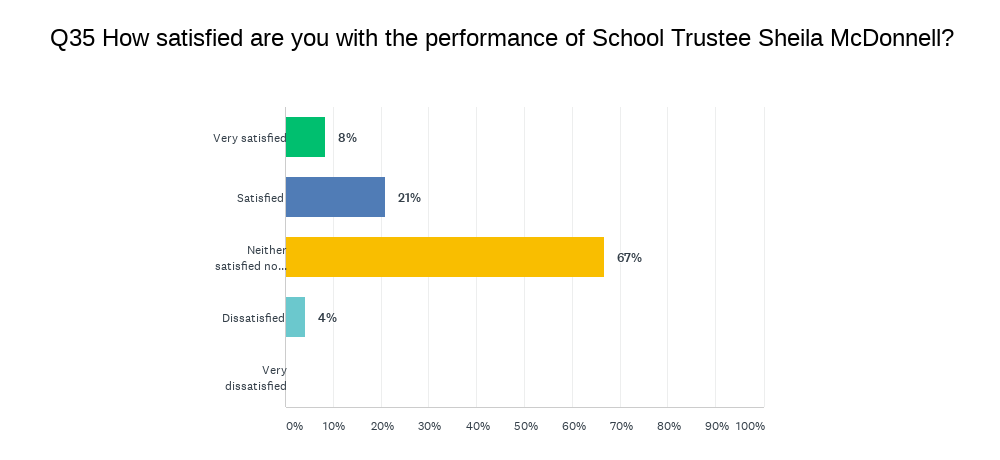
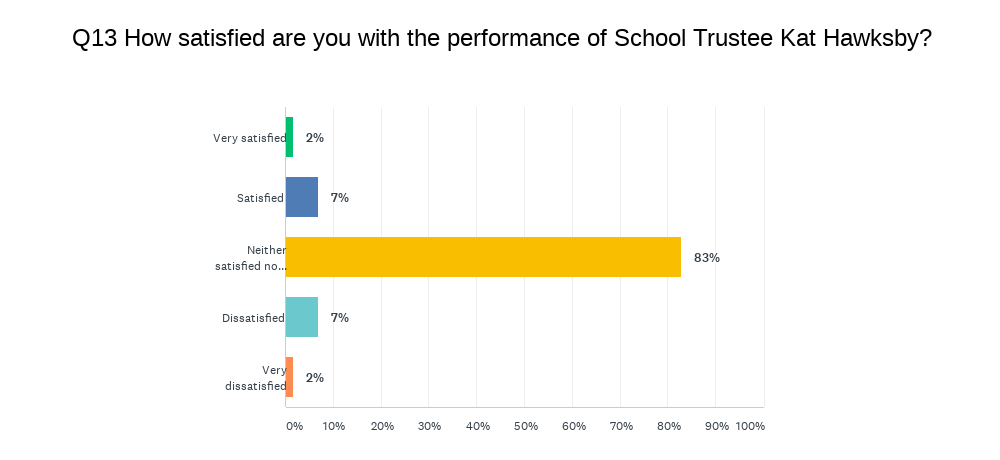
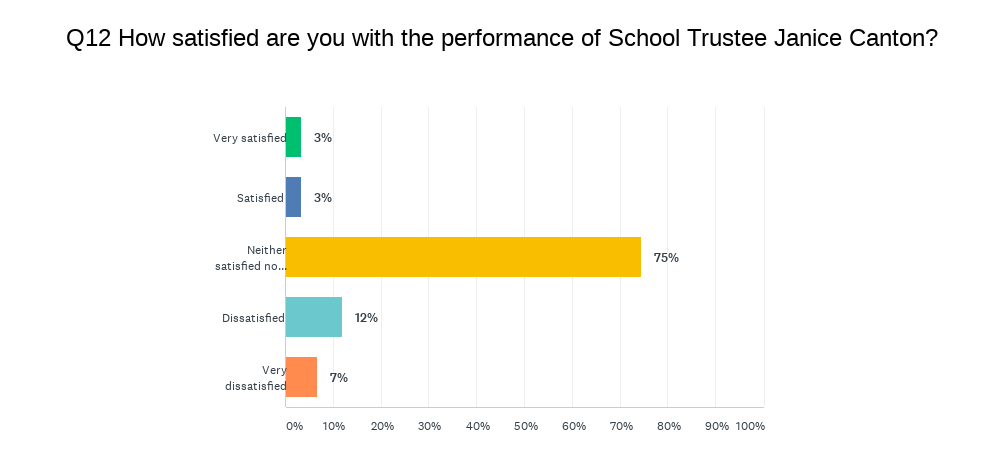
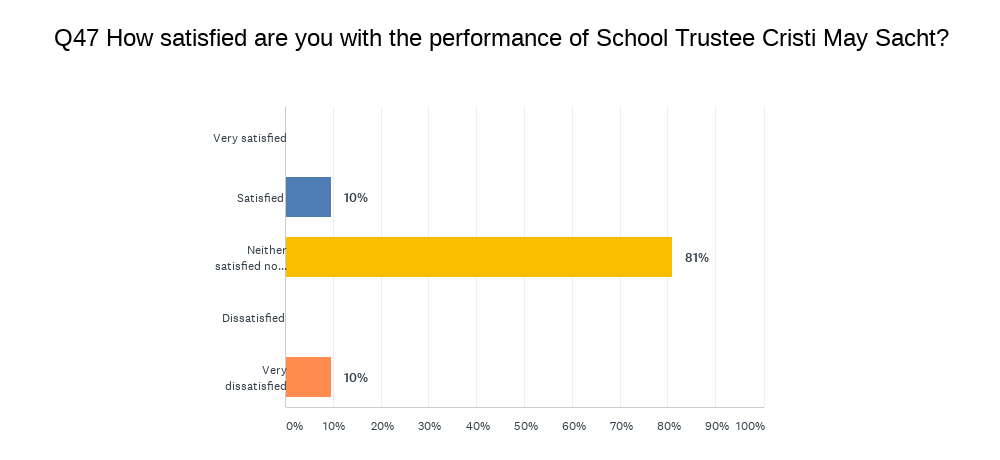
These are the written comments made about District 71 school trustees by the respondents in Decafnation’s Local Government Performance Review from each trustee’s jurisdiction. Comments that breached our journalistic standards have been eliminated. All other comments appear as entered into the online survey platform. Click on each image to enlarge the view.

Sheila McDonnell — Area A

No knowledge

Not sure what she has done for us.

Sheila has been very receptive to feedback and concerns about the School Board processes.

I don’t know much about this, but I think teachers and support staff should be on a priority list for COVID vaccines. They are in the US and UK. This might make other demands for more teaching staff, more classrooms, more distancing, masks, etc. unnecessary.

Not had any dealings with her. Have never seen any of her work

Not familiar with her.

All our Valley grandkids are in university now, but so long’s the Denman grade school is kept open (occasionally the province has threatened to shut it down because, in BC Liberalese, it has been deemed “inefficient”) I’m satisfied.No kids in school so not an interest.

Do not know

I have no knowledge of her work as we have no children of school age

Haven’t been watching to be honest

I do not have children is school anymore so have no dealings with Sheila. Anyone to take public office I give them kudos.

No real contact

No idea what she’s up to.

Kat Hawksby — Courtenay

Never hear from or about her.

I have no info to judge.

Not familiar.

Don’t follow

I have heard very little about the school board considering that they are juggling Covid.

Unknown to me

Don’t know enough to comment.

Sarah Jane Howe — Cumberland

Straightforward and caring. Engaged and connected with our school community.

Janice Canton — Courtenay

School trustees too quiet and leave overall policy and direction in the hands of senior management. Not enough checks and balances, minimal decisions in their votes. Too busy listening to ‘good news stories’ that pad senior management egos. Not enough attention to actual community needs and the inadequacies of provincial funding and the future of public education and overall community-based supports to reflect strong communities.

I don’t have children in the school district so I’m not really aware of her performance.

Divisive!

Have not been following the actions of School Trustees.

Janice who?

Some concern about what language she wants to include in the updating of the school district bullying and inclusion policy change that has been proposed.

I have no info to judge.

Not good the tons of money spent on teachers and new school add ons

Not familiar.

Don’t follow

I have heard very little about the school board considering that they are juggling Covid.

unknown to me

Don’t know enough.

I don’t pay attention to school issues.

Cristi May Sacht — Area C

Too early to say

She’s only been there for a few weeks and has no track record. See my comment above about ‘Green’ rural directors and then multiply it even more for school trustees.

Dont follow school issues… too damn old.

Who? All-female school board?

She hasn’t been in this position long enough to assess…

Don’t know enough to rate May

I don’t have any children in the school system (never have) so I don’t pay any attention to school trustees.

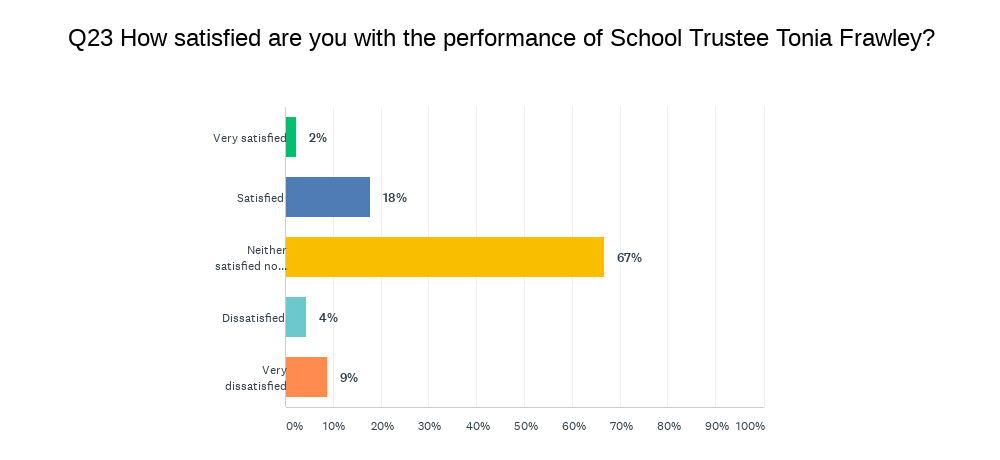
Tonia Frawley — Comox

Tonia Frawley tries to be somewhat progressive but has difficulty garnering a collective consensus among her fellow trustees.

Cannot comment as do not have any dealings with the school board.

Not enough experience or interaction for me

School boards and trustees are redundant and should be disbanded.

Nice person but not a good source of information.

She is ineffective and barely comes to PAC meetings.

She has done absolutely nothing for Comox students…she’s no advocate for students or for increased funding to public ed.

She doesn’t answer parent emails. Comes unprepared to PAC meetings and is generally mute when questioned about anything.

I know nothing about her.

Not even aware she exists

I ‘m afraid I don’t enough about how she stands on School Board issues.

Michelle Waite — Area B

The school district does a poor job of getting its news and information to the public. Sometimes this feels intentional.

No idea how that is going

Again, no information reaching us.

I am uninformed.

Don’t follow her.

Unaware of her

Don’t have much information regarding issues relating to schools.

I don’t know enough about her to comment.

Invisible