The pressure mounts on Comox
With new organizations and high-profile individuals joining the movement to preserve the waterfront home of internationally known naturalist and Town of Comox benefactor Hamilton Mack Laing, there are rumors that some Comox Council members might reconsider the town’s plan to demolish the house, known as Shakesides.
Robert Bateman, Canada’s most famous naturalist and painter, is the latest individual to support saving Shakesides.
In a March 23 message to town officials, Bateman wrote, “I have spent my life since the 1960s battling to hold back the destruction of our human and natural heritage … it is your job to protect this property and honour the wishes of its owner ….”
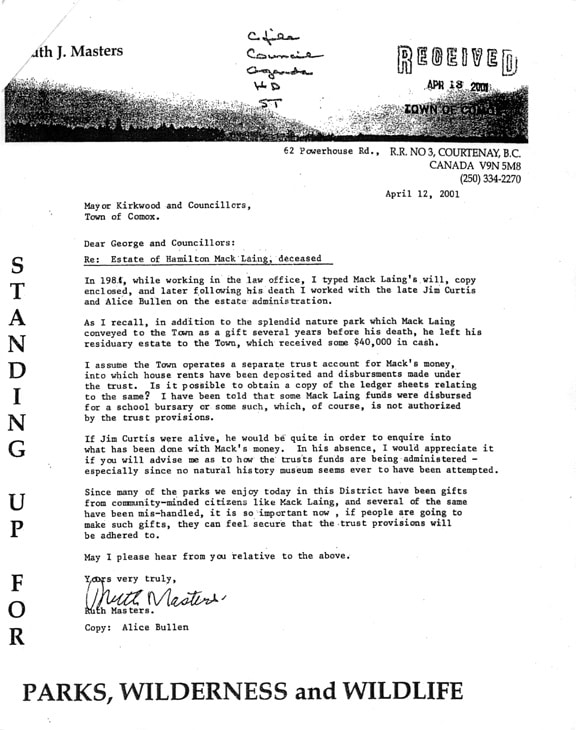
Laing, who died in 1982 at the age of 99, gave his waterfront property, his home, substantial cash and personal papers from his estate to the Town of Comox “for the improvement and development of my home as a natural history museum.” The town accepted the money and, therefore, the terms of the trust.
But 35 years later, the Town of Comox has done little to satisfy his last wishes and apparently mishandled the Laing trust funds. The current Town Council has voted twice to demolish Shakesides, raising serious ethical and legal questions. The demolition was stopped in 2016 by the B.C. Attorney General.
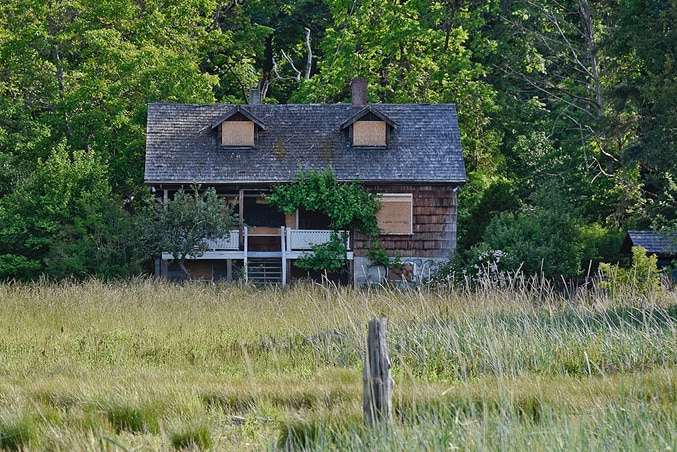
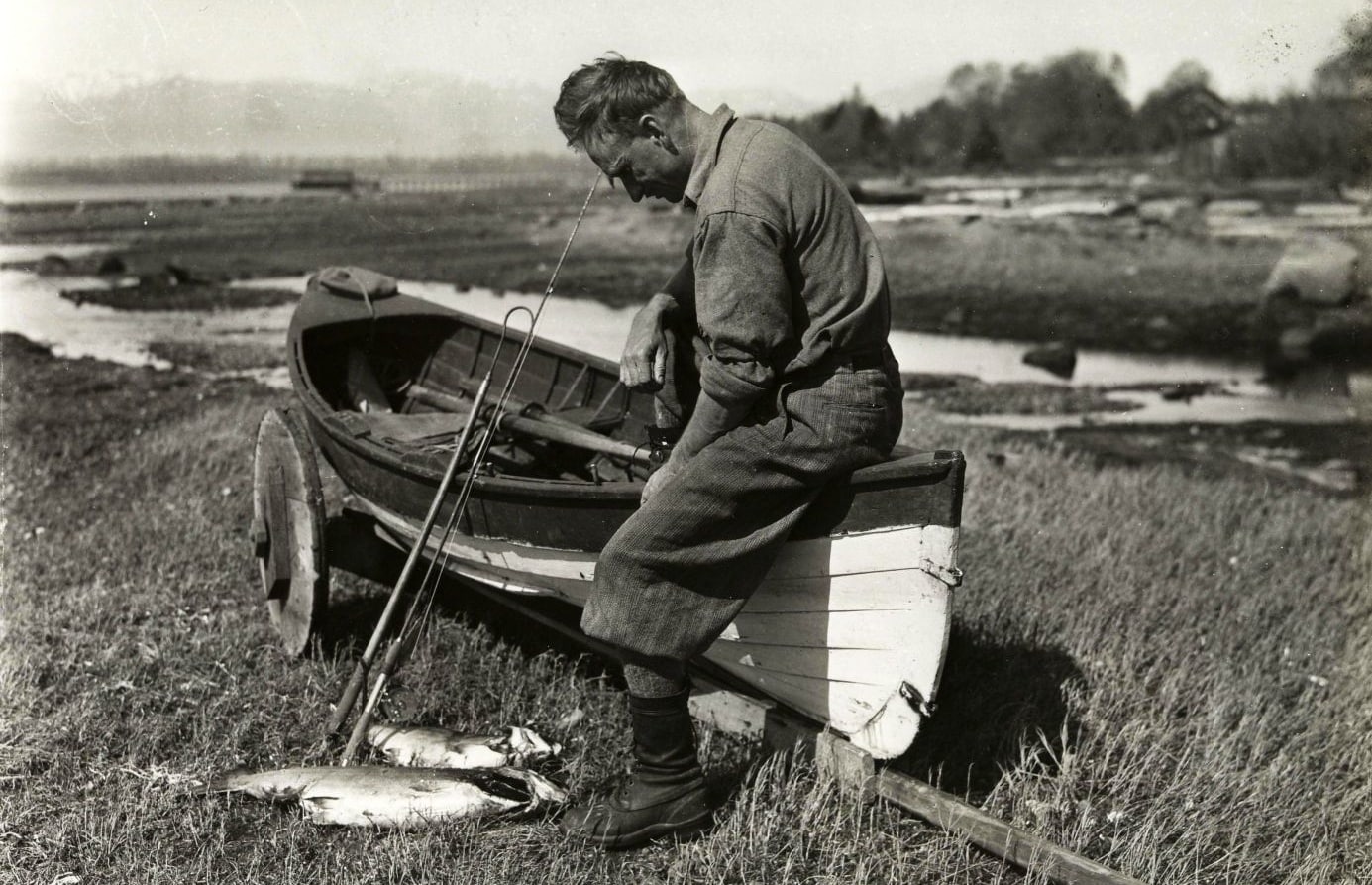
Top Photo: Laing with spring salmon, April 26, 1929. Above: Shakesides today
Comox Council voted unanimously in February to ask the B.C. Supreme Court to release the town from its obligations under the terms of Laing’s trust, which required it to use 25 percent of his money to develop a natural history museum in Shakesides and to invest the other 75 percent to fund ongoing operations.
But at least three Comox Valley groups plan to seek intervenor status in opposition to the town’s application.
The latest to join the movement is the Comox Valley Naturalists Society, commonly know as Comox Valley Nature. In a letter to the Provincial Ministry of Justice, the group asks for a 12-month to 18-month freeze on demolition so it can work with “Heritage B.C. and the National Trust of Canada to prepare a heritage management plan.”
It also requests an independent forensic audit of the town’s handling of the trust’s money. Documents collected by other intervenors show the town spent trust money on improvements outside the park, and that none of the investment income was spent in accordance with the terms of the trust until the early 2000s. The more than $100,000 in rental income from Shakesides was funneled into the town’s general ledger.
Comox Valley Nature also asks the Attorney General to remove Mack Laing Park property, including the Shakesides house, and the trust funds from the town, and place them “in more trustworthy and capable hands.” The group intends to create a consortium of community and provincial groups to take responsibility for the house and park.
Besides Comox Valley Nature, support for Shakesides has also come from B.C. Nature, Heritage B.C., the Comox Valley Conservation Strategy Partnership, Project Watershed and dozens of well-known individuals, including Bateman, author Robert Mackie and columnist Stephen Hume.
This mounting support has at least one council member questioning whether the town should proceed with its Supreme Court application, which could cost more than $100,000. If council was permitted to proceed with demolition, taxpayers would pay an estimated $250,000 in legal costs, demolition and remediation of the site into a viewing platform.
Surely other council members are also wondering if it might create more goodwill and community cohesion to direct that amount toward living up to the terms of Laing’s trust.
An unfavorable Supreme Court decision could be even costlier for Comox taxpayers.
Comox resident Gord Olsen commissioned an independent analysis of the Laing trust by Kent Moeller, CPA, of Moeller Matthews in Campbell River. It showed the trust fund could be worth $481,548 today. He used figures released by the town and conservatively calculated interest rates and added in the investment of rental income.
Moeller’s analysis suggests that if the town had immediately invested all of Laing’s bequeathed cash plus the rental income, it would have nearly a half-million dollars in the trust fund.
Laing left the town about $60,000 in 1942 (note: the price of a newly built similar-sized home in Courtenay in 1982 sold for about $50,000).
According to Bunker Killam, who rented the house, and Richard Mackie who lived there after Laing died to sort and organize his personal papers and belongings, Shakesides was in good condition at the time the town took possession. A nationally recognized heritage consulting firm recently examined the house and determined it is still structurally sound, and are prepared to write a conservation strategy.
No date has been set for the town’s court application to modify the terms of Laing’s trust. Comox Council should recognize this as a grace period to reconsider their decision and save a public relations disaster with just over a year before the next municipal elections.