
New candidates trying unseat Courtenay City Council incumbents claim the city’s property taxes are too high. But province-wide data shows that the city’s tax burden is the same or lower than same-sized municipalities. And City Council is leading the province with innovative fiscal policies
Herring fishery hurts bi-national orca recovery efforts
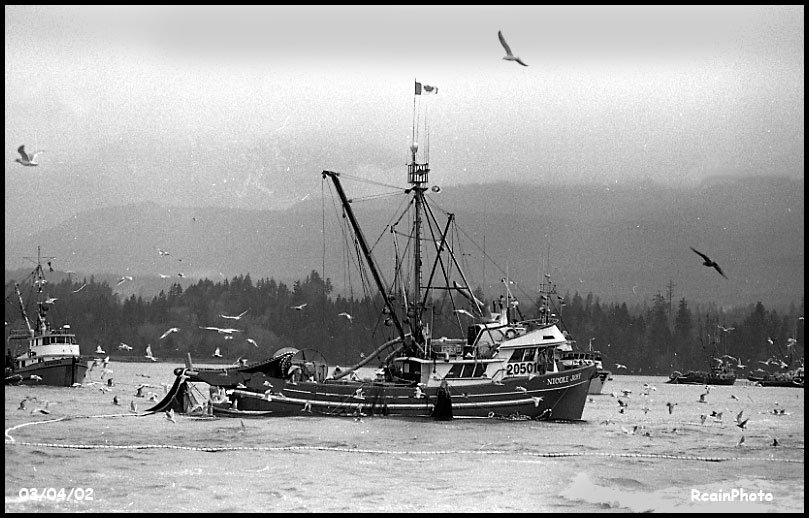
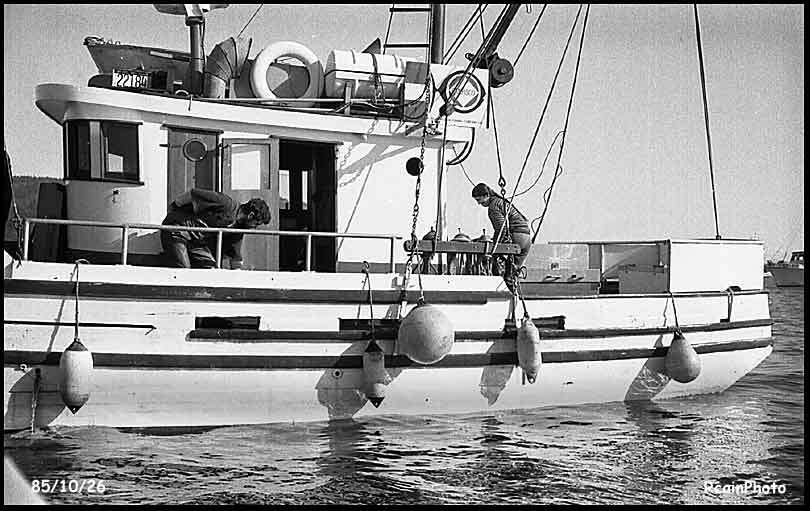
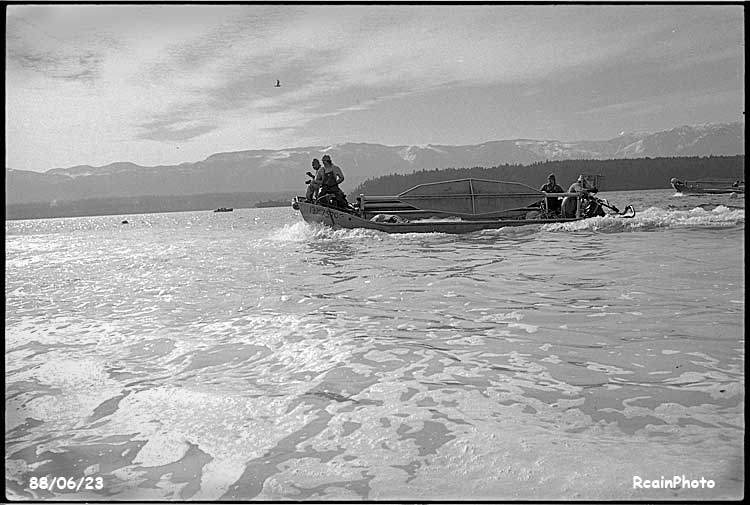
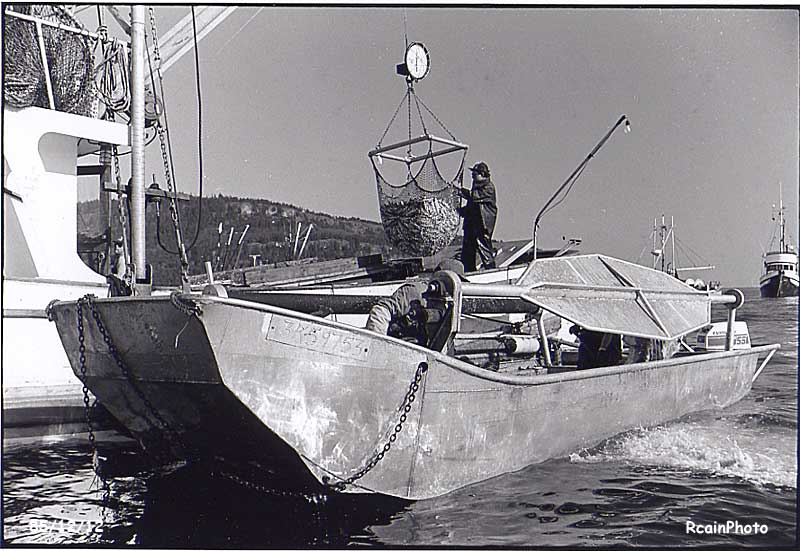
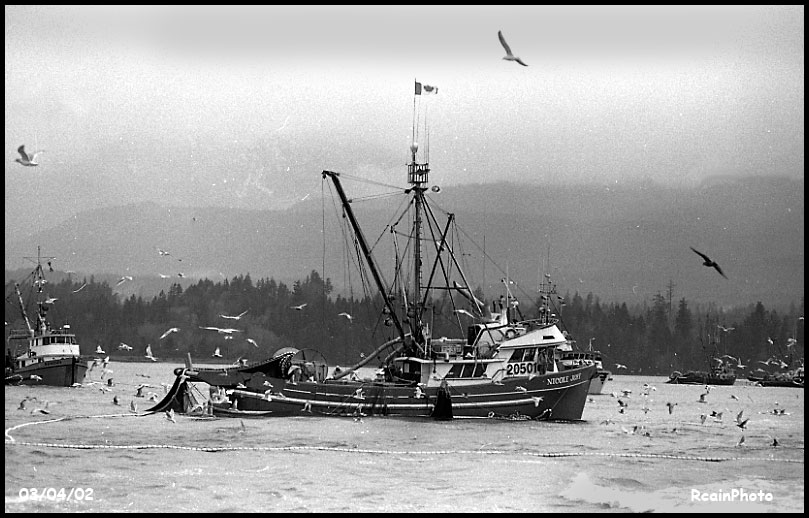
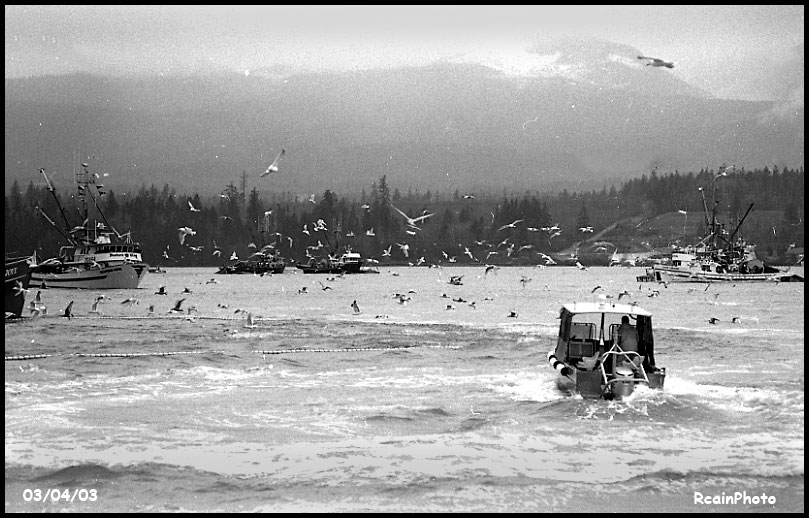
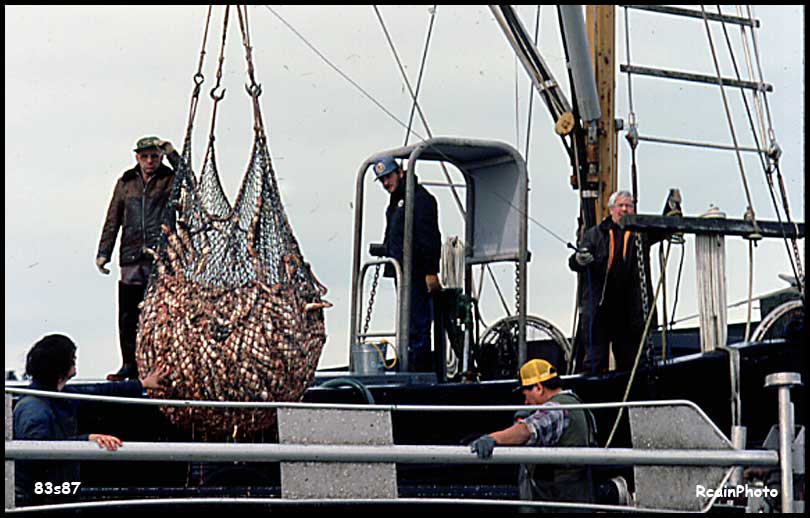
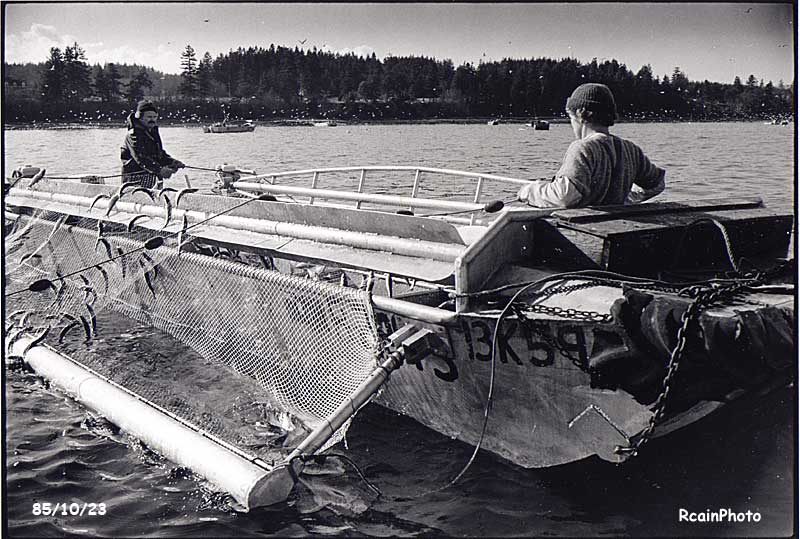
The Hornby-Denman islands herring fishery in the 1980s / Bob Cain photo — View gallery below
Herring fishery hurts bi-national orca recovery efforts
By
Killer whales that live, play and forage for food in the Salish Sea are starving to death. To help them, both sides of the U.S.-Canada Pacific Northwest border have launched multi-million dollar initiatives to increase the chinook salmon stocks that comprise 80 percent of the orcas’ diet.
But the federal Department of Fisheries and Oceans’ plans to undercut those international efforts have baffled orca conservation organizations.
FURTHER READING: Canada and Washington state announce orca recovery programs
In March, the DFO has scheduled a massive industrial kill of the small silver Pacific herring in the Denman and Hornby island area. It’s the last remaining significant herring spawning area in the Pacific Northwest, from Alaska to Washington state.
Conservancy Hornby Island has asked the federal government to close the herring roe fishery planned for next month. Pacific Wild, a conservation voice dedicated to ensuring preservation of the Great Bear Rainforest, has demanded termination of the fishery.
Grant Scott, spokesperson for the Hornby Island group, says the the DFO has failed to consider the impact of the herring fishery on the entire Salish Sea ecosystem.
The diet of the endangered and declining populations of southern resident Killer Whales consists of 80 percent chinook salmon. And the diet of salmon consists of 80 percent Pacific herring.
“It doesn’t take a scientist to make the important link between herring and killer whales,” Scott said in a statement to Decafnation. “Wouldn’t it make sense to leave this stock alone to hopefully rebuild all the herring schools on our coast and the marine life that needs them for survival?”
Scott said discontinuing the fishery wouldn’t harm anyone.
The industry now supports few jobs or taxes for the province. In the mid-1980s, commercial fishermen were awash in profits when herring earned up to $5,000 per ton. Today, the price ranges from $150 to $700 per ton, because Japanese taste for the delicacy has faded.
According to BC Ministry of Agriculture data, the herring fishery was valued at $309 million in 1995 (adjusted for inflation), but only $58 million in 2017 for the same tonnage of fish.
But that isn’t the worst impact of continuing the herring fishery.
“Ninety percent of the herring are ground up for fish farm food and pet food.” he said. “Using wild fish for non-human consumption is illegal under the federal Fisheries Act. When 90 percent of the herring is used for fish farm and pet food is the federal Minister of Fisheries breaking the law?”
The DFO doesn’t exactly have a good track record of managing the herring population. It’s policies have lead to the closure of four of the six major herring stocks on the BC coast in the last 20 years, according to Scott, who is a former commercial fisher. Basically, herring have declined because they’ve been overfished.
The DFO set a top limit for killing 28,000 tons of spawning herring in the upcoming March opening. That’s the rough equivalent of 200 million fish.
Scott says Conservancy Hornby Island believes this last productive spawning ground will get overfished this year, and that will impact other species, such as salmon and Killer Whales.
“We are asking for our politicians’ support in closing down the herring roe fishery, or at least closing the senine roe fishery in the Strait of Georgia, especially around Hornby and Denman islands,” Scott said.
According to the Hornby group, Vancouver businessman Jimmy pattison owns most of the seine boats working the coast.
Historically abundant fish
An archeology study of fish bones on the Pacific Northwest coast found that herring was the region’s most abundant fish dating back 10,000 years.
But herring stocks started to decline for the first time in the late 1800s when the industrial fish kill began. A Simon Fraser University study concluded that spawning patterns and population decline had been altered by 1910.
And yet, DFO has increased the number of herring allowed to be caught.
According to Pacific Wild’s website, Denman-Hornby will be the only area fished in 2019. But while the “coast-wide catch has declined with herring abundance in the last 30 years, the quantity of fish taken from the Salish Sea has more than doubled,” the organization says.
Scott says that although the DFO claims to manage herring according to the principles of Ecosystem Based Management. But the Monterey Bay Aquarium Seafood Watch program, which evaluates ecological sustainability of wild-caught seafood in North America, thinks otherwise.
In its 2016 evaluation of the herring fishery, the program said, “Currently (DFO) management of the herring fisheries does not account for ecosystem considerations when determining abundance (or) allowable catch. As herring is an important source of food for a variety of species, the lack of ecosystem considerations … in the fisheries’ overall management warrants a score of ‘high’ concern.”
Canadian and Washington state governments might be wasting hundreds of millions of dollars on orca recovery programs to increase salmon stocks, if the salmon themselves don’t have enough food to sustain even current population levels.
LIFECYCLE OF THE PACIFIC HERRING
Pacific herring prefer spawning locations in sheltered bays and estuaries. Conditions that trigger spawning are not altogether clear, but after spending weeks congregating in the deeper channels, both males and females will begin to enter shallower inter-tidal or sub-tidal waters. Submerged vegetation, especially eelgrass, is a preferred substrate for oviposition. A single female may lay as many as 20,000 eggs in one spawn following ventral contact with submerged substrates. However, the juvenile survival rate is only about one resultant adult per 10,000 eggs, due to high predation by numerous other species.
The precise staging of spawning is not understood, although some researchers suggest the male initiates the process by release of milt, which has a pheromone that stimulates the female to begin oviposition. The behavior seems to be collective so that an entire school may spawn in the period of a few hours, producing an egg density of up to 6,000,000 eggs per square meter. The fertilized spherical eggs, measuring 1.2 to 1.5 millimeters in diameter, incubate for approximately 10 days in estuarine waters that are about 10 degrees Celsius. Eggs and juveniles are subject to heavy predation.
— Wikipedia
SUBSCRIBE TO OUR NEWSLETTER
More
Fact: Courtenay property tax burden equal or lower than most same-sized BC cities
Retiring Courtenay City Councillors recap years of experience
Doug Hillian and Melanie McCollum will not be seeking re-election this for the Courtenay City Council. Hillian retired after 17 years on council. McCollum served for eight years.
Updated candidates list for the 2026 local elections
A list of candidates for the 2026 municipal elections
Overwhelmed by so many candidates? Just vote for the ones you know and like
For many Valley residents, it’s difficult and time consuming to gather the necessary information to make thoughtful selections in municipal elections. And paid trolls and fake posters on social media pages make it even more difficult. Public candidate forums help, but there is a simple solution for frustrated voters
THIS WEEK: Election signs are everywhere; MLA Day joins the Findlay ship jumpers
Candidates for the Oct. 17 municipal elections start making it official next week. But it’s been obvious that the “unofficial” campaigns began on social media a long time ago. And MLA Brennan Day announces he’s jumping BC Conservative Party’s ship — but it was no difficult decision
“Liberal Rush” tricked voters in NDP ridings and exposed an electoral system flaw
Despite the positive big picture outcome, this election exposed a glaring vulnerability within our electoral system. And that vulnerability caused otherwise smart people to forget how our Canadian parliamentary system actually works. Namely: We do not have a proportional representation form of government. But there is a simple solution.
Battle of the North Island riding polls, does it really matter? A prediction
Progressives have found something new to squabble about: which poll of the North Island-Powell River (NIPR) riding is the accurate one? Some polls show the Liberals ahead of the NDP. Others show the NDP with an edge. But does it really matter if neither party can win?
Greens dropped ridings to avoid vote splitting … ???
Photo Caption omox Valley voters will have several opportunities to watch and listen to the candidates for the Oct. 17 local government election SUBSCRIBE TO OUR NEWSLETTER
Island group urges NDP vote to stop Conservatives
Photo Caption growing coalition of over 140 Vancouver Island residents has called for strategic voting in the North Island-Powell River and Courtenay-Alberni ridings to block the Conservatives and reject Aaron Gunn's...
For a Liberal government, vote for the NDP in the North Island-Powell River riding
If you want to help the Mark Carney Liberals form the next federal government, then DO NOT vote for them in the North Island-Powell River riding. That sounds counter-intuitive, but only a vote for the NDP can save this riding from swinging to the Conservatives in 2025. Why? Read on for the full article.