The Week: Town of Comox parade denial was a petty ploy

The Week: Town of Comox parade denial was a petty ploy

Canada Day parade crowd in Courtenay, circa late 1970s  /  George Le Masurier photo

The Week: Town of Comox parade denial was a petty ploy

By

Update: Courtenay Canada Day parade chairman Scott Mossing says “I can confirm that I have not received nor have any complaints regarding Mack Laing Heritage Society’s involvement in the July 1st Parade.”


Another week has come and gone and once again the Town of Comox has done something stupid. If it seems like The Week criticizes Mayor Russ Arnott and his gang a lot, it’s just because “the powers that be” at town hall can’t help making themselves a target.

This week, Mayor Russ Arnott called Nautical Days parade organizer Wendy Petrie and demanded that she revoke her approval of an application by the Mack Laing Heritage Society to appear in the Nautical Days parade. His justification: the “alarming” and “inappropriate behaviour” of MLHS in the Courtenay Canada Day parade.

After telling the Mack Laing society they were prohibited from being in the parade, Petrie later convinced Arnott to reverse his order and she rescinded the denial later in the week. She says the group is once again welcome in the parade.

But the MLHS says the rescinding order came too late and “some special participants and supporters … were not able to attend or assist, having made other arrangements. Given the restrictions placed on us, which are not listed in the official ‘Parade Guidelines’, we felt it best to cancel our appearance.”

Petrie told Decafnation in a telephone interview that the special restrictions — not to have petitions or hand out any negative paraphernalia with participants or spectators — apply to all political groups in the parade.

But there is something seriously “alarming” about this turn of events. Mayor Arnott has attempted to stifle the free expression of genuinely-held viewpoints that run contrary to his own. And it appears that he used his position to do so without Town Council support.

Could the mayor have committed a violation of Canada’s Charter of Rights and Freedom?

Were the other Comox councillors aware of his actions and do they support them?

Arnott’s personal feelings about the Mack Laing society also put Petrie, a dedicated volunteer who has organized the Comox parade four times in the past, in a difficult spot.  

FURTHER READING: Who is Mack Laing and what is this dispute about?

Petrie said she agonized over how to tell MLHS they could not participate in the parade. In the rejection email to MLHS on July 30 — eight days after approving their parade application — Petrie wrote that while “researching” the society’s “alarming behaviour” and after hearing “from many people how inappropriate your behaviour was” in the Courtenay Canada Day parade that the MLHS application had been denied entry into the town’s “family-oriented” parade.

What was this “alarming” and “inappropriate” behaviour that might threaten family values in Comox?

During the July 1 parade, MLHS supporters say they handed out a few tee-shirts and a bag with the society’s logo. They also carried a banner saying “Join us to preserve heritage” and signs that said “Mack Laing Matters” and “Keep the Trust.”

They were accompanied in walking the parade route by well-known local fiddler Jocie Brooks, the granddaughter of naturalist painter Alan Brooks, who was a close friend of Mack Laing.

Scary stuff, indeed.

It’s clear that the decision to exclude Mack Laing from this weekend’s parade was made after Arnott discovered the society had been approved. Petrie, in fact, freely admits that she didn’t make the decision to reverse her approval and deny entry. She agrees it was a raw deal.

In subsequent emails to MLHS, Petrie says, “I know I was looking forward to having you, but this was not my decision. I have to listen to the powers that be.” And, later she says, “I am as disappointed as you are.”

Mayor Russ Arnott’s actions — and/or whoever else conspired in this travesty — played petty politics.

Arnott doesn’t want the public to hear about Mack Laing. He doesn’t want the Mack Laing Heritage Society to generate any additional support for forcing the town to abide the terms of the famous naturalist’s trust agreement . He wants the Mack Laing debate to just go away.

So he kicks them out of a parade. Sounds like middle school.

But the “alarming and inappropriate behaviour” here is that an elected official would use his position to prevent the free expression of ideas. Mack Laing supporters have a different point of view from Arnott about the town’s action in regards to Mack Laing’s trust and the fate of his heritage home, called Shakesides. Thankfully, expressing differing points of view is still legal in this country.

An email sent to Arnott inviting him to explain his actions have not been answered. Petrie responded quickly with a phone call. 

— On a related topic, the Comox Valley Record recently took a strong stand against anything in local parades except horse-drawn wagons, clowns, animals and bands.

In the editorial, Record editor Terry Farrell writes, “Put the fun back into parades, and for a change, leave the politicking at home.”

Farrell makes an exception for local elected officials, but doesn’t explain why. Maybe he classifies them as clowns or animals. They certainly don’t put any more fun in a parade than the real targets of his editorial: the Green Party and the Mack Laing Heritage Society.

And how do commercial vehicles offering nothing but their business names add to the fun in a parade? Farrell doesn’t mention them.

Besides the fuzzy argument that tries to distinguish between local politicians and federal or provincial ones, and between acceptable nonprofit organizations and not-acceptable ones (the ones he doesn’t like?), Farrell makes one point on which we can agree: Parades should be fun, not sombre events.

— Parade participation or not, there is a federal election coming on Oct. 21, and the political parties have already started their pre-official election campaign campaigning. See the Election Countdown Timer on the Decafnation home page.

One of the interesting debates already occurring concerns the possible shifting of traditional NDP votes to the Green Party. Strong NDP advocates are all over social media slamming Green Party leader Elizabeth May in an attempt to discourage this shift. They have blasted her for, among other things, saying she might consider an alliance with Andrew Scheer’s Conservatives under certain circumstances.

But NDP stalwarts can relax because, according to Scheer, that’s not going to happen.

In an ad that keeps popping up on The Week’s Facebook page, Byron Horner, the Conservative candidate for Courtenay-Alberni, says don’t be fooled by the new Green Party slogan. “The Green Party is a Left-Wing Big Government party that would economically devastate Islanders who own a car or a home. Thinking about the Green Party? Read the fine print.”

— It appears there will be at least one federal election all-candidates forum in the Comox Valley. Details to follow.


SUBSCRIBE TO OUR NEWSLETTER

Enter your email address to subscribe to the Decafnation newsletter.

More
BC heritage professionals lobby cabinet ministers to conserve Shakesides

BC heritage professionals lobby cabinet ministers to conserve Shakesides

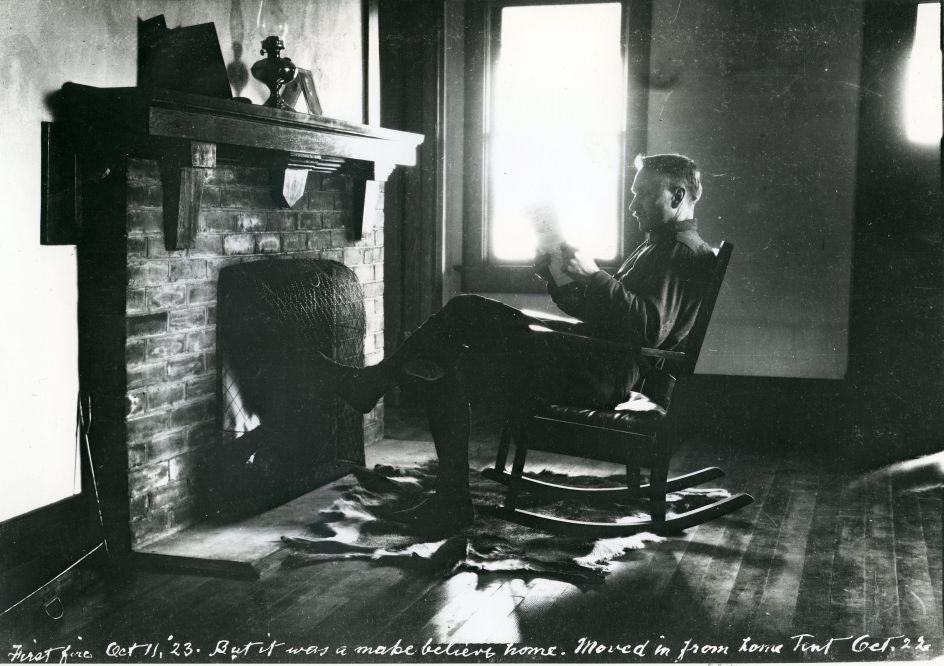
Hamilton Mack Laing at home in Shakesides during his last years  /  Archive photo

BC heritage professionals lobby cabinet ministers to conserve Shakesides

By

The president of the BC Association of Heritage Professionals has lobbied the provincial Attorney-General and the minister of Forests, Lands and Natural Resource Operations to oppose the Town of Comox’s application to vary the charitable purpose trust of Hamilton Mack Laing.

Elana Zysblt, a Vancouver-based heritage consultant, says in letters sent Tuesday to AG David Eby and FLNROD Minister Doug Donaldson that the conservation of Laing’s home, known as Shakesides, “represents heritage values that extend much further than the boundaries of the Town of Comox.”

Heritage issues in British Columbia fall under the FLNROD portfolio and are managed by Roger Tinney.

Writing on behalf of the province’s heritage professionals, Zysblat expresses concern that municipalities such as Comox might be allowed to use a section (184) of the Community Charter to ignore and alter substantial gifts of money and property donated to the public in good faith.

FURTHER READING: Attorney general takes West Vancouver to court for breach of trust

The Community Charter sets out municipalities’ core areas of authority, such as municipal services, public health regulation and entering into agreements. Under section 184 if, in the opinion of a council, the terms or trusts imposed by a donor or will-maker are no longer in the best interests of the municipality, the council may apply to the Supreme Court to vary the terms of the trust.

This is the crux of the town’s application to vary the Laing trust and demolish Shakesides.

Gordon Olsen, a member of the Mack Laing Heritage Society, says the significance of Zysblat’s letters is a warning to the minister about the serious precedent the Shakesides case could set.

“If municipalities are allowed to ignore terms of agreements that` they have freely entered into that will have a chilling effect on future donators across the province,” Olsen told Decafnation.

But that isn’t the only point Zysblat makes in her letters. The Association of Heritage Professionals also believe Shakesides has significant heritage values and remains, despite the town’s neglect, in good condition for rehabilitation.

“In 2017, a Statement of Significance was completed to describe the heritage values of the place,” Zysblat wrote. “A condition assessment of the historic structure was also conducted in the same year by an independent heritage professional and structural engineer. The assessment concluded that the building is in good condition to be rehabilitated for adaptive re-use as envisioned by Hamilton Mack Laing.”

The Town of Comox has not requested any professional assessment of the building. But Comox Parks Manager Al Fraser told a public meeting in April that only a “cursory report” has been done, which he admitted was “not comprehensive.” Fraser called it a “soft pass.”

“Let’s say there’s still considerable work to be done in that regard,” Fraser told the public meeting.

As of July, the town still has not done that work and has yet to acknowledge the professional assessment by a structural engineer completed in 2017, according to Zysblat.

She also informs the two provincial government cabinet ministers that the town seems uninterested in other perspectives on Shakesides.

“Gord Macdonald, Heritage BC chair, shares our belief that the state heritage value of Shakesides demands that (Laing’s) former home be conserved for future generations,” Zysblat wrote. “And that Heritage BC has committed to providing their assistance, at no charge, to the Town of Comox, for the duration of the process to repurpose Shakesides, and guarantees the town a provincial grant through the Heritage Legacy Fund Heritage Conservation Program.

“To this date, the Town of Comox has ignored this offer by Heritage BC.”

For more stories about Mack Laing, the Town of Comox and the legal proceedings, go here


SUBSCRIBE TO OUR NEWSLETTER

Enter your email address to subscribe to the Decafnation newsletter.

More

No Results Found

The page you requested could not be found. Try refining your search, or use the navigation above to locate the post.

BC attorney general appears to argue both sides of cases similar to Mack Laing battle

BC attorney general appears to argue both sides of cases similar to Mack Laing battle

BC Archive photo

BC attorney general appears to argue both sides of cases similar to Mack Laing battle

By

What should Comox Valley residents think about the BC Attorney General’s office arguing two different sides of similar cases?

The attorney general of BC announced last week that it would take the district of West Vancouver to court because the municipality allegedly broke an agreement with two residents who had bequeathed their property to the district.

But in the Comox Valley, the Attorney General’s office is defending the Town of Comox for breaking its agreement with Hamilton Mack Laing.

And it gets more interesting. The lead counsel for the AG’s office in both cases is Sointula Kirkpatrick.

FURTHER READING: More on Mack Laing 

According to a report from Glacier Media, which publishes several BC newspapers including the North Shore News, the AG’s lawsuit asks the BC Supreme Court to rule that West Vancouver is in breach of the trust.

Pearley and Noreen Berissenden gave their property to the district of West Vancouver in the late 1980s. The couple specified that the property was “to be used and maintained by it (the district) for public park purposes.”

When Mack Laing died in 1982, he left the town his waterfront property, his home named Shakesides, and the residue cash from his estate “for the improvement and development of my home as a natural history museum.”

The district of West Vancouver never followed through on their agreement with the Berissendens, and instead rented out the couple’s home on the property from 2001 to 2018. And in 2017, the district applied to vary the trust to subdivide about half of the property into building lots.

The Town of Comox likewise never followed through on the terms of its trust agreement with Laing, and also rented out Laing’s home for almost 30 years. In 2017, the town applied to vary the trust in order to demolish Shakesides.

AG lawyer Kirkpatrick alleges West Vancouver is in breach of the Berissenden’s trust for failing to make their property a park and for profiting from the rent, according to the Glacier Media report. Kirkpatrick has asked for an accounting of all all rent money received and that it be put back into the trust.

As well, Kirkpatrick, on behalf of the AG’s office, wants the court to order West Vancouver to make the property a park.

But Kirkpatrick has taken the exact opposite view when it comes to the Town of Comox versus Mack Laing.

In the Comox Valley case, Kirkpatrick has defended the town’s failure to make Laing’s home a natural history museum for public enjoyment and for profiting from renting out Shakesides, even though there hasn’t been an independent accounting of those funds and not all of the rent money has been returned to the trust, according to the Mack Laing Heritage Society.

Kirkpatrick has not responded to an email request asking her to explain the differences in the two cases.

She did, however, request a nearly five-month delay for the Supreme Court trial that will determine the fate of Shakesides. Kirkpatrick requested the delay in early May, well before filing the lawsuit against West Vancouver.

At the time, members of the Mack Laing society said they hoped the delay meant the Attorney General’s office was less certain about the merits of the town’s application to alter the trust and that it had new concerns about how Comox councils and staff have mishandled Laing’s gifts to the community.

Now they hope the West Vancouver lawsuit signals a change in direction at the AG’s office over municipal applications to vary citizen trusts. It is part of the Attorney General’s mandate to provide oversight of charitable purpose trusts.

No court date to hear the Shakesides case has been scheduled.


SUBSCRIBE TO OUR NEWSLETTER

Enter your email address to subscribe to the Decafnation newsletter.

More

No Results Found

The page you requested could not be found. Try refining your search, or use the navigation above to locate the post.

The Week: Strange attitude in Comox and perils of logging in watersheds

The Week: Strange attitude in Comox and perils of logging in watersheds

George Le Masurier photo

The Week: Strange attitude in Comox and perils of logging in watersheds

By

There’s a classic ironic saying — “We’re from the government, and we’re here to help you” — that seems to describe the Town of Comox’s aloof and often confrontational attitude toward some of its constituency. It’s a peculiar mindset that the town has developed in recent times.

There’s no better example than the story of Ken McDonald and Golf Creek, which Decafnation first reported back in January when it was a simple Small Claims Court case. This week, we broke the news on Tuesday that a civil court judge granted an escalation of the law to the BC Supreme Court and multiplied the amount of damages tenfold.

Read the full story here, and the original story here

The town could have settled this matter for $25,000 or less three years ago just by taking a helpful and sympathetic approach to a resident’s problem. But instead of trying to assist this taxpayer, the town basically told him to buzz off, and then actually added to his financial burden by paying high-priced lawyers to fight him in court.

By the time this case is resolved, the town will have spent tens of thousands more of taxpayers’ money than if they had empathy for one of their own citizens and helped him out. And the bill will grow to hundreds of thousands more if the town loses the case.

The good news out of this example of the town’s pitiful proclivity for bullying people is that this citizen has the means to fight back. And because of McDonald’s refusal to just let it go, some of the town’s other sins have come to light: flushing toxic stormwater into the harbor, repeatedly ignoring warnings from more than one professional consultant, failing to monitor water quality in the creeks it abuses and more.

It’s hard to ignore the irony of Comox hosting a week-long seafood festival that starts today, knowing that the town bears a huge responsibility for the pollution of Comox Bay that has killed aquatic life and closes the area to shellfish harvesting.

Comox is also embroiled in another legal case that could also cost its taxpayers hundreds of thousands of dollars, this one over the mishandling of the Mack Laing Trust and the fate of his heritage home, Shakesides. Instead of sitting down face-to-face and working out a solution, the town again has taken a confrontational approach, spending large amounts of money on lawyers to prevent Mack Laing’s supporters from having a voice in court.

There are good examples of local governments — in Cumberland and Courtenay — that when faced with citizen-based problems, municipal staff and elected officials actually try to resolve them in a win-win manner, rather than attempt to beat a citizen into submission. But Comox is apparently not that kind of town.


DECODING POLITICAL SPEAK

One of the frustrating aspects of the Town of Comox’s current legal battles is that elected officials refuse to talk about them. Mayor Russ Arnott is famous for hiding behind the words, “It’s before the courts, so I can’t talk about it.”

Literally, that’s not true. Elected officials have the freedom to talk about court cases, and defendants and prosecutors do it all the time. There is no law against this.

What Arnott really means is that he’s afraid to say something that could hurt the town’s legal case.

Municipal insurance companies have a big thumb on freedom of speech. So instead of transparency, we usually get silence based on a fear of liability.


BIKING IN COURTENAY

Here’s some good news: the City of Courtenay has received $227,655 from the provincial BikeBC program to expand its cycling network on both sides of the river. The grant amounts to about half of the cost of projects on Fitzgerald Avenue and the Hobson Neighborhood.

Courtenay is really pushing toward a cycle-friendly community.

For its next step, we humbly suggest some kind of infrastructure — overpasses?, physically separated lanes? — that would allow students of Vanier and Isfeld secondary schools to cycle more safety from their homes on the west side of the river.


LOGGING AND WATER TREATMENT

There is an excellent recent story in the online publication, The Narwhal, about how clearcut logging is driving a water crisis in some interior communities.

While the story focuses on the Okanagan region, there’s a similar story about logging in the Comox Lake Watershed, the drinking water source for most Comox Valley residents. And the results of this practice are similar.

Due to upstream logging, large quantities of sediment flow into Peachland Creek and eventually wash into Okanagan Lake. That has forced the town of Peachland to spend $24 million on a new water treatment plant to filter out the fine sediments, disinfect it with chlorine and ultraviolet light.

Sound familiar? That’s exactly what’s happening in the Comox Lake Watershed. Because the BC government allows logging in the watershed, sediment flows into all the little creeks and streams, and into the bigger rivers, such as the Cruikshank, causing turbidity.

The Comox Valley’s $110 million price tag for water treatment is more than four times higher than Peachland’s.

Why doesn’t the province only permit selective logging in watersheds? Why does the province prioritize logging over drinking water? And one wonders how much of the watershed the Comox Valley could have purchased for the cost of its water treatment plant.


SUBSCRIBE TO OUR NEWSLETTER

Enter your email address to subscribe to the Decafnation newsletter.

More
Town of Comox now faces 0,000 Supreme Court lawsuit over pollution

Town of Comox now faces $250,000 Supreme Court lawsuit over pollution

One of the few remaining daylight sections of Golf Creek at the Comox Golf Course  /  George Le Masurier

Town of Comox now faces $250,000 Supreme Court lawsuit over pollution

By

What started as a simple request three years ago for the Town of Comox to help defray a homeowner’s expense to remediate a creek bank has since uncovered a litany of town-related problems and, as of last week, turned into a BC Supreme Court case valued at nearly a quarter-million dollars.

As reported by Decafnation in January, Norine and Ken McDonald launched a BC Small Claims Court action in June of 2016 to recover some of the $30,000 they spent to shore up a portion of Golf Creek that flows through their Jane Place property.

They took the legal action after discovering the erosion was caused by excessive municipal stormwater flowing into the creek, and because the town refused to take responsibility for the damage.

For three years, the McDonalds and the Town of Comox have been locked in a legal battle to settle the matter. The McDonalds have requested meetings to negotiate a resolution, and have been turned down. The town has responded by trying to have the case dismissed, and were denied in court.

FURTHER READING: Stormwater: it’s killing our water

But in the process of preparing their case against the town, the McDonalds have learned that Golf Creek is not only plagued by high volumes of stormwater flowing into the creek, but that the water is highly polluted with heavy metals and fecal coliform counts up to 230 times higher than the provincial water quality standards. E Coli counts have exceeded provincial maximums by 500 percent.

For the McDonalds, the toxic water in their backyard created a new financial problem.

According to section 5-13 of the rules of the Real Estate Council of BC (enforced under the BC Real Estate Act), a homeowner must disclose a material latent defect that renders the property “dangerous or potentially dangerous to the occupants” or “a defect that would involve great expense to remedy.”

“Now that we are aware of the pollution problem, we are obligated to disclose that problem to any prospective future buyer as well,” Ken McDonald told Decafnation. “That disclosure will certainly impact property value.”

So the McDonalds recently asked the court to amend the compensation they are seeking to nearly $250,000, the value of the portion of their property affected by the Creek (about 29 percent), and to move their case to the BC Supreme Court.

On Friday, May 31, Civil Court Judge Hutcheson granted the McDonald’s request.

This ruling escalates the financial risk for Town of Comox taxpayers.

In a letter to the town and to the attention of Mayor Russ Arnott, the McDonalds lawyer wrote that “… other property owners and occupants in the Town of Comox may have suffered similar damages, and are considering the potential for a class action lawsuit to hold the town accountable….”

McDonald also believes the case might have province-wide significance for other property owners near urban streams.


Background

The McDonalds’ house at the end of the Jane Place cul de sac was originally built by John and Christine Robertsen in 1991. The Robertsens commissioned BBT Hardy Engineering to do a geotechnical study to determine the feasibility of building on property that included the Golf Creek ravine, and were issued a building permit and final occupancy permit by the town even though no erosion control measures were undertaken, as recommended in the study.

In 1992, the town commissioned a study by KPA Engineering that recommended four erosion control options — including a detention pond on the Comox Golf Course — to protect properties along Golf Creek. None were implemented, according to documents supplied by Ken McDonald.

Ken McDonald stands in front of his $30,000 geotextile wall to prevent further erosion from Golf Creek. The Town of Comox’s refusal to help him pay for the remediation has turned into a nearly $250,000 BC Supreme Court lawsuit

Seven years later, a 1999 a KPA Engineering study gave Golf Creek the highest environmental sensitivity rating in their investigation and recommended remedial action and water quality monitoring. Neither were implemented, accord to McDonald’s documents.

From 1991 to 2005, Town of Comox population grew by 70 percent, increasing stormwater flows into Golf Creek.

In 2005, the Robertsens communicated concerns about increased erosion of their property, and the town denied responsibility. The Robertsens then paid for a second geotechnical study — this one by Lewkowich Engineering — that repeated the need for “some preventative measures.” None were implemented.

A 2013 assessment by McElhanney Engineering raised concerns about increased stormwater volumes and recommended the town “mitigate the impacts of discharging stormwater into sensitive receiving environments.” The town did not implement the recommendations in the McElhanney report, according to McDonald.

When the Robertsens decided to sell their house in 2014, they commissioned a third geotechnical study, which reaffirmed the need for creek bank remediation.

After purchasing the house, the McDonalds hired a contractor to do the creek bank remediation, and were told by the town that erosion damage was entirely their own responsibility.

McDonald says he did not realize Golf Creek was no longer a natural waterway until June 2016 when a downstream neighbor mentioned his erosion problems and the old engineering reports indicating the creek was a key component of the town’s stormwater management system. The neighbor told McDonald that the town had installed a five meter-long rock wall along his creek bank.

So the McDonalds started a BC Small Claims Court action to recover some of the cost of remediating their own section of the creek.

Two years into that legal action, McDonald had the water quality in the creek tested. The test results showed fecal coliform levels nearing that of raw sewage and concentrations of heavy metals, including mercury, that exceeded provincial guidelines.

In many cases, the level of contaminants exceeded government guidelines by more than 1,000 percent.

Last month, McDonald had the creek’s water retested. While the fecal coliform tested down to 150 times provincial standards, the results showed the more dangerous E Coli levels at 2,000 Fecal Coliform Units per 100 ml. BC and Health Canada guidelines put the maximum safe level for human recreational contact with E Coli in a single sample at 400 FCU/100 ml.

E Coli in Golf Creek registered 500 percent over the BC maximum.

McDonald said the provincial environment ministry has also recently tested the creek’s water, but has not yet released their results.


Attempts to meet with Town Council

McDonald says that litigation is not his preferred approach to resolving the issue, but that repeated attempts to meet with town staff and the mayor and council have been rebuffed by the town.

Prior to last fall’s municipal election, McDonald filed an application to the court requesting postponement of a trial date so that he could present his case to the new mayor and council. The town opposed the postponement, but it was granted. No meeting has taken place.

In October, before the election, McDonald asked candidate Russ Arnott if council would entertain a meeting. Arnott declined in an email message.

“I did bring it up with Richard (Kanigan, the town’s Chief Administrative Officer) and was advised it was in the hands of their insurance people and that it best not to engage at this particular time,” Arnott replied to McDonald via email.

McDonald said two subsequent informal encounters with Arnott met with the same response.


What’s next

The McDonalds are now in the process of preparing their case for the Supreme Court.

“Our object is to solve a major environmental problem that has destroyed the fresh water streams in Comox and is contaminating our marine environment,” McDonald told Decafnation. “There are practical solutions to the problem. What is needed is an administration and a council that acknowledges that there is a problem and is willing to change their stormwater management practices.”

Decafnation briefed Comox Mayor Russ Arnott and CAO Richard Kanigan on the content of this story prior to publication, but neither responded to an invitation to comment or provide additional information.


WHAT IS FECAL COLIFORM?

FECAL COLIFORM — Microscopic organisms that live in the intestines of warm-blooded animals. They also live in the waste material, or feces, excreted from the intestinal tract. Although not necessarily agents of disease, fecal coliform bacteria may indicate the presence of disease-carrying organisms, which live in the same environment as the fecal coliform bacteria. Swimming in waters with high levels of fecal coliform bacteria increases the chance of developing illness (fever, nausea or stomach cramps) from pathogens entering the body through the mouth, nose, ears, or cuts in the skin. Diseases and illnesses that can be contracted in water with high fecal coliform counts include typhoid fever, hepatitis, gastroenteritis, dysentery and ear infections. Read more here and here


SUBSCRIBE TO OUR NEWSLETTER

Enter your email address to subscribe to the Decafnation newsletter.

More

No Results Found

The page you requested could not be found. Try refining your search, or use the navigation above to locate the post.