The Week: Valley councils begin new terms, but will Comox ignore voters?

The Week: Valley councils begin new terms, but will Comox ignore voters?

The Week: Valley councils begin new terms, but will Comox ignore voters?

By

The Comox Valley’s new municipal councils will begin their four-year terms this week after swearing-in ceremonies and approving each mayor’s annual committee assignments and board appointments.

While it’s one of the prerogatives of a mayor to appoint council members where a councillor may be best suited or where a councillor can best represent the public’s interests, the appointments are not automatic. The council must vote to approve the mayor’s selections.

Courtenay Mayor Bob Wells told Decafnation recently that councillors have always approved his appointments, which he makes after one-on-one conversations with council members to elicit their interests.

And, if you are geeky enough about local politics to find last year’s first meeting of the Comox Council, you can listen to Ken Grant and Maureen Swift speak eloquently and passionately about supporting then-mayor Russ Arnott’s appointments. More specifically, you can hear Grant and Swift point out that going into the fourth and final year of a council’s term wasn’t the right time to change the town’s two seats on the Comox Valley Regional District board.

The best time to change, they argued, would be at the start of a new term.

Well, here we are, at the start of a new term.

So what, dear readers, do you think will happen at tomorrow night’s first meeting of the Comox Town Council? We’ll tell you what we think should happen.

First-time Mayor Nicole Minions should respect both the continuity of service and voters’ clearly expressed wishes. And so, she should therefore appoint Maureen Swift and Jonathan Kerr as the town’s representatives on the CVRD board.

That combination offers a mix of experience and fresh perspective.

Swift, who has served multiple terms as one of the town’s regional representatives provides the continuity. Kerr, who was by leaps and bounds the top choice of Comox voters in the election, has the support and confidence of the council’s constituency.

Kerr received 76.4 percent of the popular vote last month. Swift received 51.7 percent and, in fifth place, Ken Grant lagged at 50.3 percent. Kerr got 152 percent more of the vote than Grant.

The people prefer Kerr far more than Grant.

And there is a good reason for that. Grant has not done a good job on the regional board of representing the majority of the voting public or even the majority view of Comox councillors. He’s been obstructive, and non-collaborative and has taken positions based on an agenda not in sync with the best interests of the public or other council members.

He is, in fact, an outlier of the majority view of Comox voters. Recognizing this, Councillor Swift should break with the “good ole boys” and vote her conscience to approve Kerr’s appointment to the CVRD.

So, that’s what should happen.

Here’s what will probably happen.

Mayor Minions will appoint Councillor Kerr as a CVRD representative along with either Swift or Grant. New councillors Chris Haslett and Steve Blacklock will take direction from Councillor Grant and vote to oppose the mayor’s wishes and then vote to approve Grant and Swift to the CVRD. Swift won’t have the courage to break rank. The vote will take place outside of the public’s view.

And that, friends, will set the council up for four years of ignoring voters’ wishes as expressed in the last election. Because Blacklock and Haslett will offer up their shiny brown noses to Grant, who will become the de facto backroom mayor.

Is Comox reverting to the old days of backroom politics, of deals made out of sight of the public, of personal gain trumping the common good? Tomorrow night’s first meeting of the new council will tell you all you need to know.

—

If you were anywhere even close to Comox town boundaries last night, Halloween night, you would have heard lots of fireworks. It started after dark and by 10 pm there was a full-on fireworks display happening.

It’s curious, of course, because no jurisdiction granted permits for the possession and sale of fireworks this year. That’s because the BC Wildfire Service banned fireworks this fall due to extremely dry conditions.

We’ve had a little bit of rain recently and burning bans have been relaxed, although the forests are still dry and, more importantly, no fireworks permits have been issued.

So the explosion of fireworks last night ignored the common good, including potential fire risks, for a few people’s personal enjoyments.


SUBSCRIBE TO OUR NEWSLETTER

Enter your email address to subscribe to the Decafnation newsletter.

More
COMOX: Candidates (most of them) respond to our questions

COMOX: Candidates (most of them) respond to our questions

COMOX: Candidates (most of them) respond to our questions

By

Decafnation asked this year’s candidates for public office to respond to three questions. We are publishing their responses by the jurisdictions in which they are a candidate.

Comox Candidates in 2022

One mayor and six councillors to be elected

Mayor

Incumbent – None
Challenger – Nicole Minions (acclaimed)

Council

Incumbents – Dr. Jonathan Kerr, Ken Grant, Maureen Swift

Challengers – Don Davies, Chris Haslett, Ruby Sidhu, Steve Blacklock, Peter Gibson, Kealy Donaldson, Jenn Meilleur

Chris Haslett, Steve Blacklock, Ken Grant and Peter Gibson did not respond.

1. In the event that a new dangerous variant of the COVID virus emerges or if a new pandemic arises would you use your position as a civic leader to support federal and provincial public health orders and encourage others to do likewise?

FOR MAYOR

Nicole Minions
YES. I put faith and trust in our medical system both provincially and federally. I see this as protecting our vulnerable population and being part of the community as a whole. When it is public safety, I see that as a part of civic leadership.

FOR COUNCIL

Jonathan Kerr
As a family doctor in Comox, the health of Comox residents and our community is extremely important to me. I would fully support any federal or provincial public health orders that aim to protect Comox residents, especially those that are most vulnerable. At the same time, if new public health orders are put in place, I would also look for ways that we can continue to support our local businesses and restaurants, to ensure our downtown and business community is able to survive and thrive.

The COVID-19 pandemic has been a challenge for everyone and we all wish that it was over for good. Comox is an amazing place to live, with caring neighbours looking out for each other. Following public health orders together allows us to continue to work, go to school, shop at a local store, eat at a restaurant, and participate in recreational activities while ensuring we remain healthy as individuals and as a community.

Maureen Swift
Yes. I would support Federal and Provincial health orders.

Jenn Meilleur
Yes. I believe in the science, expertise, and rigorous process that goes into making federal and provincial public health orders. I also believe that science should guide our leadership and policy decisions.

COVID also taught many of us the importance of connecting and building relationships with neighbours and the community to help us navigate challenging times. When disasters happen, the most immediate help will come from those around us. Our Comox Valley Emergency Program has created a Neighbourhood Emergency Preparedness Program (NEPP) and Guide. This program and guide will provide important tools to people in our neighbourhoods to prepare in case of an emergency.

Kealy Donaldson
Yes, it is our duty to support public health orders as representatives of the municipality and Town Council, by oath. Covid set new precedents in health care and although there are many opinions as to how to follow health and pandemic protocols, it is important that communities, collectively, respect and observe any health orders that are issued.

Ruby Sidhu
Of course, I will work towards the best health for all of us. I will urge local government and businesses to let their employees work from home. I will work towards taking a decision to help all our community as one and tackle their needs in the pandemic. Public health officials are there for a reason, which is to worry about everybody around them. I would appeal neighbouring municipalities to do the same.

Don Davis
Yes. I have every confidence in the Health authorities.

 
2. Do you support the Regional Growth Strategy as it’s currently written? In particular, do you support its theme of funneling new growth into already defined urban boundaries, leaving the rural areas as rural as possible? And, do you support not adding any settlement nodes until the Union Bay Estates and K’omoks First Nations developments in the Union Bay area are well underway?

FOR MAYOR

Nicole Minions
I think these documents are a balance between being the roadmap for planning & development, but also the need to be a living document. I support aspects like density within the current drawn boundaries. Rural areas maintaining the benefit of rural living and encouraging the best use of land (ALR for farming etc). I would need to review what future nodes would be discussed but a general theme of reasonable and balanced density in downtown areas where transportation, infrastructure and services are readily available. It makes economic sense and environmental sense.

FOR COUNCIL

Maureen Swift
Yes. I support the RGS as it is a guideline for services and transit. I also believe these types of documents should be considered “living documents” and as such might be altered when circumstances and opportunities arise. I believe it is important to have an open mind.

Jenn Meilleur
I support funneling new growth into already-defined urban boundaries, leaving the rural areas as rural as possible. Whether we call it “Smart Growth” or “Green Settlement,” this land use planning approach is a critical part of climate mitigation and committing to building a healthy and resilient community for future generations.

Some settlement areas will need to be reconsidered to account for inevitable sea level rise, and growth within urban boundaries should focus on infill on already developed lands, rather than cutting down trees to make new developments.

The major issues identified in the Regional Growth Strategy have increased in severity beyond what was anticipated nearly a decade ago. This speaks to the need for an update (which is already planned), as well as the need to be asking some important questions about what we’re going to do differently over the next decade to turn towards regeneration.

I also support not adding any settlement nodes until the Union Bay Estates and K’omoks First Nations developments in the Union Bay area are well underway. Local governments have a very important role to play in supporting the recommendations from the Truth and Reconciliation Commission, the Calls to Justice from the Final Report and Inquiry into Missing and Murdered Indigenous Women and Girls, and the Declaration on the Rights of Indigenous Peoples Act.

Jonathan Kerr
I support the Regional Growth Strategy for 3 reasons:
1. Focusing on truly affordable housing: The last census showed that 67 percent of dwellings in Comox were single-family homes, which is way above the national average of 53%. Every single day, I hear from Comox residents that they are struggling to find a place to live, or that they are worried about being able to afford another place if they are forced to move. Comox desperately needs the right mix of housing options, including more affordable living choices such as rental units and townhomes.

2. Keeping taxes low: Comox residents want low taxes. It can take decades for tax revenues to eventually pay for the services (road, water, sewer) supporting a new subdivision. To keep our taxes as low as possible, we should focus on increasing density within our current municipal boundaries.

3. Mitigating climate change: At this critical point in our planet’s history, it doesn’t make much sense to cut down mature forests to allow for more urban sprawl or settlement nodes. Existing forests sequester carbon, provide a protective tree canopy during heat waves, and give us green spaces where we can enjoy nature, reduce stress, and connect with others.

Kealy Donaldson
The Regional Growth Strategy is a solid document produced in the late 2000s. There could be some important amendments adopted to modernize the overall strategy.

Urban Density is a key issue for most communities, Comox and the Valley included. It is critical to focus on improved density within urban areas for easy access to services, health and business, and amenities like shopping, recreation and public spaces. Comox has bylaws in place regarding Carriage homes and this offers a unique opportunity for residential property owners to expand their neighbourhood density and housing capacity.

In regards to the UBE + KFN developments, the overall need for housing continues to grow and if there is an opportunity to grow housing capacity, both parties will hopefully be able to support the right decisions for the best outcome for the citizens of Union Bay and K’omoks First Nation.

Ruby Sidhu
I do support the strategy with a few exceptions. No doubt we need more accommodation and that can only happen with more construction or uniting families. Any boundaries within Comox like land on Guthrie between Pritchard and Anderton can be developed for high-density dwelling.

We need to recognize that the land we are on is the unceded territory of K’omoks First nations and we should work towards a mutual understanding. At the same time, we should check the effects on the environment and the land in question before we jump into any decision, and make sure we are not disturbing any landfill or K’omoks territory.

Don Davis
Yes regional growth is fine for now and I look forward to participating in helping it to evolve for future needs. 


3. Do you believe it is the responsibility of local governments to take climate change-focused actions and to consider how to minimize carbon emissions from municipal operations and facilities in all of the council’s or board’s deliberations?

FOR MAYOR

Nicoles Minions
YES. It is a “lens” that should be applied at every level of government in every decision. Similar to how we consider economic factors, our local government actions on climate initiatives impact the bottom line of the change we need to see immediately.

FOR COUNCIL

Jenn Meilleur
I 100 percent believe it is the responsibility of local governments to take urgent action on both corporate and community-wide climate mitigation and adaptation. It’s essential that every council or board consider how to minimize carbon emissions from operations and facilities in all deliberations.

Every core service and every purchase made should be considering climate change, social wellness, and its impact on future generations, along with creating local economic vitality. To do this work well, the Town of Comox will need to develop its first climate action plan and strategy.

As we grapple with understanding the local impacts of global warming of 1.5 °C above pre-industrial levels, every job is a climate job. And as Yvonne Chouinard, the billionaire who recently gave away all of the shares in Patagonia, the company he founded, to a trust that will use future profits to help fight the climate crisis, says, “the earth is now our only shareholder.”

Of course, Comox Council doesn’t have this kind of money to work with, but I would like local governments – and all levels of government – to operate with Chouinard’s innovative spirit and commitment to the wellbeing of the planet. Wise and creative use of our local resources will pay off in the short term and for future generations.

Maureen Swift
Yes. Climate change is on the minds of everyone. A few of the initiatives I have supported during my terms are the installation of EV chargers, the early adoption of the Step Code, the piloting of organics in Comox beginning in 2014, the purchase of an electric Zamboni and the adoption of the Corporate Energy Emissions Program at the CVRD.

Jonathan Kerr
Up to half of Canada’s carbon pollution is influenced by local policy decisions. (Source: Federation of Canadian Municipalities). According to the BC Charter, one of the four core priorities of a municipality is “fostering the economic, social and environmental well-being of its community.” Anyone suggesting that municipalities shouldn’t be focussing on our environment is just plain wrong.

We are a coastal community, facing real threats from rising sea levels, heat domes, and smoke-filled skies. Last year, 619 people in BC died due to the extreme heat. As a town, we have a choice. Doing nothing would not save us money or taxes. In fact, it would do the opposite as we try and repair and keep pace with the impacts of a changing environment. Comox could, and should, be a leader in climate change and adaptation solutions. Our safety and security as a community depend on it.

We could reduce our local carbon emissions by:
— Educating and incenting residents to select more energy-efficient home systems.
— Increasing the number of electric vehicle charging stations.
— Promoting urban agriculture and community gardens.
— Championing active transportation, such as walking and cycling.
— Transitioning the Town’s vehicles, lawnmowers, and leaf-blowers to electric.

Kealy Donaldson
It is important to take the action required to tackle climate change and lead by example. The Town of Comox is progressively-minded when it comes to adopting policy on minimizing impacts for internal carbon emissions on an operations basis and for its facilities. Further implementations regarding paper waste, grey water upcycling, living walls and solar and battery-powered equipment are also being reviewed and adopted.

Ruby Sidhu
Yes, it is for sure. It’s not even a question. One of the options to contribute to minimizing carbon emissions is moving toward electric vehicles in the town. Since the town changes its fleet every five to seven years, we will be a fully electric fleet in the next 10 years.

The building facilities and energy needs should also be looked at to change it for greener resources. I would try to set up one day a year where we try to minimize the use of cars and celebrate a National Green Day.

Don Davis
Yes.  Everything that can be done at the local level toward reversing climate change must be instituted.

This article was updated Monday afternoon to include comments from candidate Don Davis.


WHERE AND WHEN TO VOTE

General Voting Day is Saturday, Oct. 15 for all local government positions.

Comox Valley Regional District

General Voting Day and advance voting take place at the CVRD building in Courtenay from 8 am to 8 pm.

Go to this link for General Voting Day locations in the three Electoral Areas.

Additional voting takes place on Oct. 6 from 9 am to 12 pm on Denman Island and on Oct. 6 from 2 pm to 5 pm on Hornby Island

Courtenay

Advance Voting begins on Wednesday October 5, 2022, 8 am to 8 pm at the Native Sons Hall, and again on Wednesday October 12, 2022, 8 am to 8 pm at the Florence Filberg Centre.

General Voting Day, Saturday, October 15, 2022, 8 am to 8 pm at the Queneesh Elementary School, and at the Florence Filberg Centre.

Comox

Advance voting begins Wednesday, October 5 from 8 a.m. – 8 p.m. at the Comox Community Centre, and on Saturday, October 8 from 10 a.m. – 2 p.m. at the Genoa Sail Building at Comox Marina, and again on Monday, October 10 from 10 a.m. – 2 p.m. at the Genoa Sail Building at Comox Marina, and on Wednesday, October 12 from 8 a.m. – 8 p.m. at the Comox Community Centre.

General Voting Day runs from 8 am to 8 pm on Oct. 15 at the Comox Community Centre.

Cumberland

All voting in the Village of Cumberland takes place from 8 am to 8 pm at the Cumberland Cultural Centre. Advance voting takes place on Oct. 5 and Oct. 12

SUBSCRIBE TO OUR NEWSLETTER

Enter your email address to subscribe to the Decafnation newsletter.

More
Jonathan Kerr: He’s delivered on housing, environment and recruiting 13 new family doctors since elected

Jonathan Kerr: He’s delivered on housing, environment and recruiting 13 new family doctors since elected

Elected last year to fill out the term of a councillor who resigned, Dr. Jonathan Kerr is seeking re-election to a full term on Comox Council

Jonathan Kerr: He’s delivered on housing, environment and recruiting 13 new family doctors since elected

By

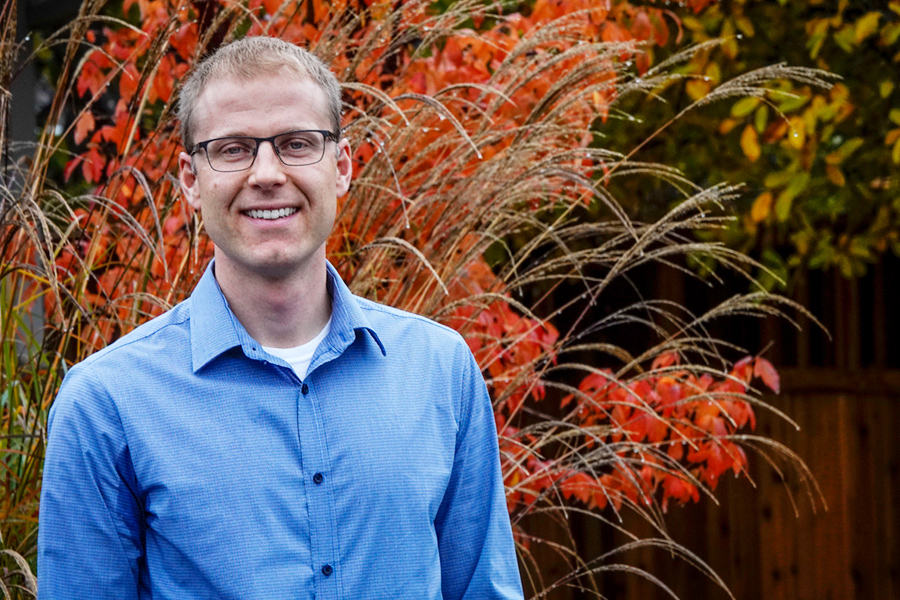
Dr. Jonathan Kerr is seeking re-election to a full term on the Comox Town Council. Kerr has been a council member since voters elected him 10 months ago to fill the seat of resigning councillor Pat McKenna.

Kerr earned his Doctor of Medicine from the University of Toronto in 2006 and did Post-Graduate Family Medicine training at Queen’s University. He practiced family medicine in Belleville, Ont. prior to moving to the Comox Valley.

He and his wife and their two children moved to the Valley in late 2014, and he joined the Sea Cove Medical Clinic in 2015, where he is currently the lead physician.

Kerr served as president of the Ontario College of Family Physicians and served on its board for many years, including one year as chair. He has also served on the board of directors for the College of Family Physicians Canada and currently sits on the Advisory Committee for the Comox Valley Division of Family Practice.

He is the founder and chair of the new Comox Valley Family Physician Recruitment and Retention Task Force.

Kerr actively competes in the sport of Biathlon and coaches youth eight to 18 in rifle marksmanship and cross-country skiing with the Vancouver Island Biathlon Club. He’s also a volunteer with the Brooklyn Creek Watershed Society, and previously served on the Coalition to End Homelessness, Dawn to Dawn Action on Homelessness Society and is treasurer of the Navigate School Parent Advisory Council.


Why should voters re-elect you?

Kerr says he has really enjoyed his role on council since last November, especially the opportunity to connect with residents. The constituency work energizes him, he says, making him a bit of an outlier among the many policy wonks who hold public office. 

Kerr says being a town councillor is similar to his role as a family doctor.

“You listen to people’s concerns, make a diagnosis and work with them on a plan to fix it,” he said. “It’s a real high, a beautiful moment when I can make a difference in people’s lives.”

In his medical practice and now on council, Kerr operates on the ‘servant leadership model.’ He sees his job as serving people to improve their lives, the community and the environment.

He stresses transparency and accountability as key attributes of a good councillor.

“They are not just buzzwords. I take them seriously. After every meeting, I post my voting record on my website and I link to the time in the council video where I speak on each topic,” he said.

In his nine months on council, Kerr has made sure that he focused on what people told him they wanted during the nine-month public listening campaign he ran last year.

“It’s for the voters to decide if I deserve a full term after winning the byelection last fall,” he told Decafnation.


What are some of your key accomplishments?

During the byelection, Keer made it clear that he would have three priorities based on the extensive public information sessions he did prior to the byelection: affordable housing, climate change and the recruitment of new family doctors.

On affordable housing, Kerr says the town used to negotiate informally with developers for affordable housing units.

“Now, we have put that into a formal policy so everyone knows what it is,” he said.

The new policy requires developers to set aside 1.2 percent of their total rental units and 1.8 percent of condo units for the town. Comox will then partner with local non-profits to rent these out as truly affordable units.

“I had proposed 2.5 percent, which developers objected to, so we collaborated to agree on the new policy rates. I took some heat for this. Developers were not thrilled but it’s important to stand up for what’s best for the community,” he said.

Kerr says he would support a regional housing authority to manage all the affordable housing units in the Comox Valley. Others running in Comox and Courtenay have expressed support for a housing authority.

On climate change, Kerr helped drive passage of the new tree retention bylaw, which passed on a 4-3 vote. The first version of the tree bylaw required 25 percent retention and the new bylaw requires 30 percent.

“Again I proposed in my motion to make it 35 percent and we collaborated,” he said. “It was important to get this done before any development started in the Northeast Comox area.”

The Town Council also approved participation in the Comox Valley Regional District’s regional climate action initiative. Kerr moved that council adopt the Comox staff report on the possibility of adopting some of the Youth Climate Council’s Green New Deal proposals in the short, medium and long-term.

“I am supporting the Youth Council’s efforts to transition to a more climate change-friendly society,” he said.

Kerr has been especially successful in his campaign theme of recruiting more family doctors to the area.

“Immediately after I was elected last November, I called together a Comox Valley Family Physician Recruitment and Retention Task Force that included mayors, councillors, CAOs, representatives from the CV chamber, hospital and other sectors because it has to be a regional-wide effort,” he said. “The goal wasn’t to just bring doctors to Comox. It wouldn’t work if all our jurisdictions competed with each other. New doctors, wherever they live or set up practice in the Valley benefit us all.”

When Kerr started the task force, there were 14,000 Valley residents who didn’t have a family doctor (numbers were culled from the Comox Valley’s clinics’ wait lists and the province’s health registry).

Since Jan. 1, the group has recruited 13 new doctors; seven are already here and practicing and six are arriving this fall. And the Task Force has connected 5,500 people with doctors in the last 12 months. 

To accomplish that, Kerr’s Task Force formed a marketing strategy that examined what each community offered. They made videos of current doctors talking about why they love practicing here and posted them on social media.

When doctors come to visit, Kerr says the group has a Roll Out The Red Carpet plan to show the doctors and their families around the whole Comox Valley and try to remove any barriers that exist, such as finding temporary housing.

Staff at the Comox Valley Division of Family Practice coordinates the Task Force’s recruitment efforts, including finding out a doctor’s and their family’s needs and interests before they come to visit in order to tailor the sales pitch.


Goals for the next four years

Kerr says he doesn’t have any personal goals for the next four years, “just the ones Comox residents tell me are their top issues. Housing, climate and doctors are still at the top of the list. But I will be looking at some specific issues.”

One of those other issues would be to protect as much of the Northeast Comox forest land as possible – the area from Highland school down to the roundabout on both sides of Pritchard, mostly on the east side. The area includes 11 different parcels with multiple owners.

“The question here is how best to use this land,” he said.

The area is zoned R1 for residential single-family homes. But Comox already has the highest percentage of single-family homes: 66 percent. The national average is 51 percent.

“We need more rental units and townhouses,” Kerr said. “With the current housing market, single-family homes aren’t affordable housing for many people.”

There’s also the economic piece for taxpayers. It will take more than 30 years to pay back the cost of extending sewer and water infrastructure to the area.

“Why burden the town’s taxpayers with more unfunded liabilities?” he said. “Plus, it’s a beautiful forest and it would be a shame if it all came down. We should be able to find a balance among retaining trees, benefits to taxpayers, affordable housing and a mixture of housing types.”

Right now, Northeast Comox area property owners could build all single-family homes. But Kerr says it would be better to upzone and allow developers higher densities and make a plan for the whole area rather than dealing with each parcel piecemeal.

“We could have a discussion and find a compromise by looking at the whole area through a community benefits lens. I’m optimistic the developers will come to the table,” he said.

Also, the council will be updating the town’s Official Community Plan during the next term. Kerr wants to be a part of that for the inclusion of community-focused visions for social, environmental and reconciliation issues.

Kerr will also be looking at improving activities for teens with “so many new young families moving here,” and making streets safer and working with the BIA for a more vibrant downtown.


What is most misunderstood about the Council Town Council?

Kerr thinks some people believe that the council should limit itself to just dealing with water, sewer and potholes.

“These are all important things, but the role of the town and council is much more,” he said. “It’s not correct that councils are not supposed to do those things.”

The BC Community Charter, which gives municipal governments their authority, states a local government must “foster economic development, social and environmental well-being of its community.”

“Those are the exact lenses that I use in decision-making at council because that’s what Comox residents want and what the people who call me want,” he said.

“It’s the responsibility of elected officials to address the issues that matter while providing excellent core services,” he said. “Our updated Official Community Plan for Comox could look different depending on who Comox people elect. You could have a forward-thinking council or a group of regressive people.”
​​


WHERE AND WHEN TO VOTE

General Voting Day is Saturday, Oct. 15 for all local government positions.

Comox Valley Regional District

General Voting Day and advance voting take place at the CVRD building in Courtenay from 8 am to 8 pm.

Go to this link for General Voting Day locations in the three Electoral Areas.

Additional voting takes place on Oct. 6 from 9 am to 12 pm on Denman Island and on Oct. 6 from 2 pm to 5 pm on Hornby Island

Courtenay

Advance Voting begins on Wednesday October 5, 2022, 8 am to 8 pm at the Native Sons Hall, and again on Wednesday October 12, 2022, 8 am to 8 pm at the Florence Filberg Centre.

General Voting Day, Saturday, October 15, 2022, 8 am to 8 pm at the Queneesh Elementary School, and at the Florence Filberg Centre.

Comox

Advance voting begins Wednesday, October 5 from 8 a.m. – 8 p.m. at the Comox Community Centre, and on Saturday, October 8 from 10 a.m. – 2 p.m. at the Genoa Sail Building at Comox Marina, and again on Monday, October 10 from 10 a.m. – 2 p.m. at the Genoa Sail Building at Comox Marina, and on Wednesday, October 12 from 8 a.m. – 8 p.m. at the Comox Community Centre.

General Voting Day runs from 8 am to 8 pm on Oct. 15 at the Comox Community Centre.

Cumberland

All voting in the Village of Cumberland takes place from 8 am to 8 pm at the Cumberland Cultural Centre. Advance voting takes place on Oct. 5 and Oct. 12.


SUBSCRIBE TO OUR NEWSLETTER

Enter your email address to subscribe to the Decafnation newsletter.

More

Our recommendations in the 2022 Comox Valley local government elections

Decafnation announces its list of preferred candidates in this year’s local government elections and for the first time we identify candidates that we think show promise and provide our reasons for not endorsing the other candidates. Our endorsements fall on the first day of voting at advance polls

Jenn Meilleur: Active volunteer and advocate for community, collaboration and climate change

Jenn Meilleur: Active volunteer and advocate for community, collaboration and climate change

Jenn Meilleur has an insider’s view of how the government process works and years of experience in working collaboratively

Jenn Meilleur: Active volunteer and advocate for community, collaboration and climate change

By

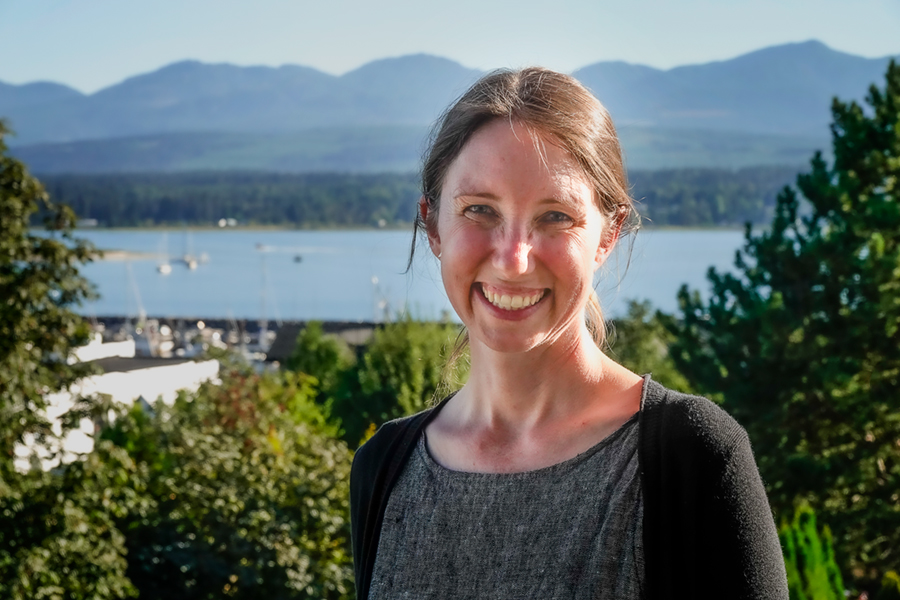
Jenn Meilleur is seeking a first term on the Comox Town Council. She is a systems change and dialogue facilitator currently working as the Manager of Community Disaster Recovery with Emergency Management BC.

She has worked with and for local governments since 2010. She started as a Program Manager (Policy Analyst) with the City of Vancouver when it adopted The Greenest City Action Plan in 2010 to become the greenest city in the world.

Meilleur moved to Comox Valley with her husband and two children in the spring of 2019. She grew up in Qualicum and graduated from Vancouver Island University when it was still called Malaspina College.

Jenn has two decades of experience leading and supporting initiatives and collaborative networks in the fields of sustainability and climate action, community development, organizational development and systems change. And she is an active volunteer in her community

She is the Board Co-Chair for LUSH Valley Food Action Society, a member of the local Food Policy Council and a member of the Coordinating Circle for the Comox Valley Community Health Network. She helped found a nature-based elementary school program and supported the creation of the Atl’ka7tsem/Howe Sound UNESCO Biosphere Region in the Salish Sea as a board member.

Jenn finds her inspiration in nature with gratitude on the unceded lands and waters of the K’ómoks First Nation in Comox with her husband, two children and many “four-legged friends.” She enjoys trail running, wild swimming, cycling and creative knitting projects. She is devoted to lifelong learning and is also an avid bookworm.


Why should voters elect you?

Meilleur is running for council because she has heard our youth’s growing anxiety about climate change and feels accountable as a Gen-X-er to do what she can for future generations. She believes there is a groundswell of worry about climate change.

“I want to take better care of nature through collaboration with others,” she told Decafnation. “It’s about the emergency. Like Greta Thornberg says, ‘we know we have to do better.’ But how do we do that?”

The three pillars of Meilleur’s campaign are community, collaboration and climate change.

She has spent her career on sustainability issues in the co-op sector, within government and for nonprofits. Through social innovation, she says she has brought people together to solve complex issues.

“I have an inside view of how the government process works and a skill of working collaboratively,” she said.

She says that running for office is not about what one person can do, but rather it’s about how this particular group of people can collaborate and what they can accomplish together.

“I have resisted campaigning with promises,” she said. “The public wants politics to be different. Council work should be a relational process, not a linear path. I would stress collaboration within the council and find new ways to bring citizens into the process.”

Meilleur would also like to bring more art into the community. She says studies have shown that road murals calm traffic and reduce accidents.


What are some of your key accomplishments?

As the previous regional coordinator for the Comox Valley Farm-to-School program, Meilleur brought together farmers, nonprofits, government staff and elected officials, and did this during the pandemic.

Working as a facilitator with the Community Health Network, Meilleur figured out how to bring all these diverse groups together to influence policy and make change. She organized and facilitated dialogue sessions and then captured stories that people shared.

Her campaign issues are affordable housing, climate change focus, local business, local food, reconciliation and creating equity for all people. And she believes that if people work collaboratively we can restore people’s faith in democracy.

A quote she particularly likes is from Lilla Watson about being interconnected: “If you have come here to help me, you are wasting your time. But if you have come because your liberation is bound up with mine, then let us work together.”


Goals for the next four years

Meilleur recognizes the importance of affordable housing to the community and would focus her efforts to continue building momentum for solutions.

“I would take a look at why Comox opted out and chose to not work regionally on this issue,” she said. “I believe affordable housing needs to be both local and regional to be effective.”

She says there is lots of good work being done in this field. She notes that Saanich fast-tracked garden suites and created 800 new housing units in one year and that the CV Seniors Support Society has started a housing program to match students with seniors who want to age in place. There was a plan for a Comox task force, but it was never formed, she said.

“Society has the answers and others are doing it,” she said. “Affordable housing has to go beyond new developments.”

But, Meilleur says, we must recognize that solutions that work in bigger cities don’t always work here. “We have to scale things for our size.”

The important lesson she takes from the council motion to require developers to set aside a percentage of below-market-rate units in all new developments is that government needs to work directly with whoever is impacted most when creating new programs – in this case, the developers.

Also, she says, it’s not always the government’s role to do something and maybe it’s better for the community or other partners to do certain things. Government should discern where to create conditions that encourage affordable housing rather than do it themselves.

“We need to consider co-housing, co-op housing and the whole spectrum of possibilities. It’s a regional issue and a complex problem that needs all parties at the table,” she said.

Climate change is also at the top of Meilleur’s priorities.

“I think of climate action both as reducing greenhouse gases and as protecting and restoring the environment,” she said.

For example, she says the town’s tree canopy bylaw supports biodiversity but that it’s out of date. She would work to carefully incentivize developers to keep trees. Meilleur’s family has turned their boulevard into a pollinator garden with bee turf, wildflowers and perennials.

Meilleur’s current work is mostly with First Nations, helping them to recover from the floods last fall (the atmospheric river event in November). But she says climate change-focused actions are “not a ticky box.”

“Those principles must be integrated into everything. Comox would benefit from this same clarity in its strategic vision. There are lots of best practices out there to draw from. There are not many council decisions that wouldn’t benefit from a climate change lens,” she said.

Meilleur believes that local governments need to talk about making “regenerative” actions and policies.

“Our environment is too degraded now so putting it back the same is no longer good enough. It has to be better than before and I think people are starting to get that now,” she said.

Food security is another of Meilleur’s key issues. She believes that community food security can be improved with urban agriculture bylaws.

“Comox made a start but it needs to be more robust to allow hens and front yard greenhouses. We need to make it easy for people to grow food and share it with neighbors. This builds community resilience,” she said.

Meilleur understands that local governments are just finding their feet in regard to reconciliation efforts and that current systems aren’t designed to support First Nations or other equity deserving groups. She thinks she can contribute by using her collaboration skills.

Government-to-government relations are now a big part of every local government’s planning and that “creates a significant paradigm shift for everyone.”

“What I mean is that we aren’t fighting over pieces of a pie, we’re trying to make the pie bigger for everyone. And when we put Indigenous people and other historically marginalized people at the centre of our work, we all benefit,” she said.

The town will be reviewing its Official Community Plan during the next four years and Meilleur would like to be part of that process. The current OCP was updated in 2011.

“The existing document is not visionary. It needs to be more inspirational and account for climate action as Courtenay has done with their OCP,” she said. “Perhaps we should include a citizens’ assembly in the process to engage as many people as possible.”

And finally, Meilleur would do what she can to support local businesses.

“At any given time, there are only about three days of supplies that people need on Vancouver Island and we have already experienced supply chain disruptions from the pandemic and the atmospheric river in November of last year,” she said. “Any type of natural or climate disaster that cuts off those supplies will be serious. Therefore, we need to shorten the supply chain and make more of what we need on the Island.”


The most misunderstood thing about Comox Town Council

In some local governments, Meilleur sees a lack of urgency and clarity of vision. And she doesn’t think the current system and the way local governments often work were designed for the complex problems of today.

“The public sees that it’s not working. They want it to be better,” she said. “We have to learn to disagree better and how to be of service to our community and to these times. I am running to be of service.”


WHERE AND WHEN TO VOTE

General Voting Day is Saturday, Oct. 15 for all local government positions.

Comox Valley Regional District

General Voting Day and advance voting take place at the CVRD building in Courtenay from 8 am to 8 pm.

Go to this link for General Voting Day locations in the three Electoral Areas.

Additional voting takes place on Oct. 6 from 9 am to 12 pm on Denman Island and on Oct. 6 from 2 pm to 5 pm on Hornby Island

Courtenay

Advance Voting begins on Wednesday October 5, 2022, 8 am to 8 pm at the Native Sons Hall, and again on Wednesday October 12, 2022, 8 am to 8 pm at the Florence Filberg Centre.

General Voting Day, Saturday, October 15, 2022, 8 am to 8 pm at the Queneesh Elementary School, and at the Florence Filberg Centre.

Comox

Advance voting begins Wednesday, October 5 from 8 a.m. – 8 p.m. at the Comox Community Centre, and on Saturday, October 8 from 10 a.m. – 2 p.m. at the Genoa Sail Building at Comox Marina, and again on Monday, October 10 from 10 a.m. – 2 p.m. at the Genoa Sail Building at Comox Marina, and on Wednesday, October 12 from 8 a.m. – 8 p.m. at the Comox Community Centre.

General Voting Day runs from 8 am to 8 pm on Oct. 15 at the Comox Community Centre.

Cumberland

All voting in the Village of Cumberland takes place from 8 am to 8 pm at the Cumberland Cultural Centre. Advance voting takes place on Oct. 5 and Oct. 12.

SUBSCRIBE TO OUR NEWSLETTER

Enter your email address to subscribe to the Decafnation newsletter.

More

Our recommendations in the 2022 Comox Valley local government elections

Decafnation announces its list of preferred candidates in this year’s local government elections and for the first time we identify candidates that we think show promise and provide our reasons for not endorsing the other candidates. Our endorsements fall on the first day of voting at advance polls

The Mack Laing Trust: BC Supreme Court hears arguments in 40-year case

The Mack Laing Trust: BC Supreme Court hears arguments in 40-year case

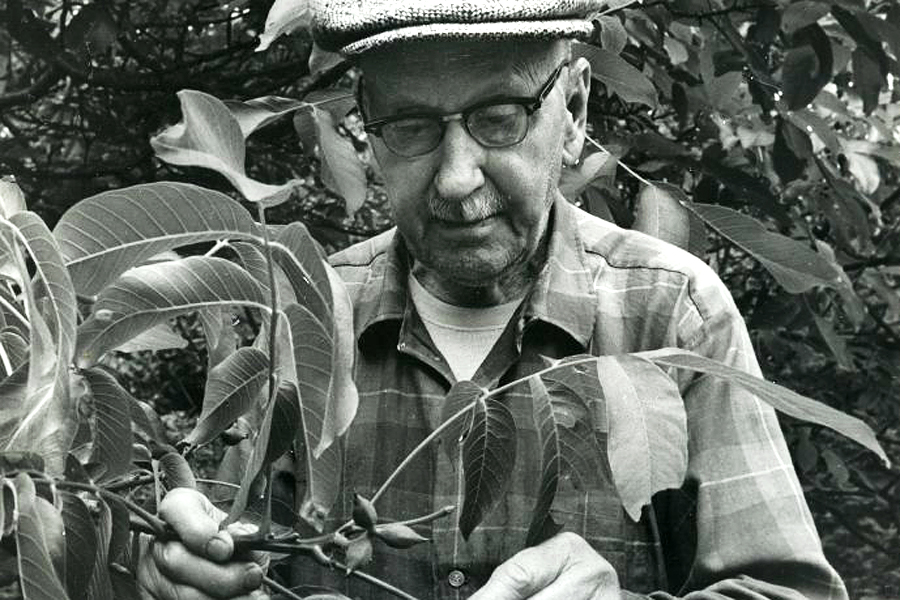
Hamilton Mack Laing tends trees in his Nut Farm above Comox Bay in the early to mid 1900s

The Mack Laing Trust: BC Supreme Court hears arguments in 40-year case

By

The 40-year saga of an internationally famous naturalist and Comox Valley pioneer who left his waterfront property, possessions and money to the Town of Comox finally made it to the BC Supreme Court recently, where lawyers argued the legal technicalities of his Trust Agreement and his Last Will and Testament.

The the three-day proceedings in Courtroom 200 at the Courtenay Courthouse with Justice Jennifer A. Power presiding provided a stark contrast to the rich history and universal respect for the man, Hamilton Mack Laing, and his passion for the natural world and the biodiversity he found in the early 1920s along Comox Bay.

Instead, a lawyer for the Town of Comox and another for the BC Attorney General speculated on a broader meaning of certain words used in the Trust Agreement and other documents. They cited statues in municipal governance and jurisprudence that didn’t exist in 1973 when Mack Laing started making his gifts to the town or even in 1981 when he wrote his last wishes before he died in early 1982.

The lawyers hoped to convince Justice Power that despite misappropriating Laing’s money and misleading past council members, the Town of Comox should be allowed to demolish the man’s heritage home, Shakesides, and use his money for purposes that Laing had not explicitly envisioned.

They also spent a large portion of their time before Justice Power arguing that she should ignore most of the hundreds of pages of evidence and documentation submitted by the Mack Laing Heritage Society (The Society), an intervenor in this case, because they are “not relevant” to section 184 of the 2003 BC Community Charter.

They dismissed the numerous affidavits provided by The Society as “opinion and hearsay” that purport to describe Laing’s importance to the town’s history and the field of natural history generally and to prove that the terms of his gifts were crystal clear.

But something was missing in this cold, binary courtroom summarization of the legal fine points, which the lawyers so aptly boiled down to what was documented or not and which words were precise or vague and whether agreements made between 1973 and 1981 do or do not comport with a 2003 law. Absent from the discussion, except when The Society’s lawyer took the podium, was the context of the social-political-bureaucratic environment during which this 40-year travesty took place.

The Society’s lawyer did his best to paint that bigger picture. The Society believes that Justice Power, and anyone else masochistic enough to read through the mountain of public filings in this case, will discover the struggles of a lone female advocate for Laing’s wishes, the pursuit of personal agendas, the political strategies that were afoot and the unsavory means used to achieve them.

The Society believes Justice Power will learn that Laing was a good-hearted man, albeit naive about fickle town councils, who wanted his life’s achievements to live on and educate those who came after him and that the intention for his gifts to the people of Comox were clear and indisputable.

The Society’s lawyer said the Town of Comox had made its own mess and was now in a rush to clean it up. But, he argued, there is no good reason why, after 40 years, the town can’t wait for a thorough accounting of how much money should be in the Trust Fund and for an independent assessment of Shakesides’ viability by heritage building professionals.

After hearing from the town, the Attorney General and The Society, Justice Power gave no immediate ruling. Her decisions in this case could take weeks.

The Mack Laing saga is ultimately a story of how clever people can obfuscate the big picture using the detachment of legal proceedings and try to rewrite history to serve a modern agenda. It’s a cautionary tale about how municipal staff can lead a town council down an ethically wrong path and how a majority of them willingly follow it.

The case puts an exclamation point on the importance of electing mayors and council members who believe in playing by the rules. In other words, serious public servants who are determined to fully understand the issues before them and who refuse to take the lazy route of blindly accepting staff recommendations.

But that’s just our opinion.

What follows now is a brief summary of the arguments heard by Justice Power.


WHAT THE TOWN AND ATTORNEY GENERAL SAID

The BC Attorney General, represented by Sointula Kirkpatrick, and the Town represented by Mike Moll, argued that Laing had made two separate trusts. In the first one in 1973, the Park Trust, Laing gifted his property including the Shakesides house. In the second in 1981 via his Last Will and Testament, the Trust, Laing left the residue of his estate – money and possessions – to the town.

The lawyers said only the 1981 trust was before the court. That argument, if accepted by Justice Power, means that the Shakesides house was given to the town without conditions in the earlier Parks Trust and was the town’s property to do with as it pleased. The only issue before the court was whether the later Trust funds could be spent to construct a viewing platform.

“It has been 40 years since he made his bequest. Shakesides was never suitable to be a museum and the Trust Funds were and are not sufficient to make it one,” Kirkpatrick told the court.

She said further that “most of The Society’s evidence is not relevant to this court’s determination under Section 184 of the Community Charter.” And she went on to argue details of general trust law principles.

At that point, Justice Power stopped the proceedings to address the gallery, comprising only members of The Society. Justice Power said that despite the AG lawyer’s opinion of The Society’s evidence, only she would determine its relevance.

In regards to the comprehensive plan prepared by The Society and two dozen community volunteers to restore Shakesides and convert it to a natural history museum, Kirkpatrick said their proposal was “beyond the scope of this proceeding and has no basis in law.”

She concluded that the town’s proposal to construct a “Nature Park Platform can accommodate the K‘omoks First Nations’ concern about disturbance to the Great Comox Midden on which Shakesides is located, without further delay or unnecessary litigation.”

She said Mack Laing’s charitable intentions should be carried out through the building of the platform and she asked the court to “grant the variation sought on the conditions proposed by the Attorney General and to which the Town agrees.”

The town’s lawyer, Mike Moll said, “The Town is applying to vary the Trust because the Town’s Council now considers the terms of the Trust to no longer be in the best interests of the Town. The Town says that the Nature Park Platform containing natural history education panels will better further both the intention of the will-maker and the best interests of the Town.’


WHAT THE SOCIETY SAID

The Mack Laing Heritage Society, represented by Kevin Simonett of Campbell River, argued that “In breaching its obligations as trustee and allowing waste and neglect of the culturally valuable and irreplaceable trust object (Shakesides), Comox has manufactured the very crisis it now claims as justification to vary the trust.

“Comox does not come before the court with clean hands and is the author of a delay of several decades.”

Simonett went to say that after 40 years of the town’s financial mismanagement and dereliction of trustee obligations and fiduciary duty – “to which Comox has essentially admitted” – a forensic accounting of the trust funds and an independent assessment is required to ascertain the true financial health and structural integrity of Shakesides.

“Comox offers no explanation as to why they cannot wait for such forensic auditing
and physical inspection to be completed. Instead, they insist on immediate
demolition of a culturally valuable and historic home to be replaced with little more than a concrete slab,” he told the court.

Simonett argued that the town’s conclusion that Shakesides is unsuitable for use as a museum was “a foregone conclusion.” Since the town received Laing’s gifts, “the town has selectively sought out informal information tending to confirm that conclusion, rather than carrying out proper due diligence and obtaining expert opinions.”

He detailed how a town executive ignored the misspending of Laing’s money, stacked an advisory committee to get the result he wanted and then misled council members to make decisions based on a non-existent Park Plan and a flawed process designed to achieve personal and political purposes.

He argued that there was only one trust, not two, which Laing continued to amend through the period from 1973 to 1981.

“By way of gift in his last will and testament, the (Laing) carried out the Settlement upon the Park Trust; his intent was to add the residue of his estate to the trust corpus established under the Park Trust, on the terms set out in the instrument of gift. The Town in its capacity as Trustee had notice of these terms, and indeed had a hand in negotiating them, and accepted these terms when it accepted the funds forming the Settlement upon the Park Trust,” Simonett said.

Simonett told Justice Power that the town and the AG have provided evidence, “only on the putative cost-effectiveness of varying the Park Trust to remove Shakesides, and none as to the superiority per se of the viewing platform. It is the Intervenor’s position that the relative cost-effectiveness of the competing visions for Mack Laing Park has not been determined, due to the protracted intransigence of the town.”


SUBSCRIBE TO OUR NEWSLETTER

Enter your email address to subscribe to the Decafnation newsletter.

More

Council vote sends Mack Laing Trust issue back to court

Comox Town Council voted 5-2 this week to continue designing a viewing platform to replace naturalist Mack Laing’s heritage home, rejecting any other proposals for the property, as it prepares to head back to the BC Supreme Court.

MLHS issues letter of thanks to Comox Council

Mack Laing Heritage Society archive photo By George Le Masurier he Mack Laing Heritage Society this morning issued an open letter to the Town of Comox mayor and council. Here is their letter: We, the Mack Laing...

Court will allow opposing evidence in Mack Laing case

A BC Supreme Court has granted the Mack Laing Heritage Society intervenor status in the Town of Comox’s application to alter the naturalist’s public trust. MLHS hopes the new council is open to out-of-court discussions

Town’s Mack Laing “hub” aims to influence court

The timing of the Tow of Como’x new information hub about Mack Laing seems to indicate that it will function mostly to justify the town’s controversial decision to have the terms of the Mack Laing Trust altered by the B.C. Supreme Court and to report on the outcome of the case.

Questions the Town of Comox doesn’t want asked in court

Why is the Town of Comox fighting so hard and spending so much money on lawyers to keep the Mack Laing Heritage Society from presenting evidence during a BC Supreme Court trial to decide whether the town can vary the terms of the famous ornithologist’s financial gifts in trust to municipality?

Supreme Court rules in favor of Mack Laing Heritage Society

The Mack Laing Heritage Society has won a major legal ruling in its battle to force the Town of Comox to honor trust agreements with the famous naturalist. It’s the first step in a case that will decide the future of Laing’s iconic home and clarify the status of his trust agreements.