THE WEEK: 5 things wrong with how Comox tried to hide sewage spill information

THE WEEK: 5 things wrong with how Comox tried to hide sewage spill information

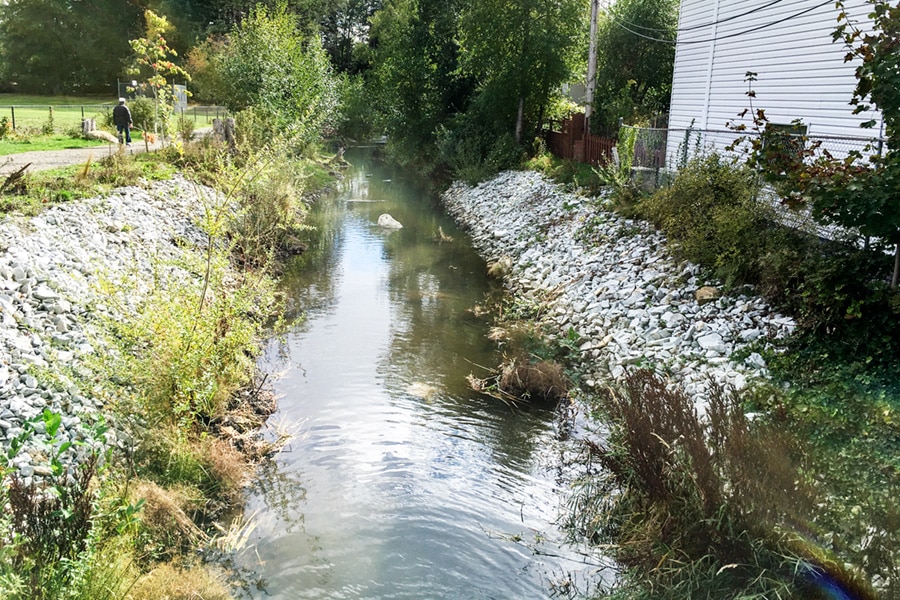
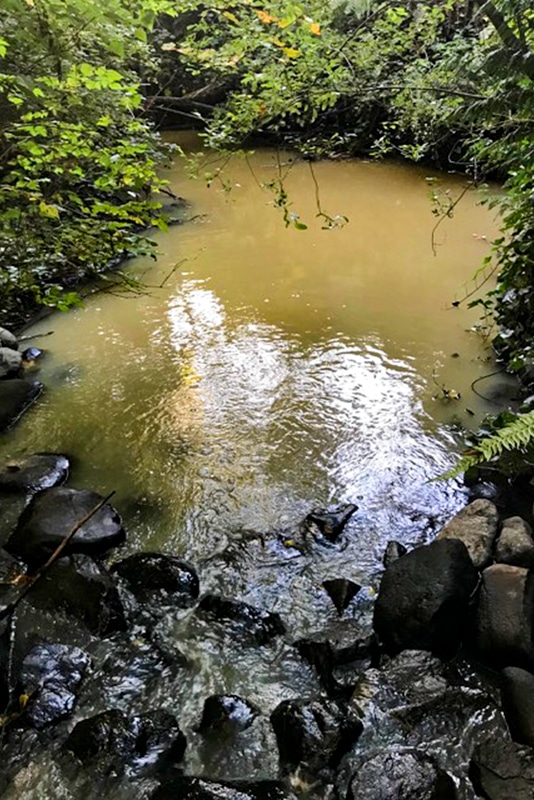
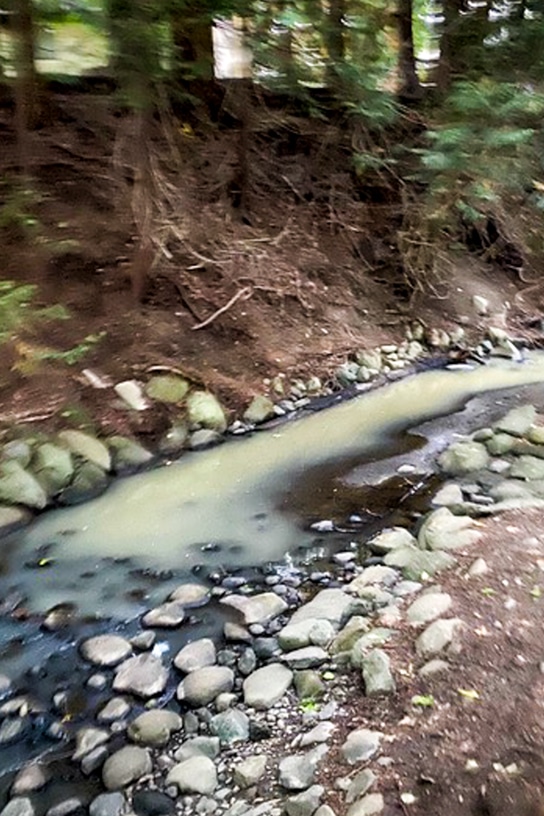
Brooklyn Creek below the Noel Avenue culverts — as it looked after the sewage spill clean-up  |  George Le Masurier photo

THE WEEK: 5 things wrong with how Comox tried to hide sewage spill information

By

There’s something fishy going on in the Town of Comox.

Here’s the story in a nutshell: Two pieces of the town’s infrastructure failed and some undetermined amount of raw sewage spilled into Brooklyn Creek for some undetermined length of time. Then, on the afternoon of Sept. 3 (a long Labor Day weekend) the town marshaled an “army” of workers and heavy equipment to dredge out tonnes of accumulated muddy silt and vegetation immediately below the Noel Avenue culverts.

When Decafnation discovered the spill — thanks to several alert readers — we published a commentary on Friday, Sept. 24 asking why the town, including the mayor and councillors, hadn’t informed the public of such a concerning situation.

The very next day, Saturday, Sept. 25, the town — which up to this time had not even publicly acknowledged the sewage spill — issued a news release that implied the incident was no big deal, just a “small leak” that was found and all fixed up in the same day.

And, oh, by the way, said the news release, the mayor and council never knew anything about any of this.

What?


FIVE THINGS WRONG

First, as you will see, the facts are that the town did not “discover” raw sewage in the creek. They were told about it.

Second, there is no such thing as a “small leak” of raw sewage into public waterways. It’s always a big deal.

Third, when lumps of human excrement and toilet paper float down a creek, there are obvious public health risks. Dogs regularly drink from the creek. Children have been known to play there. To say otherwise — and the town is not qualified to make such an assessment — is misinformation.

Fourth, the town clearly hoped to hide the sewage leak from the public. When it could not hide it any longer, their communications were so confusing that it couldn’t even get it right about the amount of contaminated soil removed from the creek during the clean-up operations.

And, finally, this is accumulated soil that Brook Place condo residents had complained about to the town starting in February and were told not to worry — including by a letter from Mayor Russ Arnott just a week before that same soil turned out to be, in fact, a problem.

It’s hard to know where to start unpacking all of this. But let’s just start by setting a few facts straight.


THE TOWN DID NOT DISCOVER THE PROBLEM

We don’t know who wrote this news release, but we can assume that at least the mayor was involved along with CAO Jordan Wall and most likely the town’s Communications Coordinator Lara Greasley. Public Works Engineer Shelley Ashfield may have also contributed.

The release starts off, “On September 3, Town Staff discovered a small sanitary leak ….”

But the town actually knew about the sewage leak a day earlier on Sept. 2 when staff members of Current Environmental, who were doing field work as part of an independent fish habitat study in partnership with DFO, the Pacific Salmon Foundation and the provincial government observed raw sewage solids and low dissolved oxygen levels in the creek below Noel Avenue. They reported their observations to DFO, PEP and the Town of Comox.

Rupert Wong, a principal of Current Environmental, then gave the town technical advice about how to proceed with source control, spill clean up and remediation, which began on Sept. 3

Town staff didn’t “discover” that sewage was spilling into the creek, but they did subsequently find the source of the leak.


HOW MUCH SOIL WAS REMOVED?

The news release didn’t say that a major amount of sewage-contaminated mud and plant growth was removed from below the Noel Avenue culverts, but CAO Jordan Wall said in a follow-up email to Decafnation that 38 cubic meters were taken out.

But Brook Place residents say they witnessed 15 dump truck loads being removed, which they estimated at 180 tonnes.

So Decafnation asked Wong to clarify the number. Wong told us that his staff’s timesheets show that on Sept. 3 vacuum trucks removed 73 cubic meters and excavators dug out a further 38 cubic meters, or 111 cubic meters in total. Depending on the density of each load, that converts to more or less 200 tonnes of material. The timesheets also show that an additional 18 cubic meters was removed on Sept. 7.


NO PUBLIC HEALTH CONCERN?

The town’s new release says the creek’s “water was tested and no health risks to the public were identified.” This is misleading.

The water was tested, but only after the clean-up was completed when, if the crews had done their job well, the test should have shown acceptable water quality. There was no test before the clean-up.

Certainly, the public was at some level of risk during the undetermined time that raw sewage was leaking into the creek.

It’s possible that the cracks in sewage and stormwater pipes that transferred sewage into Brooklyn Creek did not suddenly bust wide open. It’s likely that they started as small cracks, perhaps just allowing a trickle to leak downstream, and that over time the cracks grew larger and larger until on or before Sept. 2, whole lumps of human excrement and toilet paper were seen floating in the creek.

When did fecal coliform levels reach the point where a public health risk existed? No one can say for sure. But the town was in no position to say on Sept. 25 that no public health risk ever occurred.

And it appears that our local health authorities were not informed about the sewage spill, although that’s not necessarily unusual, according to Wong.

“When we report spills to PEP, it is like a triage center that processes, evaluates and refers the incident to other agencies,” he told Decafnation via email. “We do not know what other agencies PEP would have referred. In our experience, the health authority will be part of the referral list if there are potentially affected water licenses.”

Wong says that preliminary bacteriological lab results showed the cleanup was effective in bringing fecal coliform levels down, but that the final lab results are not yet in. They are still waiting on lab results for other water quality parameters that will hopefully help delineate non-human fecal coliform sources.

The Town of Comox does not regularly test waters in Brooklyn Creek or any of its waterways despite being advised to do so in several past consulting engineer’s recommendations.


WHO KNEW WHAT, WHEN?

The basis of this matter is that a raw sewage leak into Brooklyn Creek was discovered and has been fixed. Stuff happens.

But the most disturbing aspect of this story is that the Town of Comox tried to hide this information from the public and, it appears, also from our elected mayor and councillors.

The public should have been informed right away.

But what about the mayor and councillors? What did they know and when did they know it?

It’s hard to believe that the town’s CAO didn’t at least inform Mayor Arnott on Sept. 2 or 3. But let’s assume the news release is accurate. The mayor and council didn’t know. In the corporate world, not reporting up about something this serious that has high negative public relations potential would trigger major consequences.

So what have the mayor and council done to ally public concerns or clarify information since the sewage spill became public? So far, it appears they’ve done nothing beyond writing a news release.

There was no public discussion of the matter last night at the council’s first regular meeting since Sept. 25. There was a special council meeting called for Sept. 22 where they might have discussed it, but that meeting was held entirely in-camera.

And from what we’ve seen on social media, councillors have only referred people to the town’s news release. Publicly speaking, no council member has expressed outrage. No council member has shared their thoughts about how to prevent such a spill from happening again or how to catch it sooner. No call has been made for regular water testing.

No councillor has expressed concern about what effect such a sewage spill might have on fish in the creek.

The Town Council apparently feels that issuing a news release is all the information Comox residents deserve or need to know from their elected officials.


CITIZEN CONCERNS IGNORED

And, finally, the residents of Brook Place, the condominium buildings adjacent to the Noel Avenue culverts, have a justifiable complaint with the mayor and town councillors.

Over the past nine months, the Brook Place strata council has complained more than once about the accumulation of silt below the culverts installed in 2019. They feared the build-up of stinky mud and extraordinary plant growth might pose a threat to their buildings.

The town administration, the mayor and council ignored these concerns.

A week before the town dispatched employees and heavy equipment to remove that stinky, contaminated soil and vegetation, Mayor Arnott wrote the Brook Place residents to say that he had concluded there was no problem with the culverts and offered to take no action to help.

But anyone looking at the photographs of the section of Brooklyn Creek below the culverts prior to and after Sept. 3 can see that something unusual was happening. It should have been more thoroughly investigated.


SUBSCRIBE TO OUR NEWSLETTER

Enter your email address to subscribe to the Decafnation newsletter.

More

The Week: Take our local government survey!

Are you satisfied with the performance of your Comox Valley elected officials? In 20 months and three weeks, voters will go to the polls again. So we’re curious how Decafnation readers feel about their councillors, mayors, directors and school trustees halfway through their current terms in office

Tonnes of sewage mud removed from Brooklyn Creek, nearby residents say its been piling up for years

Tonnes of sewage mud removed from Brooklyn Creek, nearby residents say its been piling up for years

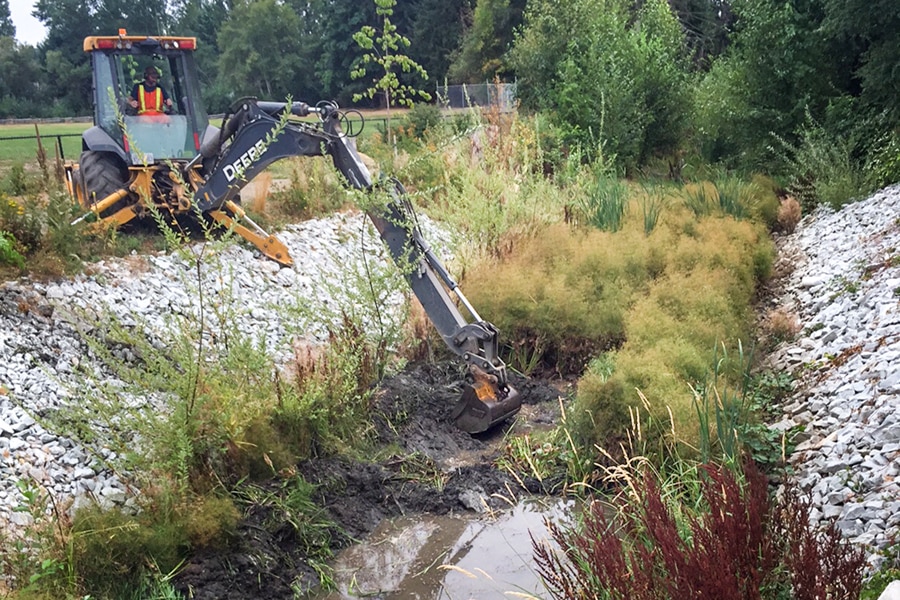
Town employees armed with dump trucks, vacuum trucks, excavators and other equipment removed stinky silt from Brooklyn Creek on Sept. 3  |  Photos submitted

Tonnes of sewage mud removed from Brooklyn Creek, nearby residents say its been piling up for years

By

Following the publication of a Decafnation commentary on Friday about leaking pipes that spilled raw sewage into Brooklyn Creek, the Town of Comox has gone on a hurried public relations campaign.

Mayor Russ Arnott has been posting on his Facebook page and doing media interviews this week even though he says he only found out about the leak on Saturday, three weeks after it occurred. And the town took the unusual step of issuing a news release on a Saturday, a day after the original Decafnation article appeared.

The PR campaign has minimized the seriousness of raw sewage leaking into the creek for an undetermined length of time and downplayed any ill effects the leak might have had on fish or dogs and other animals that drink from the water or children who play in the creek.

The town’s news release dated Saturday, Sept. 25 characterized the problem as “a small sanitary leak” that it “discovered” on Friday, Sept. 3, and assured citizens that the matter was remedied that same afternoon by removing tons of “contaminated water and soil from the creek.”

A test of the creek’s water quality after the remediation measures showed no public health concerns, according to Chief Administrative Officer Jordan Wall.

While the town says it found the source of the sewage leak on Sept. 3, it has not said how long the failed sewer and stormwater pipes had been leaking. Nor have they stated the length of time between when town employees first noticed diminished water quality and when they located the source of the problem.

But thanks to multiple Decafnation readers, we have learned that raw sewage may have been leaking into Brooklyn Creek for a long time, possibly years.

That would explain high levels of dissolved oxygen in the creek, unusual plant growth near Noel Avenue, dead smolt fish found on the creek’s bank and a definite sewage odour noticed by at least one person who walks the Brooklyn trails regularly.

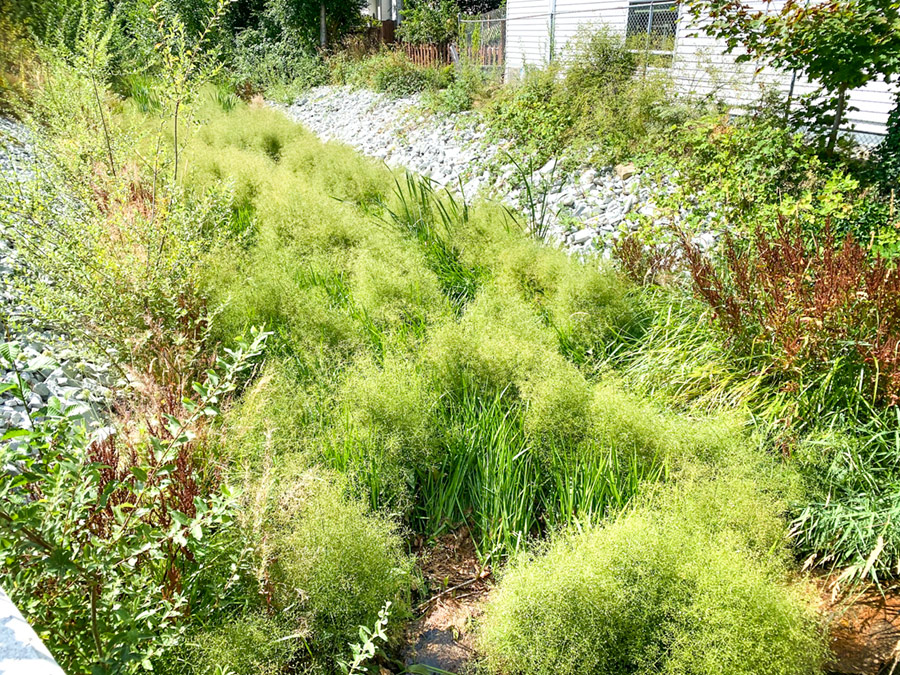
Photo of the Brooklyn Creek bed just below the Noel Avenue culverts taken last summer.


PIECING TOGETHER WHAT HAPPENED

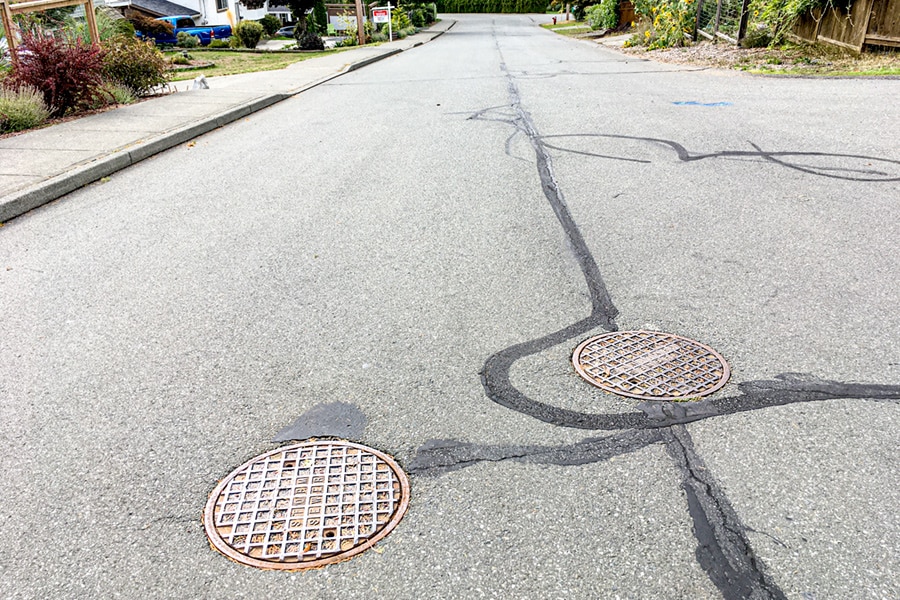
According to the town’s news release the sewer breach occurred near the Hillside Avenue-Highland Road intersection where stormwater and sewage manholes are located side by side. The town says concrete at the bottom of the sewage manhole eroded and flowed into a crack in a stormwater pipe one meter away

“These types of issues are increasingly common in these systems due to the age of some of the infrastructure,” Wall told Decafnation. He says the town plans to invest “heavily” in replacement and repair over the next several years.

Based on that explanation, the affected stormwater pipe would have to have discharged its polluted water into the creek somewhere upstream from the new culverts lower down on Noel Avenue. That’s because, as the town says, its response to discovering the leak included removing “contaminated soil” from the creek at the location of the new Noel Avenue culverts.

Neither Wall nor the town’s news release has said clearly that the removed soil was infused with the leaking raw sewage, but residents who live close to those culverts have told Decafnation that the smell of sewage was “overwhelming” as they watched town crews dig out tons of “contaminated soil.”

Asked if the septic smell had been strong, Brook Place Strata President Dennis Strand said, “Strong? That isn’t the word for it.”

And other residents of Brook Place, a 36-unit condominium building that borders the creek say that over the past two years they have observed unusual growth of plant life and silt buildup at the site of the culverts, and a definitive smell of sewage.

Carol Neufeld, a Brook Place resident who walks the creek trails every day, told Decafnation that she has noticed a septic smell along the creek for more than a year.

Strand says he and other nearby residents suspect that sewage may have been leaking into the creek at least since the Noel Avenue road work was conducted two years ago. But it’s also possible that sewage has been leaking into the creek for even longer and conceivably from multiple sources.

Strand says he was told by an environmental professional working at the site that there have been reports of toilet paper and lumps of human excrement floating in the creek.

Recent photo of the same section of Brooklyn Creek bed after remediation following the discovery of a sewage leak for an undetermined period of time | George Le Masurier photo


ROLE OF THE NOEL AVENUE CULVERTS

But in a written response to the Brook Place concerns, Strand says Mayor Russ Arnott denied any problems of capacity or silt buildup with the culverts.

In the mayor’s letter dated Aug. 20, Arnott said the culverts were “working as expected.”

But just a week later, at 1 pm on Sept. 3, at the start of the long holiday weekend, “an army of people and equipment descended on us, full force,” Strand told Decafnation.

Strand and other residents watched as approximately 15 employees with two dump trucks, excavators, two vacuum trucks, backhoes and other heavy equipment spent more than six hours removing 15 truckloads of contaminated, stinky silt and plants from the culvert location. The crews came back over the weekend for another few hours.

The vacuum trucks were used to reach places the excavators could not.

Regular tandem-axle dump trucks can carry 12.5 tonnes and a vacuum truck holds about 12 tonnes. Fifteen loads (11 dump truck and four vacuum truckloads) would equal approximately 180 tonnes or nearly 396,000 pounds of sewage-infused silt.

But town CAO Wall disputes those estimations. He told Decafnation the town only removed 38 cubic meters of material or about 57 tonnes, equivalent to a little more than four truckloads, and that most of it was gravel.

Strand says that’s “just not true and the photographs we have prove it.”

He says other people who watched the six-hour operation counted 15 loads — 11 by dump trucks and two each by the two vacuum trucks.

“If they only took out 57 tonnes, why did they have two dump trucks and two vacuum trucks onsite,” he said.

Strand, a former two-term Comox Council member and Comox Valley Regional District director, also disputes the town’s claim in its Saturday press release that they discovered a sewage leak, found its location and fixed it, and then coordinated with federal and provincial agencies and mobilized a large contingent of employees and equipment all in the morning of a single day.

The reparation work at the culvert site began at 1 pm.

“They had to have known sooner. I know governments can’t do all of that in a half-day,” he said. “They didn’t come and remove the silt because of our complaints. The mayor had just said a week earlier that there wasn’t a problem there. So they came Friday (Sept. 3) afternoon because of the sewage leak.”

What really angers Brook Place residents, Strand said, is the fact that the town had for a long time failed to even acknowledge their complaints about a problem that could have affected the condo building.

“But all of a sudden they arrive in full force. Working overtime on a holiday weekend. As I said, they weren’t here for us,” Stand says.

Strand is particularly upset with how the council has handled the issue.

“Nobody is taking ownership for not doing it right (the culvert design) in the first place. They didn’t account for the periods of low flow in the creek,” he said.

“It’s total disrespect to me and our strata owners.”

The stormwater (left) and sewage manholes at the intersection of Hillside Avenue and Highland Road


TURBIDITY FROM NEW GRAVEL

The turbidity observed in the creek recently is linked but not directly related to the sewage discharge.

Following the clean-up of contaminated silt and vegetation below the new Noel Avenue culverts, well-intentioned streamkeepers laid down new gravel as part of the reparation measures for potential spawning fish. Some of the gravel was reportedly unwashed, meaning it wasn’t clean of sediment. A subsequent flush of rainwater sent the silt (turbidity) downstream.

Sources told Decafnation that the turbidity was temporary and not likely to have any long-term effect on the creek’s water quality.


OTHER POLLUTED COMOX CREEKS

Brooklyn Creek isn’t the only waterway within the Town of Comox that has been affected by high pollution levels.

The last measurement made by a homeowner of E. Coli in Golf Creek, which runs through downtown Comox (mostly channeled underground) was taken on Aug. 7, 2021 and showed 11,000 coliform units per 100 ml. The single sample threshold for closing a public beach is 400 cfu/100 ml.

That means the E. Coli measured in Golf Creek may be nearly 30 times the government guideline considered safe for human contact. On Aug. 19, 2020 E. Coli was measured at 16000 cfu/100 ml, or 40 times the safe limit.

There is a BC Supreme Court lawsuit pending over water quality in Golf Creek.

All of Comox Bay is under an ongoing shellfish harvesting ban.


COUNCIL KEPT IN THE DARK?

The news release also revealed that the mayor and Town Council had not been made aware of the issue until that day, which was 22 days after the leak was discovered and remediation action was taken. Mayor Arnott confirmed that delay in an email to a concerned citizen.

“Myself and council were briefed on this today,” Arnott wrote on Sept. 25 to a Decafnation reader.

Decafnation asked Mayor Arnott Tuesday morning via email whether he was concerned about this lack of communication, and whether the council might pursue disciplinary action.

“The issue is being dealt with internally,” he said.

This article has been updated to correct tonnage from imperial tons to metric tonnes


COMOX TOWN COUNCIL


Russ Arnott, Mayor
rarnott@comox.ca


Alex Bissinger
abissinger@comox.ca


Nicole Minions
nminions@comox.ca


Ken Grant
kgrant@comox.ca


Maureen Swift
mswift@comox.ca


Stephanie McGowan
smcgowan@comox.ca


SUBSCRIBE TO OUR NEWSLETTER

Enter your email address to subscribe to the Decafnation newsletter.

More

Stormwater systems shift slowly toward green infrastructure

Stormwater management plans in the Comox Valley have historically treated rainwater as waste, something to be collected and disposed of quickly, usually into previously clean streams or directly into the ocean. Clearly a new approach is needed.

CVRD trades water for hatchery, for treatment plant land

BY GEORGE LE MASURIER The Comox Valley Regional District issued this press release today.he Comox Valley Regional District (CVRD) and the Courtenay and District Fish & Game Protective Association (Fish & Game Association) have reached an...

Golf Creek: A case study in stormwater planning gone wrong

The second in a series about stormwater begins the Tale of Three Creeks: Golf, Brooklyn and Morrison. Golf Creek is dead, Brooklyn Creek is threatened and Morrison Creek is thriving, with an effort to protect its pristine and intact headwaters

Morrison Creek headwaters are unique on Vancouver Island

The Comox Valley Lands Trust is “this close” to conserving a small portion of the unique Morrison Creek headwaters, but has its sights on protecting the entire oasis of swamps, ponds and marshes. A conservation area the size of Stanley Park.

The Comox Valley has a wood stove problem

No wood stove would pass a basic vehicle emissions test, yet the Comox Valley allows them to burn day and night, for weeks and months, with almost no regulation, polluting our air and posing serious public health risks

Town of Comox spills raw sewage into Brooklyn Creek, doesn’t inform public

Town of Comox spills raw sewage into Brooklyn Creek, doesn’t inform public

Turbidity in Brooklyn Creek, with stormwater pipe creating a “waterfall” in the background. Kids sometimes play under this  |  Photos submitted by a Como resident

Town of Comox spills raw sewage into Brooklyn Creek, doesn’t inform public

By

Five months ago, I decided to take a break from publishing stories on Decafnation. It was a difficult decision because I enjoy journalism and there is such a dearth of enterprise reporting in the Comox Valley.

Several news events during this past half-year have tempted me to revive my regular reporting and commentary: Daniel Arbour’s bold and forward-thinking proposal about a future with fewer fossil fuel-powered vehicles and the recent federal election come to mind.

But today I stumbled onto a story that I couldn’t resist because it involves the ongoing degradation of local waterways by a municipality and a cadre of council members who chose to hide pertinent information from their constituents.

The story involves a major pollution event with potential public health concerns in the Town of Comox about which the public has not been informed.

One of the town’s sewage pipes recently broke and an unknown volume of raw sewage spilled into Brooklyn Creek, which flows through  Mack Laing Park and empties into the Comox Harbour. That created a health hazard for any children playing in the creek and at the creek’s Comox Bay estuary, and a potential lingering toxic environment for any returning fish this fall.

It also contributes to the contamination of shellfish in Comox Bay, which is under an ongoing harvesting ban.

None of the council members or town staff have discussed this sewage spill publicly or informed town residents. We couldn’t find any notice on the town’s website. And, of course, you won’t have read about it in any of the local media.

Decafnation reached out late afternoon Friday to Town Engineer Shelley Ashfield via email, who has not yet responded. We will update this story when and if Ashfield responds to our questions.

We asked Ashfield when and where the sewage break occurred and how the raw sewage could have flowed into Brooklyn Creek.

And it gets worse. On Thursday, the creek turned a milky brown color from somewhere south of Guthrie Road and covered the length of the creek to Comox Harbour. It appears, though this is not yet confirmed, that during mitigation measures following the raw sewage spill, the town dumped loads of gravel into the creek, stirring up sediment at the creek’s bottom and creating turbidity that took a long time to clear.

This also poses potential problems for wildlife.

We learned from a Comox resident that Kira Gallant of Environment Canada has an open file on issues regarding Brooklyn Creek and the Town of Comox. And that Dave Pridham, an officer with the BC Environment Ministry, is investigating both the raw sewage spill and the turbidity issue.

Decafnation has also learned that Brooklyn Creek Streamkeepers discovered dozens of dead salmon smolts along the waterway’s banks this summer. That could be linked to the fact the town discharges multiple stormwater drainage pipes into the creek, which diminishes its water quality, and also as a result of this summer’s heat domes created by climate change.

Suspected poor water quality in the creek has nearly wiped out healthy fish spawns in the creek in recent times. The creek’s headwaters begin in Courtenay, primarily Crown Isle, and pass through Area B en route to Comox, which creates a three-jurisdiction regulatory process. None of the three levels of government monitor the creek’s water quality.

The recent incident reinforces long-time concerns about the Town of Comox’s stormwater management practices. Decafnation published an intensive series of stories on this and related issues two years ago.

The town had ample warning that such a disaster could occur. But the town has ignored recommendations from multiple engineering consultants dating back more than two decades to upgrade its stormwater practices, including the building of detention ponds to filter toxic runoff before it enters sensitive waterways and regular collection of water quality data.

There is a pending BC Supreme Court case about the town’s handling of stormwater scheduled to begin next spring.

But Comox residents might question their elected council members why they didn’t inform the public about the raw sewage spill into the creek? Did they even know about the spill? If not, then who is providing oversight of town operations?

Some people believe the Town Council of Comox is the least transparent of all Comox Valley municipalities. You might think that council members heading into municipal elections in 2022 would be trying to change this perception.

This story has been updated to correct an error that Brooklyn Creek travels through Macdonald Wood Park.


COMOX TOWN COUNCIL

Russ Arnott, Mayor: rarnott@comox.ca

Alex Bissinger: abissinger@comox.ca

Nicole Minions: nminions@comox.ca

Ken Grant: kgrant@comox.ca

Maureen Swift: mswift@comox.ca

Stephanie McGowan: smcgowan@comox.ca


SUBSCRIBE TO OUR NEWSLETTER

Enter your email address to subscribe to the Decafnation newsletter.

More

No Results Found

The page you requested could not be found. Try refining your search, or use the navigation above to locate the post.

The Week: Doing it right on the wrong side of town, CVRD gets a good result for wrong reasons

The Week: Doing it right on the wrong side of town, CVRD gets a good result for wrong reasons

The Week: Doing it right on the wrong side of town, CVRD gets a good result for wrong reasons

By

As voters and taxpayers, we hope our elected officials always do the right thing for the right reasons.

The Comox Valley Regional District did the right thing last week by terminating its contract with the Comox Valley Economic Development Society (CVEDS). But they did it for the wrong reasons.

The Economic Development Society was a poorly run service that clothed itself in secrecy, reported to no one but a few self-appointed friends and spent a lot of money for questionable community benefit. And in doing so, the society managed to disappoint, frustrate and antagonize broad sectors of the Comox Valley community.

That was the right reason to terminate this contract.

Hornby and Denman islands and the Village of Cumberland pulled their financial support for the CVEDS service many years ago because those taxpaying elected officials realized how little value they were getting for their money.

Regional directors from Courtenay and Areas A and B might have gotten there, too, but they were making a good faith effort to transform CVEDS into a modern and more relevant organization through — for the first time ever — serious oversight.

But the CVEDS contract was not terminated for its obvious lack of performance. It wasn’t terminated because it had lost its way many years ago by spending almost a third of its budget on a seafood festival that added nothing to the economic sustainability of local businesses beyond a slight uptick in restaurant reservations.

The society’s contract wasn’t terminated because it often claimed responsibility for things on which it actually had minimal impact. It wasn’t terminated because the society shunned accountability or that it failed to comply with requirements under the Societies Act. Or that it had trouble managing its money.

No, the regional district terminated the CVEDS contract because Comox council members objected to increased oversight and scrutiny. Comox councillors didn’t like the regional board setting goals for the society that targeted current problems, such as affordable housing for low-wage employees and familys’ access to child care.

Comox Councillor Ken Grant summed it up when he lectured Courtenay Councillor Wendy Morin about how elected officials should manage arms-length societies.

“That’s the thing about the independent governance model, you don’t get to tell them how to do their business. That’s been the problem from day one,” Grant said at the Feb. 9 regional board meeting.

Grant couldn’t have been more wrong.

When a local government creates an organization — as the regional district did by forming CVEDS in 1988 — that exists only because it receives more than $1 million in public funds annually, then the elected officials absolutely get to say what they want for their money. In fact, taxpayers expect their elected officials to set the big picture goals and to hold people accountable for achieving them.

Grant was right about one thing. The independent governance model has been the problem from day one. Day one being back in 1988. Since then the society has happily taken the public’s $1 million-plus every year and did whatever it wanted with the money. Past elected officials didn’t seem to care what they did.

What is truly amazing is that this bad example of political oversight took so long to blow up.


But don’t celebrate just yet

Just because the contract for economic development services gets voided later this year doesn’t mean Comox Valley taxpayers are off the hook.

The regional district wrote CVEDS a $400,000 check in January. That’s one-half of its 2021 funding. The expectation is that the society will continue to fulfil the majority of their 2021 work plan items, including the ones the Town of Comox finds so distasteful.

But, of course, the regional district has no means of ensuring that all or even most of the work will get done satisfactorily. What recourse does the CVRD have? The contract will terminate on Aug. 26 whether the work gets done or not.

The second half of the $800,000 CVEDS 2021 budget is scheduled for July. Will they automatically get another $400,000 for their last two months? Not necessarily, according to CVRD Chief Administration Officer Russell Dyson.

“CVEDS has various commitments in place to deliver services for economic development, tourism and visitors services, and destination marketing. The termination notice provides service to CVEDS for eight of the 12 months in 2021, therefore the second payment for 2021 will consider any adjustments to annual allocation for this adjustment, noting that some costs are annual whether the contract is terminated part way through the year,” he told Decafnation via email.

Dyson confirmed that the regional district would not be responsible for any severance pay for CVEDS employees because they are not CVRD employees.

But Comox Valley taxpayers might become responsible for the Visitors Centre, which some people call the “drum” building and others call the White Elephant.

According to Dyson, “Upon the wind up of CVEDS, the net assets after payment of liabilities is transferred to CVRD and the participant member municipalities. The ongoing ownership and operation of the Visitors Centre will be a key consideration of the service participants in determining future service priorities.”

Dyson says the CVRD and municipal partners will be meeting and working with CVEDS staff the next few months to “encourage” that the work plan priorities are delivered and to encourage a smooth transition to a future service delivery determined through the service review.

“The second payment amount will be determined through this collaborative work over the next few months,” he said.


So what will rise from the ashes of CVEDS?

How will local governments provide destination marketing, handle visitor services, manage the hotel tax money and encourage economic vibrancy?

Given that Cumberland and the islands are doing just fine managing their own economic prosperity in-house — as most other communities on Vancouver Island already do — the ideal scenario now is that Courtenay and Comox will hire their own economic development officers.

The CVRD should also hire an economic officer to focus on the three electoral areas because it’s too easy for the rural areas’ needs to be overshadowed by the municipalities. They may all feel strongly about food security, but there are different projects that need to take place in different areas.

Then all four of the Valley’s economic development officers can meet monthly to share information and work together where it’s possible.

Meanwhile, all local governments should agree to share the contract for destination marketing and visitor services to Tourism Vancouver Island (about $260,000 per year). The City of Courtenay economic development officer should have input to Tourism Vancouver Island about how local MRDT funds are spent because all of that money comes from the city.


Every community’s needs will evolve over time

But no matter how our elected officials propose to meet those needs, they must always favour transparency and accountability and ensure their objectives are being met without favouritism and for the benefit of the greatest number of people.


SUBSCRIBE TO OUR NEWSLETTER

Enter your email address to subscribe to the Decafnation newsletter.

More

The Week: Take our local government survey!

Are you satisfied with the performance of your Comox Valley elected officials? In 20 months and three weeks, voters will go to the polls again. So we’re curious how Decafnation readers feel about their councillors, mayors, directors and school trustees halfway through their current terms in office

Regional District terminates CVEDS contract, opposing views were too entrenched

Regional District terminates CVEDS contract, opposing views were too entrenched

Decafnation archive photo

Regional District terminates CVEDS contract, opposing views were too entrenched

By

This story was updated March 2 to include a reaction from Area C Director Edwin Grieve. Comox Councillor Ken Grant and Comox Mayor Russ Arnott did not respond.

After almost a year of public discussions, in-camera meetings and mediated workshops that were often divisive, the Comox Valley Regional District will terminate its contract with the Comox Valley Economic Development Society on Aug. 26.

In an email to CVEDS Chair Deana Simkin sent Feb. 25, board Chair Jesse Ketler said the regional district was invoking Section 22 of the current service agreement signed just seven months ago on July 27. The section provides for early termination of the contract with six months notice.

A press release issued by the regional district this morning made the termination public knowledge.

The 33-year-old Economic Development Society will now almost certainly fold without a contract that provided local public funding in excess of $1.2 million annually in recent years in exchange for economic development and destination marketing services, and management of the Visitor’s Centre.

In this morning press release, Chief Administrative officer Russell Dyson said, “the CVRD with their municipal partners (City of Courtenay and Town of Comox) will continue reviewing the economic development service to provide a path forward on how economic development will be delivered within the region.”

One possible path that Comox Council has already discussed is for the town to hire its own economic development officer, as Cumberland did in 2016. Comox could still continue to participate in regional funding for destination marketing and Visitors Centre management.

Regional directors made the decision to terminate the contract at an in-camera session following the Feb. 9 full board meeting, which had become heated over the Economic Development Society’s 2021 work plan and budget.

The Comox Town Council has been at odds with the majority of regional district directors over how to manage the CVEDS contract and over its fundamentally opposing view about what constitutes economic development.

The board majority comprising directors from Courtenay and Electoral Areas A and B have pressed to make CVEDS more financially accountable and to modernize its view of what drives the local economy.

Comox Director Ken Grant made the Town Council’s position crystal clear at the Feb. 9 meeting.

“With all the angst around this, I don’t see any way how this relationship with CVEDS can continue,” he said. “So it’s time to cut our ties with CVEDS and stop pouring good money after bad.”

He said the society’s 2021 workplan included seven projects specifically requested by the board “that, in my opinion” have nothing to do with economic development. That’s taking us down a road our community really isn’t interested in.”

Those seven items included, among others, efforts to help create broader access to child care to enable women to return or enter the workforce and addressing the need for affordable housing to accommodate employees of local businesses.

Grant said the regional board has been “interjecting our decisions into their board … in an independent governance model you don’t get to tell them how to do their business,” he said. “That’s been the problem from day one.”


NOBODY WAS HAPPY

Comox Town Council wasn’t happy with the board’s new vision for economic development. The board majority wasn’t happy with how CVEDS operated, especially its lack of transparency and what it considered an outdated approach.

It appears both sides had become tired of the conflict.

Some observers believe Comox developed its own economic development strategy last year when the differences of opinion looked irreconcilable and they didn’t have the votes to prevail.

Town Chief Administration Officer Jordan Wahl recently spoke about hiring its own economic development officer as Cumberland did after withdrawing from the regional service five years

The town hired Lara Greasley, former CVEDS marketing manager, last year and now there is speculation they might hire CVEDS executive director John Watson.

That would leave Courtenay and the electoral areas to form their own economic development plan.

But there might still be room for a regional-wide destination marketing service and management of the Visitor’s Centre, both of which are currently under contract with Tourism Vancouver Island.


REACTION TO THE TERMINATION

Area A Director Daniel Arbour said the ongoing service review will allow the municipalities and rural areas to discuss how to support economic development in each respective community. He said it’s clear there are a variety of needs, some which may be best addressed in each jurisdiction, and some through regional collaboration.

“For Area A, CVEDS has worked primarily on the promotion of the shellfish sector for years. Without CVEDS, as chair of the Baynes Sound Ecosystem Forum, and AVICC local government representative on shellfish issues, I look forward to continue to grow the relationship with the businesses, BC Shellfish Association, and K’omoks First Nation on the promotion of sustainability initiatives in and around Baynes Sound,” he told Decafnation.

“Ultimately, in the years ahead, the most important economic consideration in Area A will be to properly manage growth in and around Union Bay, and to make thoughtful decisions around infrastructure requirements and integrated community planning,” he said.

Area B Director Arzeena Hamir said she has been advocating for more support for the farming sector ever since she was elected in 2018.

“Supporting farmers to increase their incomes per acre and create a vibrant food economy has always been at the forefront of my asks of our Economic Development Service. I hope to continue pushing for that,” she told Decafnation.

“I do also support more childcare places and I do see the direct connection between the vitality of the workforce and the ability of that workforce to return to work without having to worry about who is taking care of their kids,” she said.

Hamir added that she is looking forward to a transformed Economic Development Service.

“It’s been a long haul. We did try to work with CVEDS under the new contract but I felt we weren’t getting the deliverables we agreed to and CVEDS continued to make decisions (like the contract to Tourism Vancouver Island) without even informing the CVRD in advance,” she said.

Area C Director Edwin Grieve thanked the “incredible list” of volunteers who stepped up and donated so much of their time and expertise to serve on the CVEDS board. He noted past presidents Richard Hardy, Ian Whitehead, Justin Rigsby, Deana Simpkin. He also gave recognition to John Watson and Geoff, Lara, Arron and others from the staff that worked magic and doubled every public dollar.

“In this, as in so many Comox Valley endeavours, it was the volunteers, societies and not-for-profits that made this such a great place to live,” he told Decafnation. 


WHAT’S NEXT

It was the Comox Council that unanimously voted to request a formal review of the economic development service. That review with a hired consultant began on Jan. 17 but has so far resulted in only one in-camera meeting, which primarily focused on the process and procedures for the review.

The next meeting of the review committee is scheduled for mid-March but does not appear on the regional district’s website because they have closed the meetings to the public.

The review committee comprises representatives from Courtenay, Comox, the three electoral areas and the regional board chair.


SUBSCRIBE TO OUR NEWSLETTER

Enter your email address to subscribe to the Decafnation newsletter.

More

No Results Found

The page you requested could not be found. Try refining your search, or use the navigation above to locate the post.